Pattern Reviews, Sewing Hacks, Tips & Free Patterns
Sewing Blog Besties

Why I sew
Everyone has to start somewhere. I started making my own clothing a few years into my sewing journey. Here’s why…
Everyone has their own personal style. Whether you wear sweats or sequins, we all need to feel comfortable in our own skin. When I turned 30, I decided to change my look. I wanted to wear things that made me happy and feel good, rather than feel and look just like a mom. I wanted to wear pinup and vintage-inspired things with a splash of rockabilly. Everything was too pricey in the stores and online. My husband asked me why I didn't simply sew my own stuff. Talk about an "ah-ha" moment. LOL
The next chance I got, I drove to the nearest fabric store ( we all know the one, that rhymes with Conan). I grabbed a few patterns and a cart full of fabric. I started with skirts because, well, they're pretty simple. I was soon sewing my own tops and bottoms.
I had only ever sewn for my kids and home decor stuff. I never thought about sewing for myself. #momming #momlife There was a little trial and error in picking fabrics and patterns, but I got there eventually.
Oh hey, it’s me!
Let me tell you though, it's an amazing feeling when I walk out wearing something I've made! Sometimes things don't turn out, but when they do, It's the greatest feeling! The best compliment is “Where did you buy that?” And it usually gets paired with “Thanks, I made it!”
I hope you’re able to benefit from what I’ve learned, here.
I love teaching others to sew. Welcome, and I hope you stick around.

Sewing Gadgets and Notions
Scissors, thread, and buttons. Oh my!

Are you new to sewing and need to know where to start? Or are you looking for more items to up your sewing game? This list is for you.
Below is a compilation of sewing notions that are necessary and some that are nice to have. You don't need to break the bank when you're just starting out. You will need a sewing machine of course, but there is a large handful of other items you're going to want as well.
These are the tools you need to sew all the magical things. Cue sparkly unicorn music.

The almighty seam ripper is a tool I reach for constantly. Sad, but true. So, get yourself an affordable one that you love. You'll be using it a lot. While you’re at it, grab 2.
“You’re not sewing until you use the seam ripper”
Sewing Machine
There are so many options to choose from when searching for a sewing machine. Some of my friends bought the $99 Singer on a Black Friday deal. You can find used ones on sites like OfferUp. I wouldn't go that route unless you have experience or a friend/ family member who can check the machine out for you. They might be missing parts or are broken. A trip to the shop costs upwards of $100. Big box stores, Amazon, and other online stores sell sewing machines.
I prefer Brother machines. I've had lots of luck with the ones I've purchased, and you get a lot of bang for your buck. Most have automatic threaders, speed control, a drop-in bobbin, and thread cutters. They cost a little bit more than the black Friday deal Singer machines, but you get a few more bells and whistles. They’re totally worth it!
A Serger is used for finishing seams and sewing knit fabrics. You do not need this at the beginning. If you find that you love sewing, then this could be a future purchase option. The zigzag stitch on any sewing machine works for knits and most machines have a zigzag stitch.

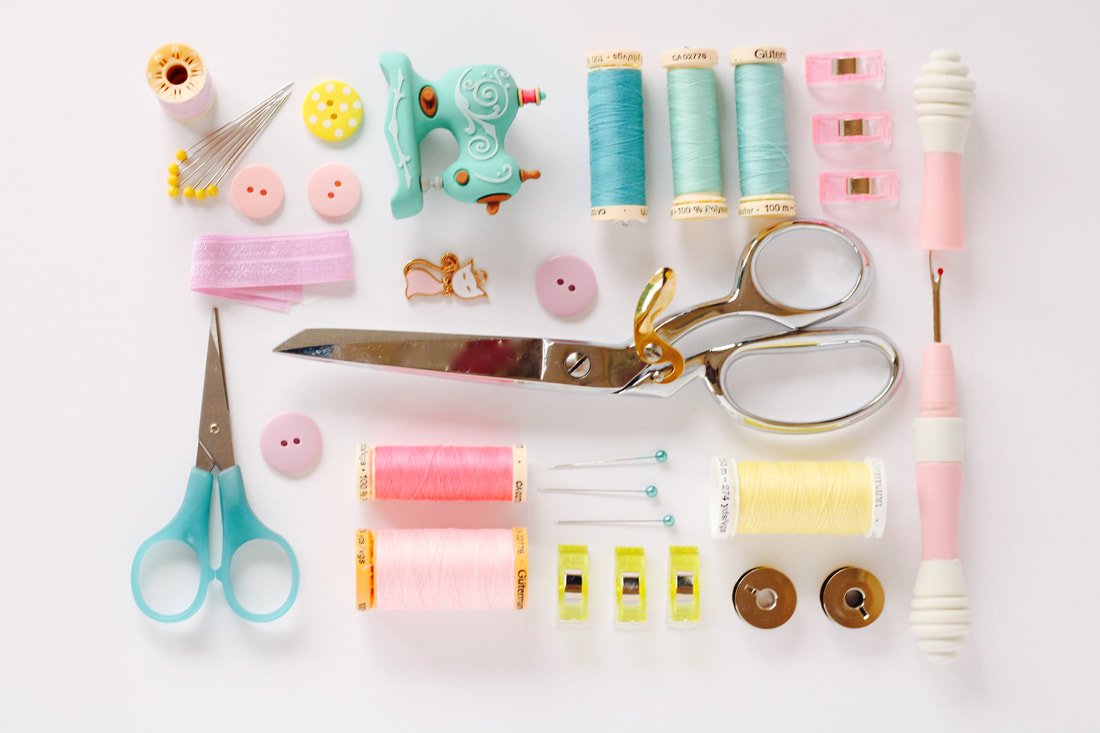
These are some of the tools you'll want to invest in. Some items are fun extras while others are a necessity.
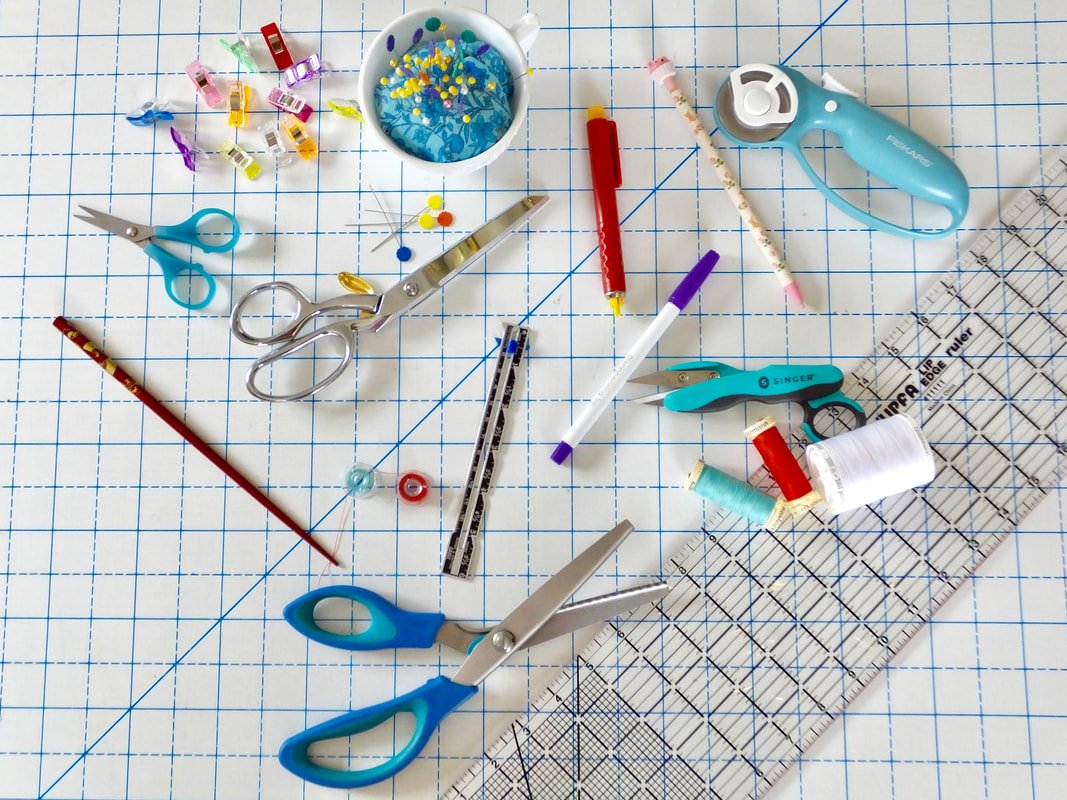
Scissors, pins, clips, seam gauge, thread, bobbins, and more! They are. numbered from the top and go clockwise.
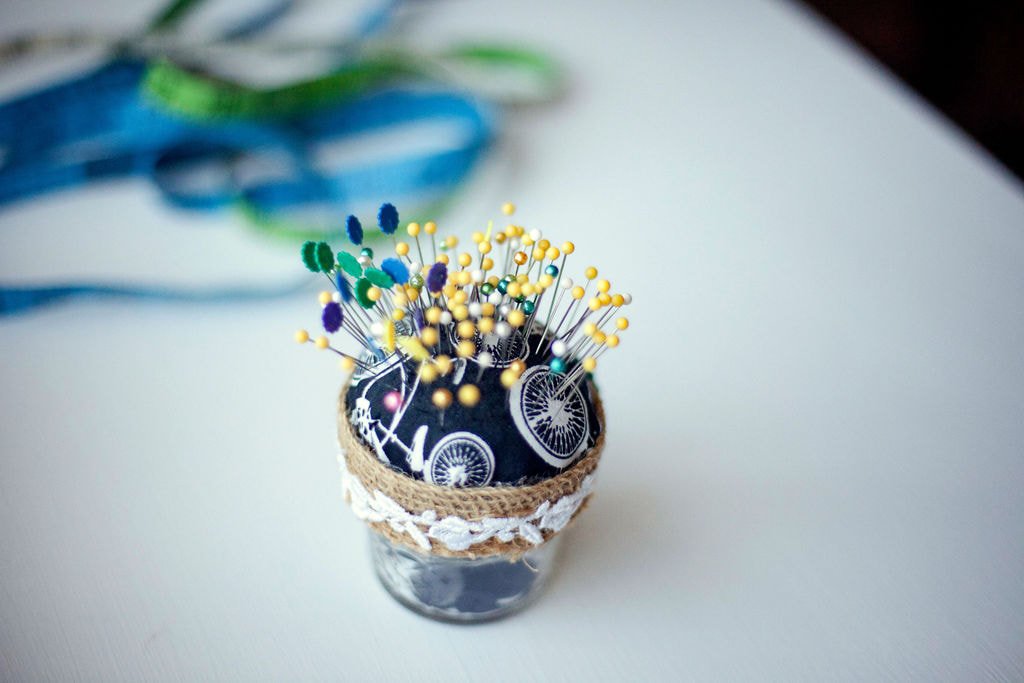
Pin cushion
You can make one by cutting a piece of fabric and closing the open end with a rubber band. Fill it with flaxseed or rice and it'll work for years. You can also buy the classic tomato at your local craft store too.
Pencil, chalk marker, and air-soluble pen
You’ll need something to write with on paper and draw patterns with. I prefer a pencil so I can erase the marks easily. You will also need something to write on fabric with. Air-soluble pens have ink that disappears after awhile or with heat. Chalk markers are my fave. Always reliable, they don't dry out, and a little water washes the markings away. Win-win!
Rotary cutter and mat
These fall into the "nice to have" category. Quilters use them, but sewists do too. The rotary cutter gives a straight cut line and works hand in hand with a ruler. It's a pizza cutter for fabric. The self-healing mat goes under the fabric, and the rotary cutter cuts through the fabric. You do not need one of these, but they make life wonderful.
Clear grid ruler
This is another "nice to have" item. I'm not a quilter, but I use clear rulers for everything. They are wide, long, and have grid lines. Great for making squares or rectangles. Think skirts, bags, wallets, scarves, pillows, curtains, kids pants, etc. You can get one at the craft store, or in the office section at big box stores.
Thread
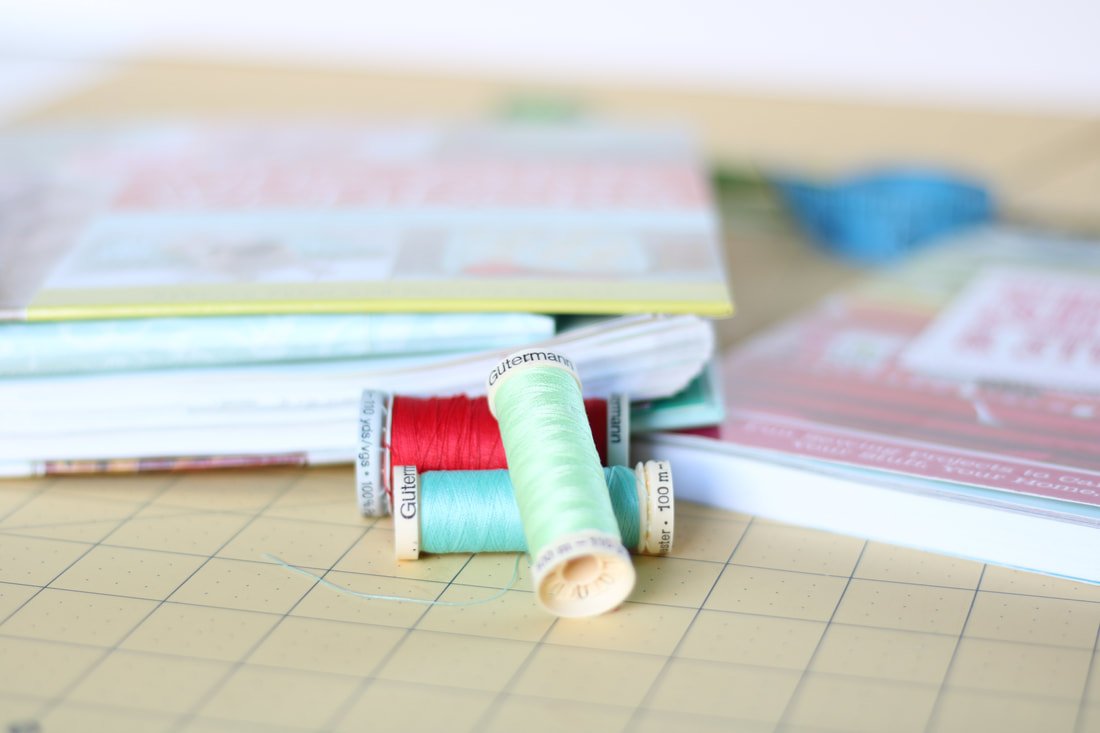
There are tons of colors to choose from. Is there really a difference in thread? Yes. You can sew most things with polyester thread. Cotton thread is often used for quilting, and silk thread is used for specialty items. If you plan on making a bowl cozy, for instance, you'll need cotton thread. Polyester will burn and melt in the microwave. Purchase larger spools in black and white and smaller-sized spools in colors you love.
Pinking shears
These are old-school, seam finishing shears. Think back to when you were a kid and you had those fancy scissors that cut paper with a scalloped edge. These do that but in a zigzag pattern. You can find these at the craft store. They cut the fabric in a way that keeps the raw edges from fraying.
Seam gauge
This fancy little ruler isn't a necessity at all. Many garment sewists love a seam gauge because it helps create a perfect hem. It has a fancy little blue slider that stays in place when you measure. Nice to have, but not needed in the beginning.
Bobbins
This is the small spool that holds the thread under the needle. Some are clear plastic, and some are metal. They come in different sizes too. Your machine comes with one or two. Check your manual for sizing info and learn how to wind your bobbin. You will use the same thread on top and bottom. It’s a good idea to have a few extras on hand.
Chopsticks
No, not the song you learned to play on the piano as a kid. This is for turning tubes and poking out corners. They sell point turners at craft stores, but I love my chopsticks. A pencil works too. Think of anything with a blunt end. Do not use your scissors to poke out a corner, you will cut through the fabric. I know these things, because I've done these things. LOL! Get yourself a chopstick.
Scissors
My favorite notion. Gimme all the scissors. You want a pair ONLY for fabric. Mark them, draw on them, tie a ribbon around the handle, attach them to your soul, and do whatever you need to, to protect these beauties. Do not use them to cut paper, ever. Buy a separate pair for cutting paper. Paper dulls scissors faster than anything. A small pair for clipping threads and making notches is nice but, not a necessity. Again, find all these at the craft store or big box store in the craft section.
Pins and clips
Pins are a necessity for keeping fabric pieces together. There are multiple types of pins. Match your pins with your fabric. You can also use clips. They sell cute little ones or you can use binder clips. They all do the same job. These bad boys are great for holding slippery fabric such as minky or multiple layers that pins can't poke through. Fabrics like oilcloth, leather, and vinyl can't be pinned because pins leave permanent holes.
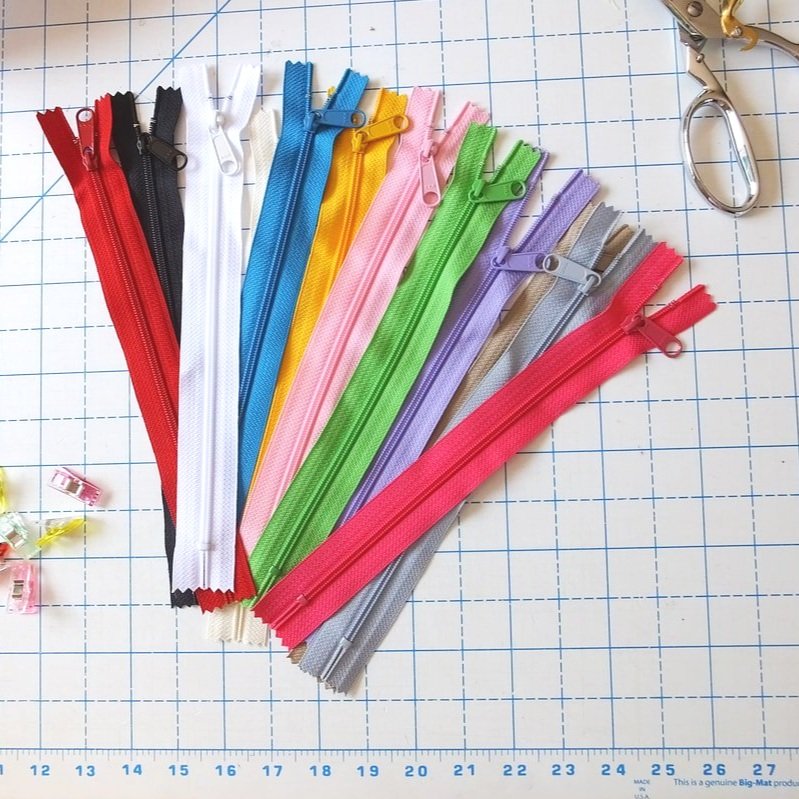
Other Items
These are other items you'll need. Sewing magical things is fun and having all of the gadgets and gismos will make things come together easier.
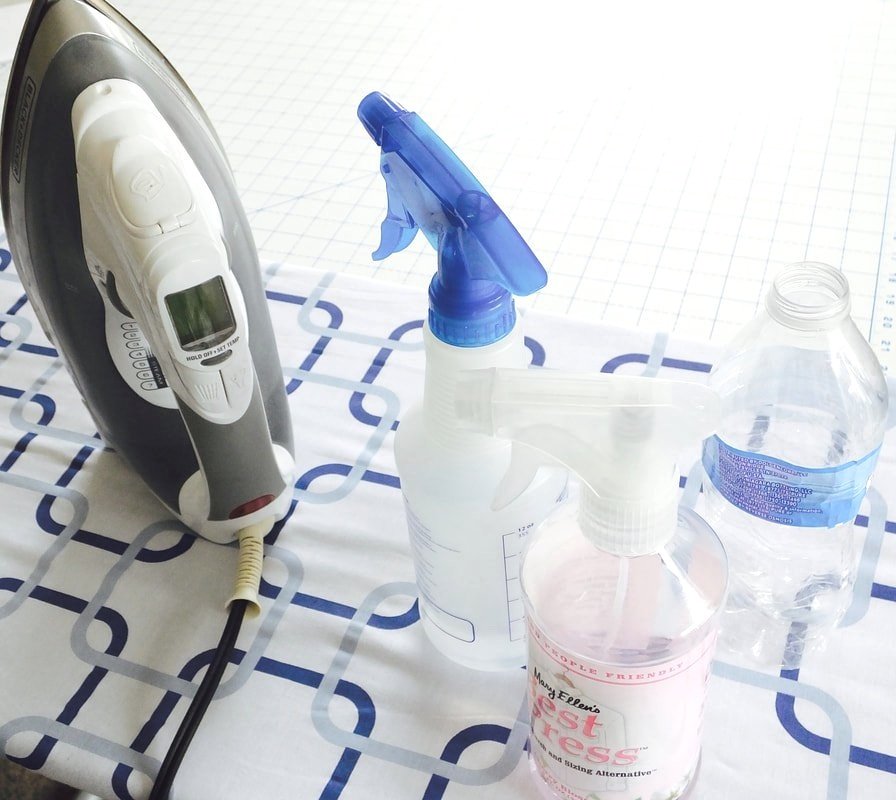
Iron, ironing board, and spray bottle of water. A separate spray bottle is nice and works better than the sprayer on your iron. The spray nozzle on the iron is small and doesn't spray as much water as you might need.
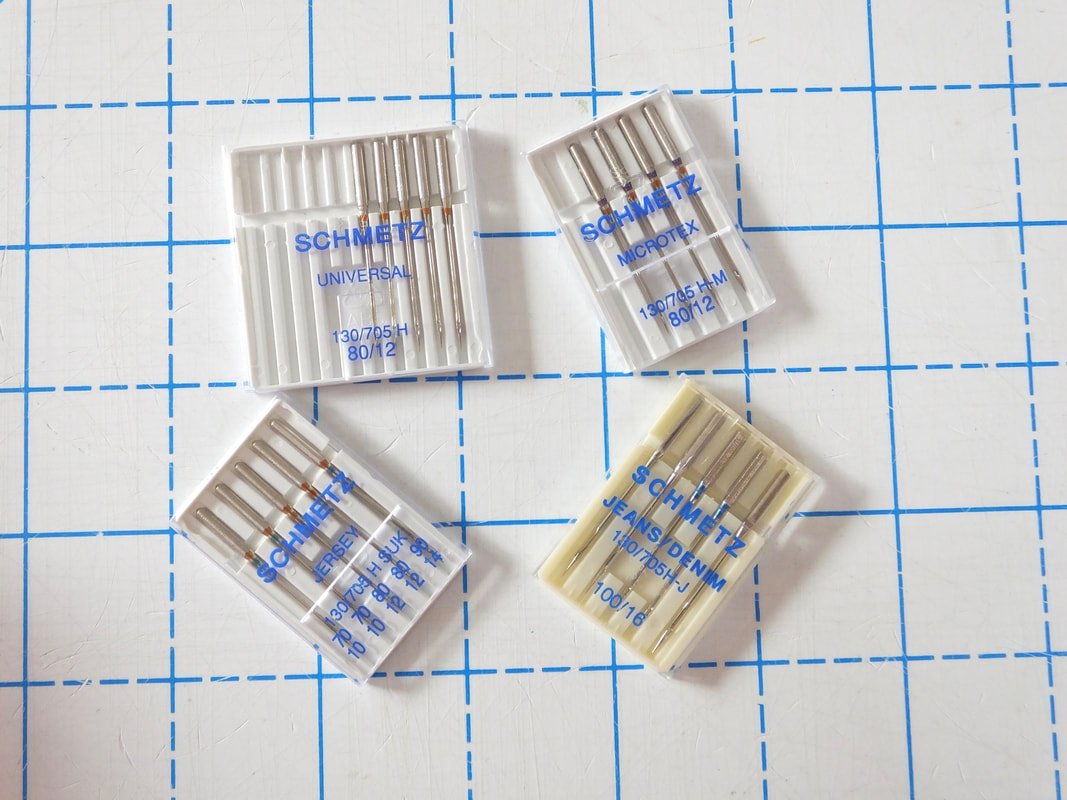
Needles for your machine. Match the needle with your fabric and thread. If you're sewing denim, you'll need a denim needle. Using topstitch thread, you’ll need a topstitch needle. Sewing stretchy knit fabric? Yes, you definitely want a stretch needle. The eyes are of different shapes and sizes and are made specifically for thread and fabric.
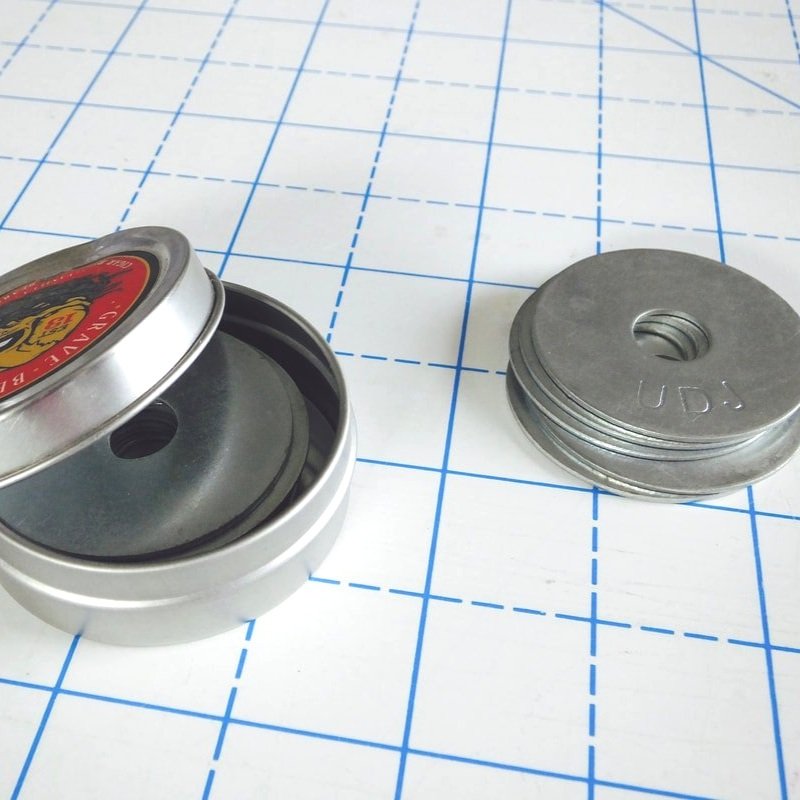
Pattern weights. These do just what the name implies. Large washers from the hardware store are easy and inexpensive. You can use your phone, scissors, the tape dispenser, a bowl, anything you can find really. You can use what you have on hand. They keep your paper pattern lying flat over your fabric while you trace and cut.

The Fabric
Don't forget the Best part of sewing!! The fabric. All the fabric. The glorious, beautiful, colorful, soft fabric that brings joy to the world. The fabric store is where you can spend hours looking through everything. It's an adult candy store and you have to touch everything. It’s an unwritten law. ;)
Oh, and there are so many different types of fabric. Quilting cotton is fun and bright. There are so many novelty prints to choose from. Some of the fabrics pictured are quilting cotton. They make great bags, pillows, and headscarves, but aren't great for garments. They are usually 100% cotton and have zero stretch. You can make gathered skirts with them though. Woohoo!!
The green and white polka dot is poplin and can be used as a garment fabric because it has stretch. It'll make a fun St. Patrick’s Day shirt.
The black tiny floral fabric is rayon challis and is a garment fabric. The navy blue with white is linen and was made into a dress.
What are some of your favorite sewing gadgets? Did I miss any? Please share in the comments below.
XO,
Annette
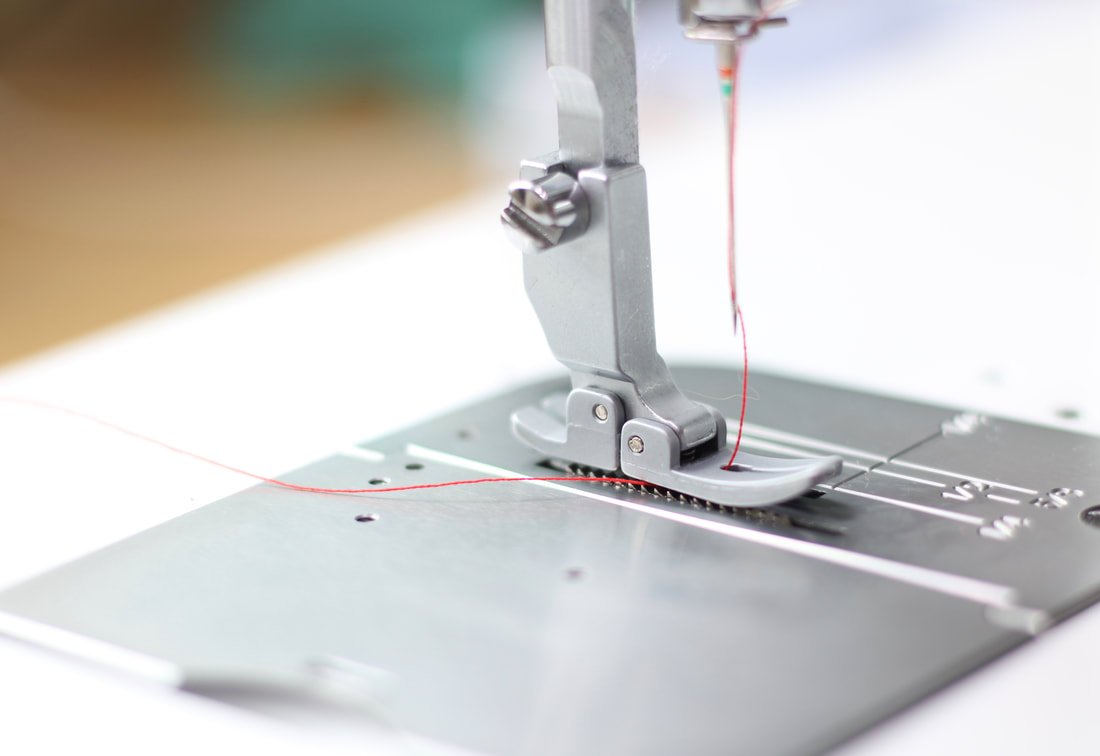
Clean your Sewing Machine in 5 minutes
Is your machine being naughty? Give her a quick cleaning and she’ll behave better, I promise.
Has your sewing machine been acting rude? Is she causing your thread to break, bunch, or nest? Is she being loud and unruly?
Well... It might be time for a quick cleaning.
I had a few minutes this morning, so I decided to give my machine a little cleaning session. When my machine starts to run a little wonky, I clean her innards and she's good to go!

What you need:
2-4 Cotton swabs
Table light (if your machine isn't in a well-lit area)
Sewing machine
I keep a few swabs stashed with my sewing notions so they're always handy when I need them.
Start by turning off your machine. Sounds silly, but you don't want to lose a finger or ruin your nails. ;)

Remove the needle.
Take your needle out. It gives you more room so you can get into the area without worrying about a poke. Turn the tiny black knob a couple of times and the needle drops down easily. Set it aside, don't lose it!
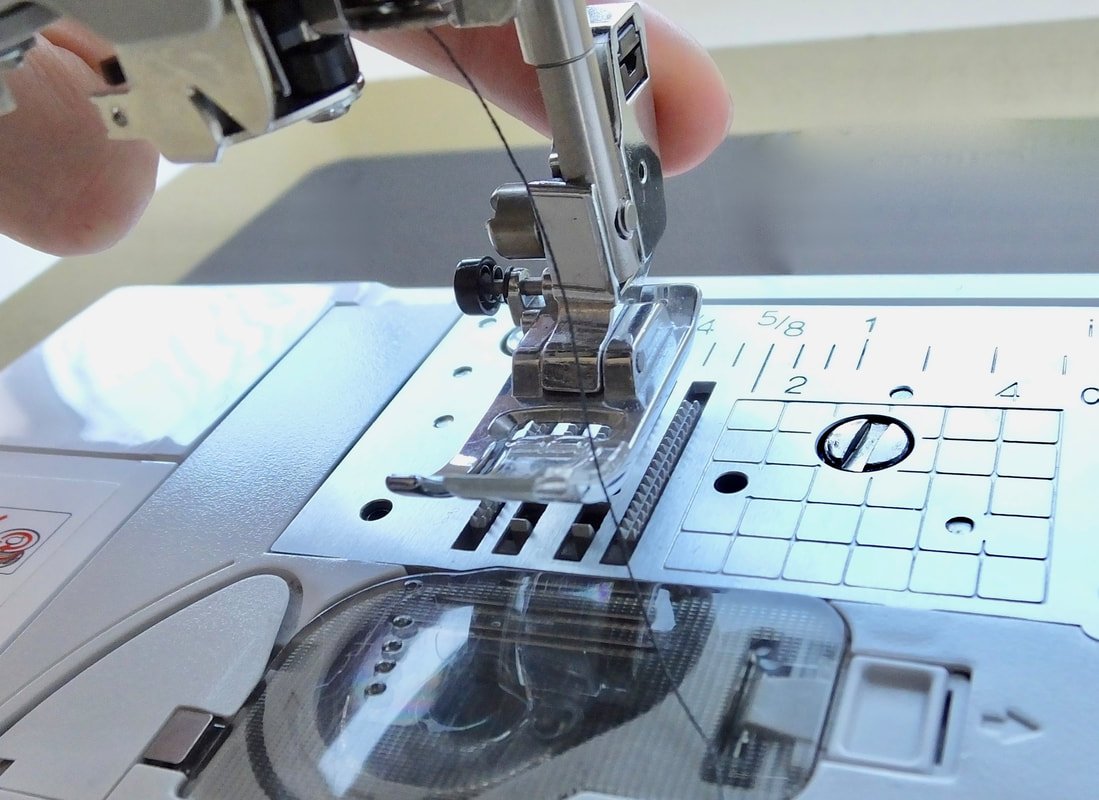
Remove the foot.
Remove the foot and set it aside. This machine has an easy button in the back that drops the foot. You may have to unscrew the foot to remove yours. Check your manual if you are not sure.
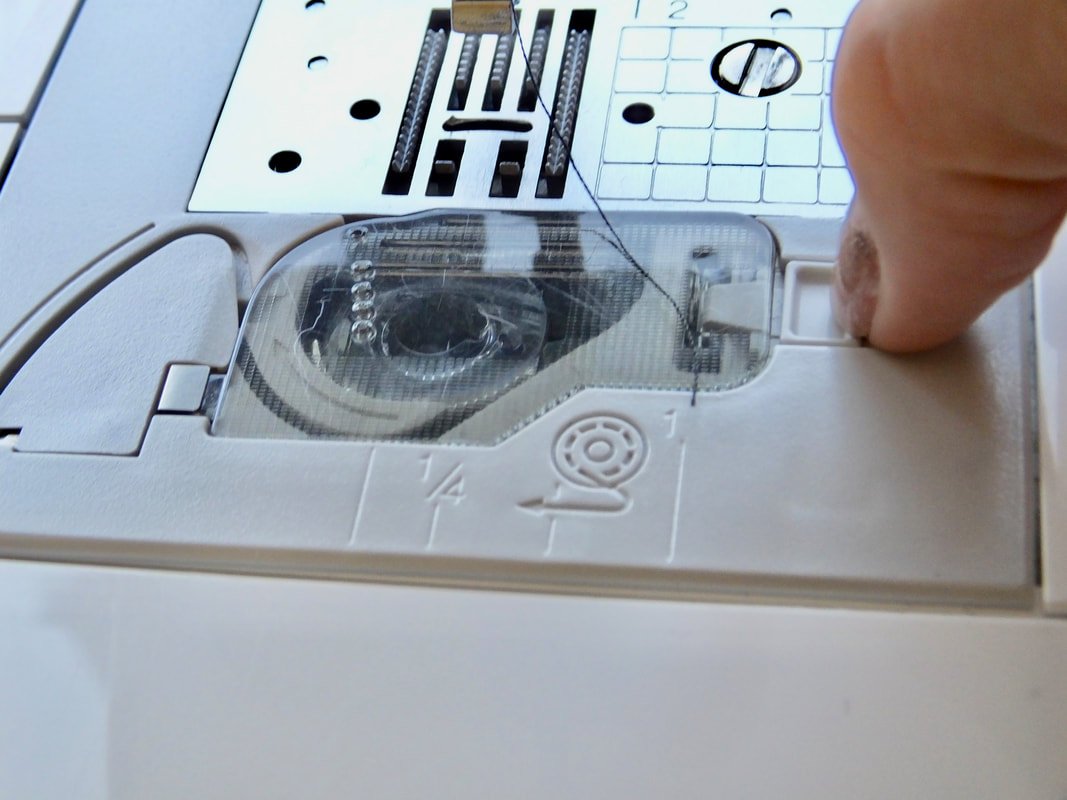
Remove the bobbin and everything around it.
Remove the bobbin cover and pull out your bobbin. This machine has a drop-in bobbin, you might have a different setup. Check your manual if needed.
Set the cover aside as well. If you have a small dish, it's nice to stick all the parts inside so they are kept together, and out of the way.

Now we're going to slide off the flat bed attachment if you have one. Easy peasy so far, right?
I made a pair of tweed pants and they left tiny fibers everywhere. I can't wait to see what's hiding inside of the machine.
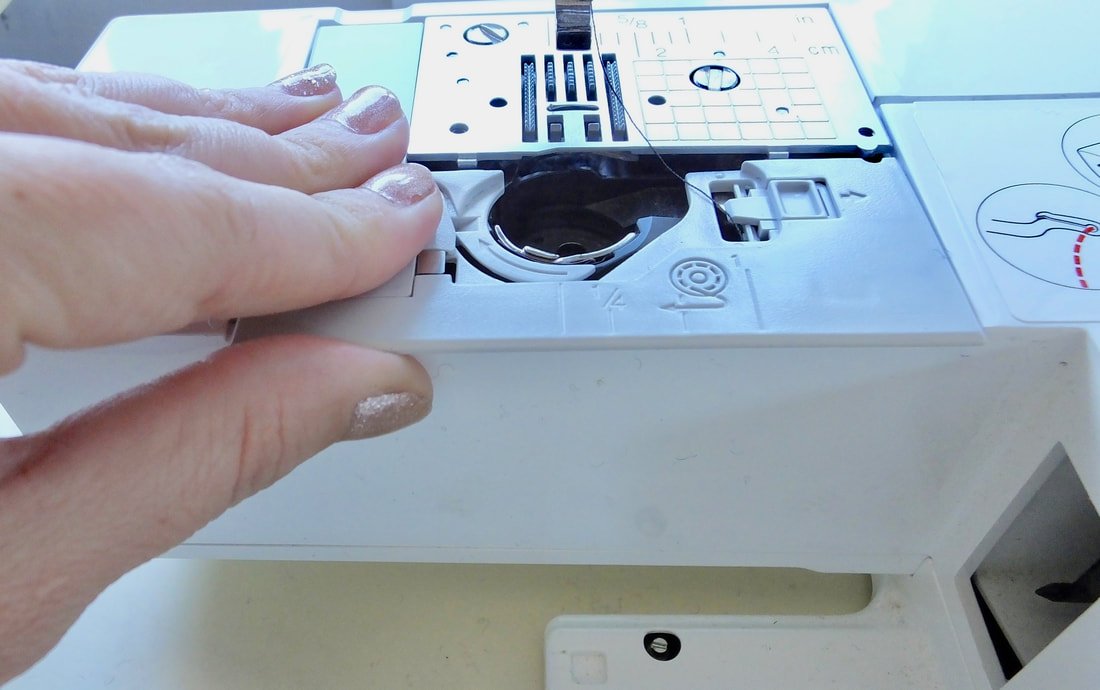
Remove the needle plate cover. This slides out towards you easily, be gentle though. Set aside or in the dish with everything else.
Are you still with me? Hope so!
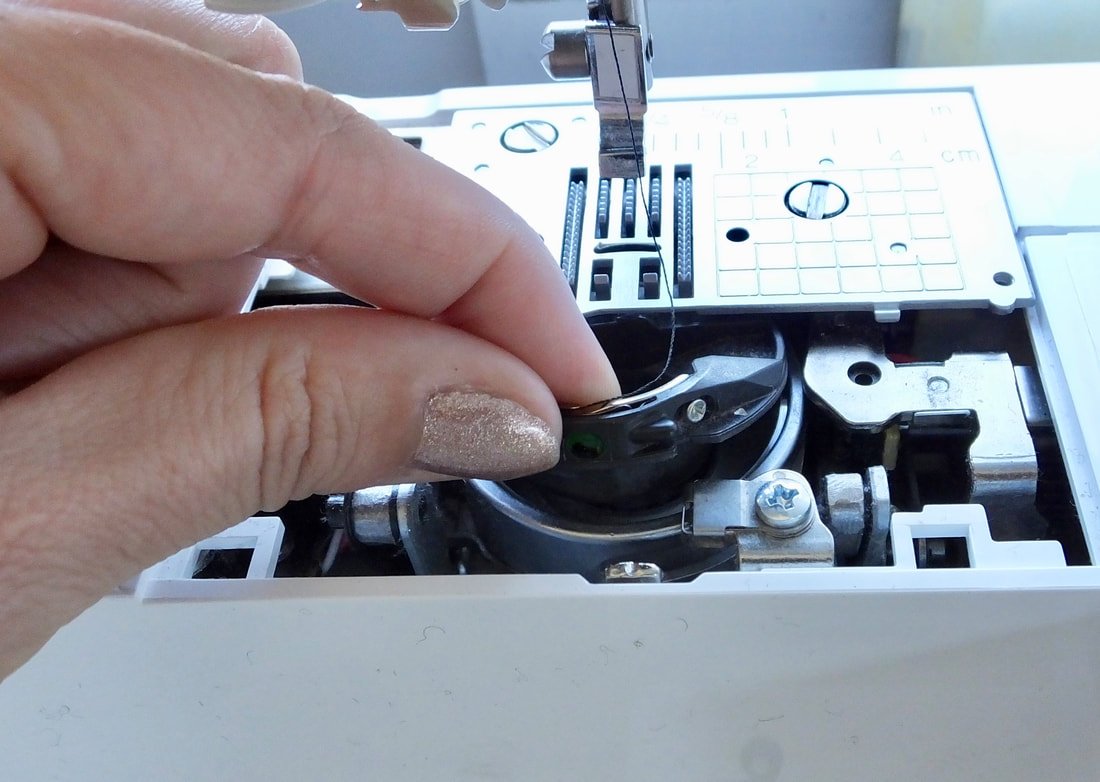
Here's where it gets fun.
Remove the bobbin case by pulling it out.
Note the tiny white triangle on yours. Keep that in mind when we are putting everything back together. Set inside the dish.
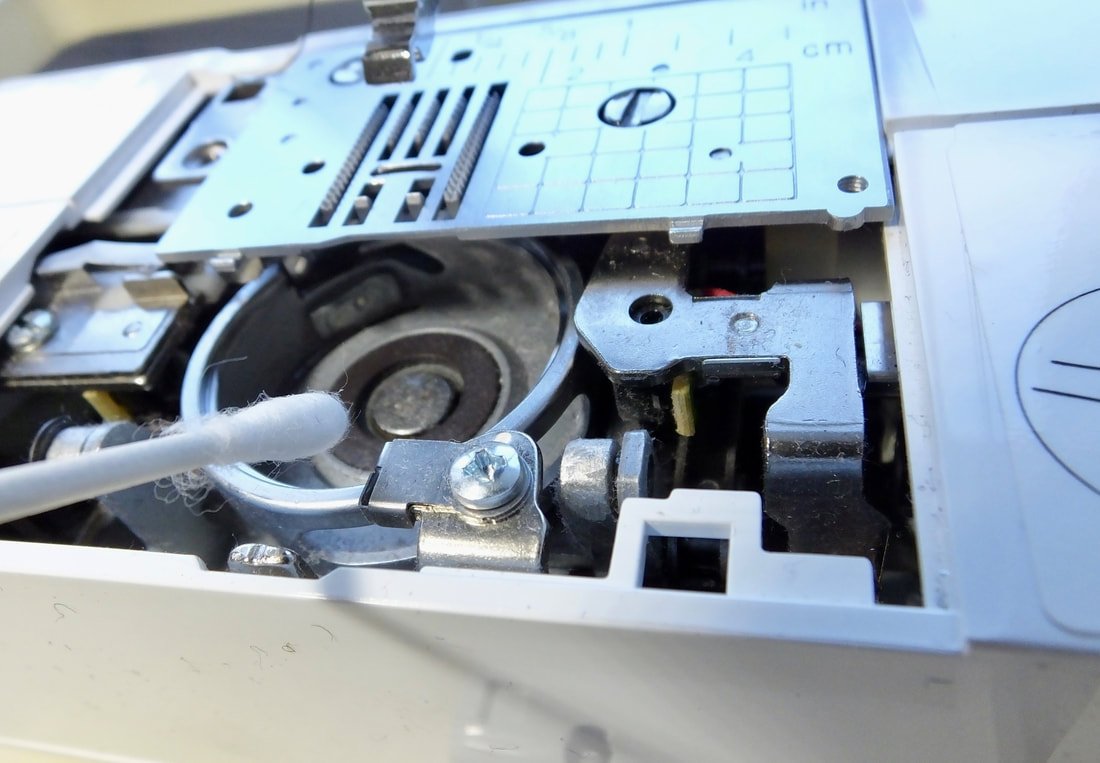
Swirl your cotton swab around everything.
Now it's time to go to town! Grab a cotton swab and look inside. Do you see little dust bunnies? You may or may not. Start by swirling the swab in the race (area where the bobbin case lives) first.
There's no wrong or right way, but try to be gentle. Don't jab it around in a stabbing motion, just slide and twirl it, gathering fibers and rogue strings. It's almost therapeutic.
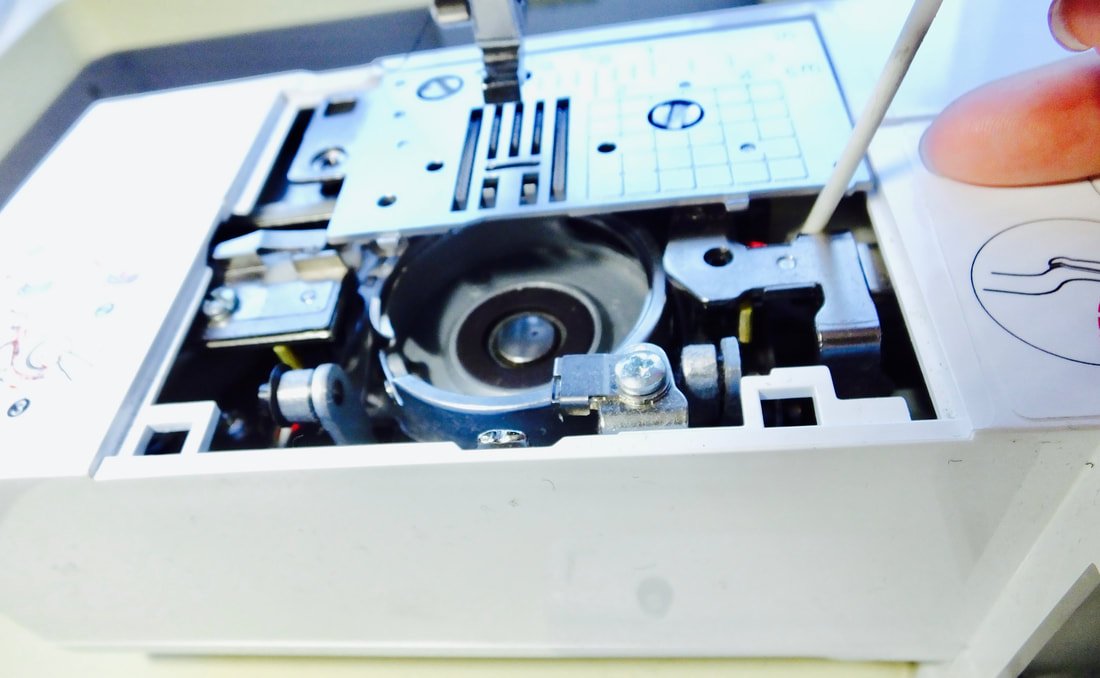
Take your time, hand crank the hand wheel a little bit. It turns the race so you can get more hidden debris.
I do not use canned air. I only use cotton swabs.
However, if you're lucky enough to have those tiny attachments that came with your vacuum cleaner, by all means... get that sucker out and use it! Literally.

When you're all done, your swabs might look like mine below, give yourself a pat on the back. You've just done a nice thing for your machine. She will thank you and run a lot smoother.
This may not look like a lot of lint. But, I assure you, it is.
The machine I cleaned today is a newer machine and the manual says they are oiled for life. So, I do not add oil.
My vintage machines would get a drop of oil at this point. My Brother PQ1500SL would also get oil.
Okay, let's get your machine put back together so you can use her again. Do everything you did to take it apart but in reverse.
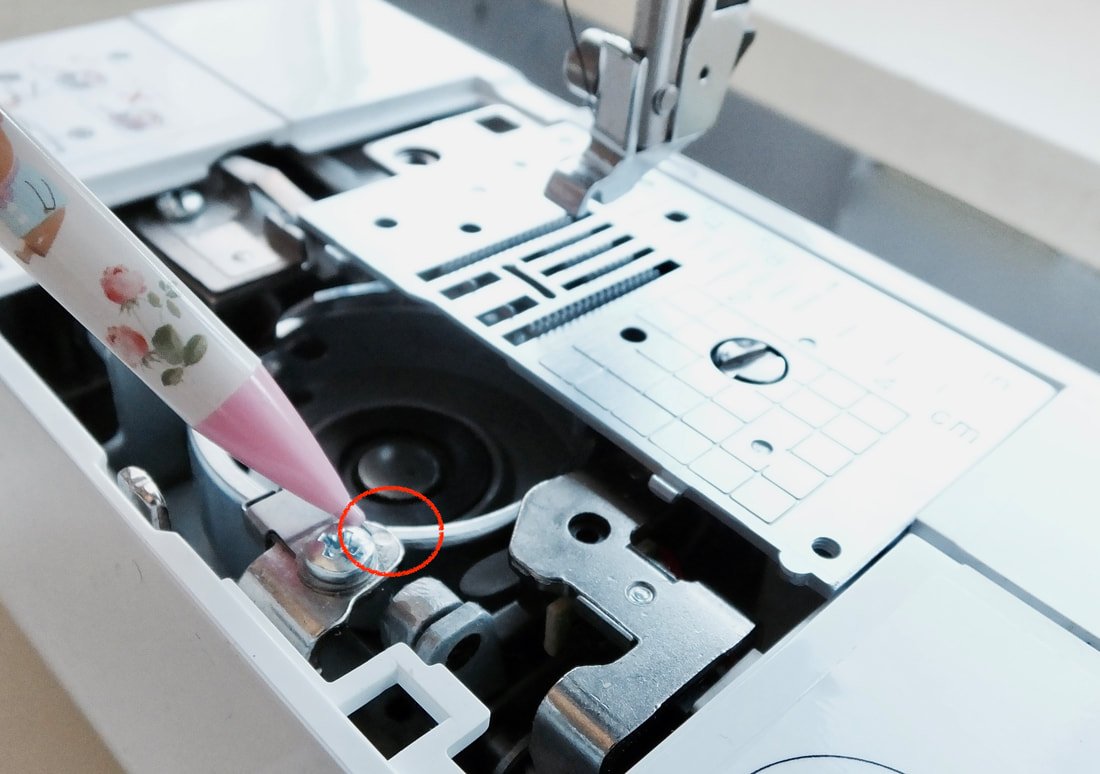
Find your tiny white triangle on the bobbin case. Match it up with the tiny white dot next to your screw. Pop the case back inside matching these 2 together. You may have to finagle it to get them matched up.
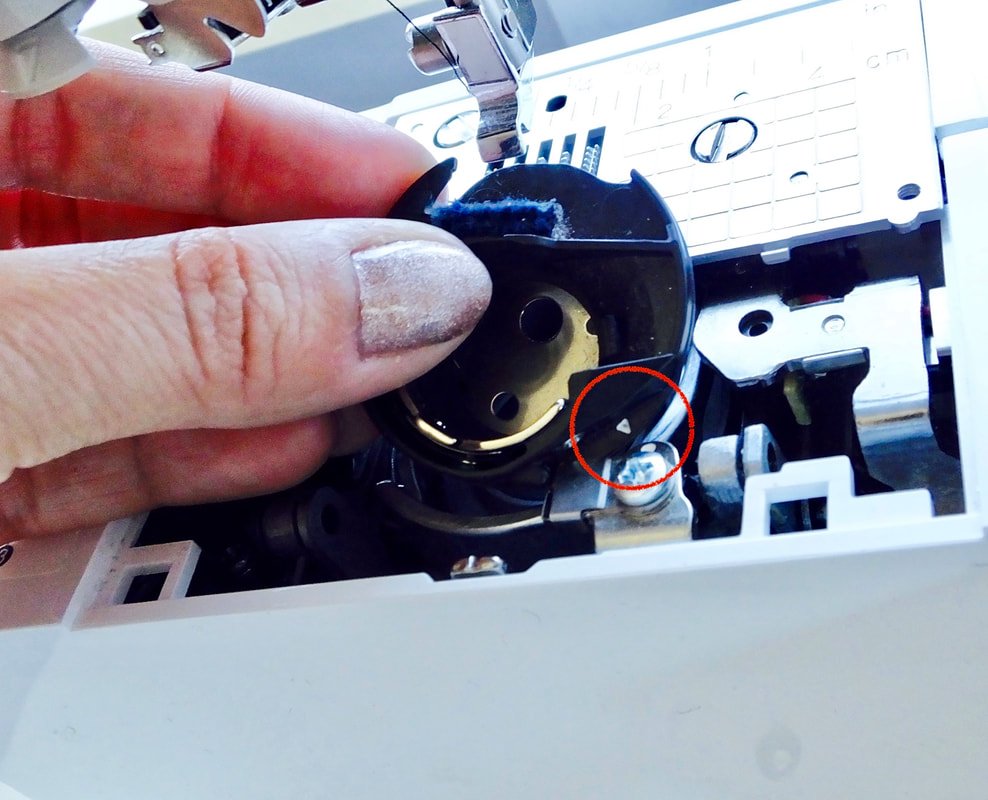
Match the triangle and dot. Your machine may not have markings, check your manual.
Slide the needle plate cover back into place.
Stay with me. We're almost done. I'm hopeful at this point, you're saying to yourself… "This was so easy!”
Slide the flat bed attachment back into place.
Slide the bobbin cover back on.
Add your presser foot and insert your needle.
You're back in sewing business!!
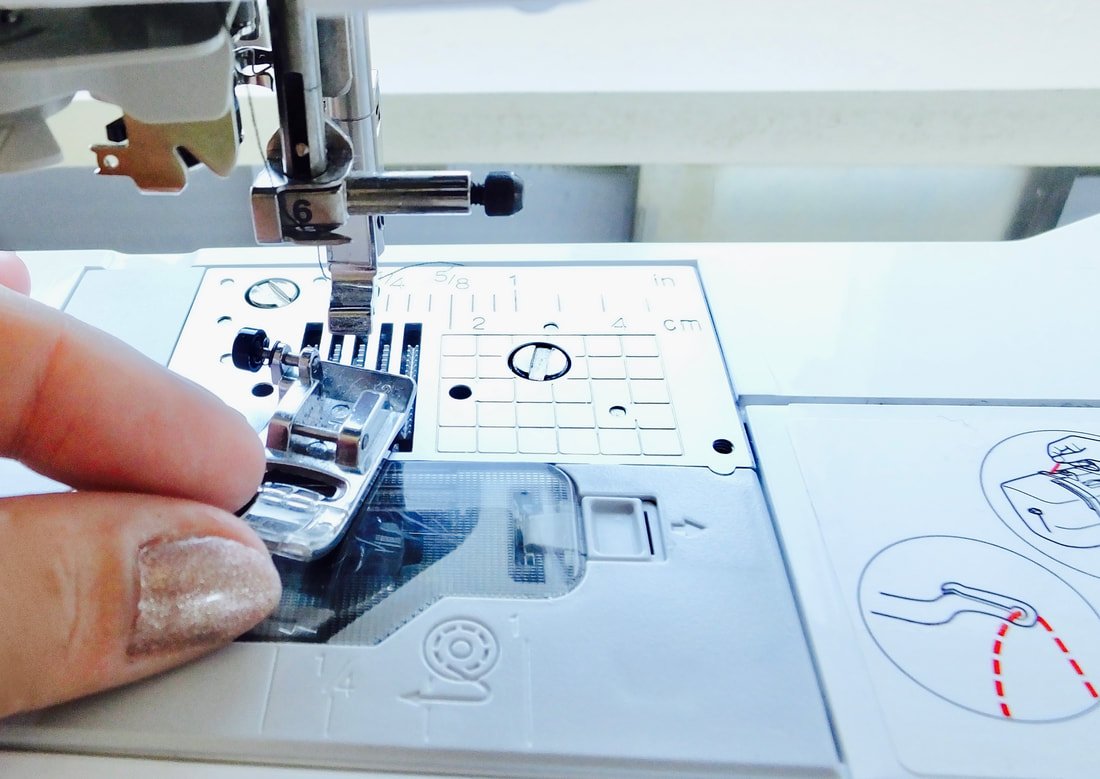
Add your pressure foot and needle.
If you have any parts left over, that is not good. Take a deep breath, sip of coffee, and retrace your steps.
I clean my machines whenever I notice them having little issues. This simple task will make your machine perk up and run more smoothly. I think it helps to make it last longer too.
You should also take the machine to a reputable sewing shop for a good cleaning once a year. They take the whole thing apart and fix any issues. I do my part by keeping the dust bunnies out.

Look at all that fuzz!
Let's take another look at the dusty, yucky cotton swabs. Yikes!! Don't forget to toss those dusty swabs in the trash.
Thanks for hanging out and cleaning with me. Did you time yourself? How long did it take you to clean your machine? Tell me in the comments, below.
Happy cleaning,
Annette