Pattern Reviews, Sewing Hacks, Tips & Free Patterns
The Sewing Blog

Cat Mug Rug
Sew a cat-shaped mug rug. These make perfect gifts for parents, neighbors, teachers, and anyone else who drinks warm drinks. Great scrap-busting sewing project and a free sewing pattern. Sew cat-themed things for the home.

The leaves are starting to fall, the mornings are crisp, and evenings are getting chilly. It's almost sweater weather! If you love fall, I bet you dream of warm mugs filled with cocoa, hot tea, fancy coffees, or hot toddies. I know I am. Cue the cat mat, rug mug, or coffee coaster; you decide the name of it. I want to share a cute kitty mug rug pattern with you all. Here is an easy, beginner-friendly sewing project you can whip up in an hour. It’s a great scrap-buster project too.
A mug rug will help protect your kitchen table from the heat of a hot beverage. With the holidays approaching, these would even make perfect gifts. Neighbors, moms, uncles, friends, and teachers will love them. They can also be great for kids. Add a hot cocoa packet inside a cute mug for an easy holiday gift.
I kept this post simple and short. Less time reading, more time for sewing. Let's go!

Supply List
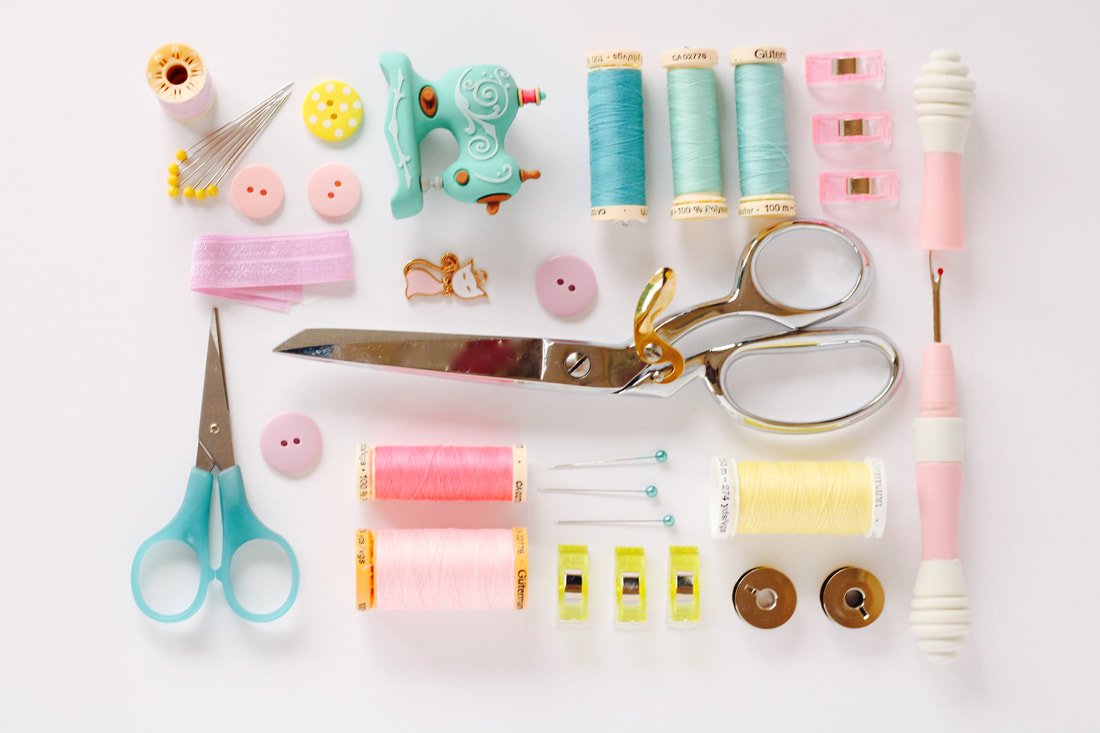
Large scraps of cotton fabric, or 2 fat quarters
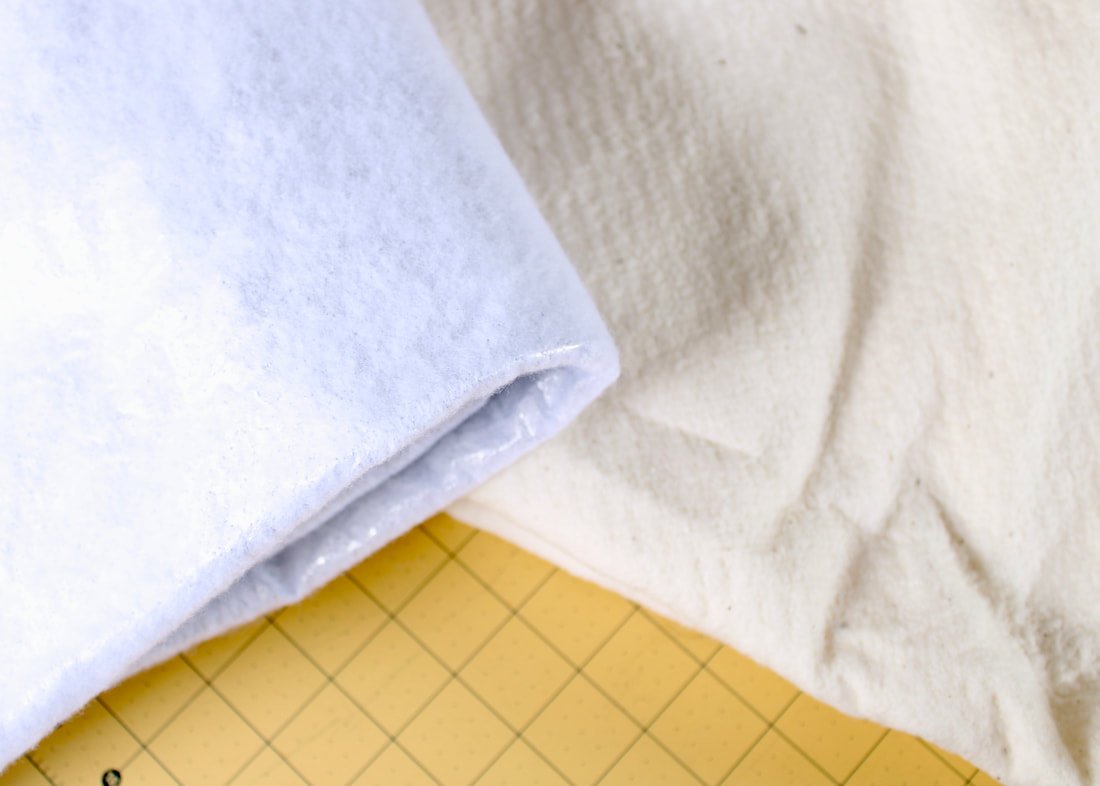
Batting. You can use quilting batting, Insul-Bright, Wrap N Zap, or fusible fleece
Clips or pins
Sewing machine
Air soluble pen
Scissors
Cup of something hot to place onto the mug after it's sewn :)
The finished size is approximately 6.5" wide by 6.25" tall.

Cut and Trace the Pattern
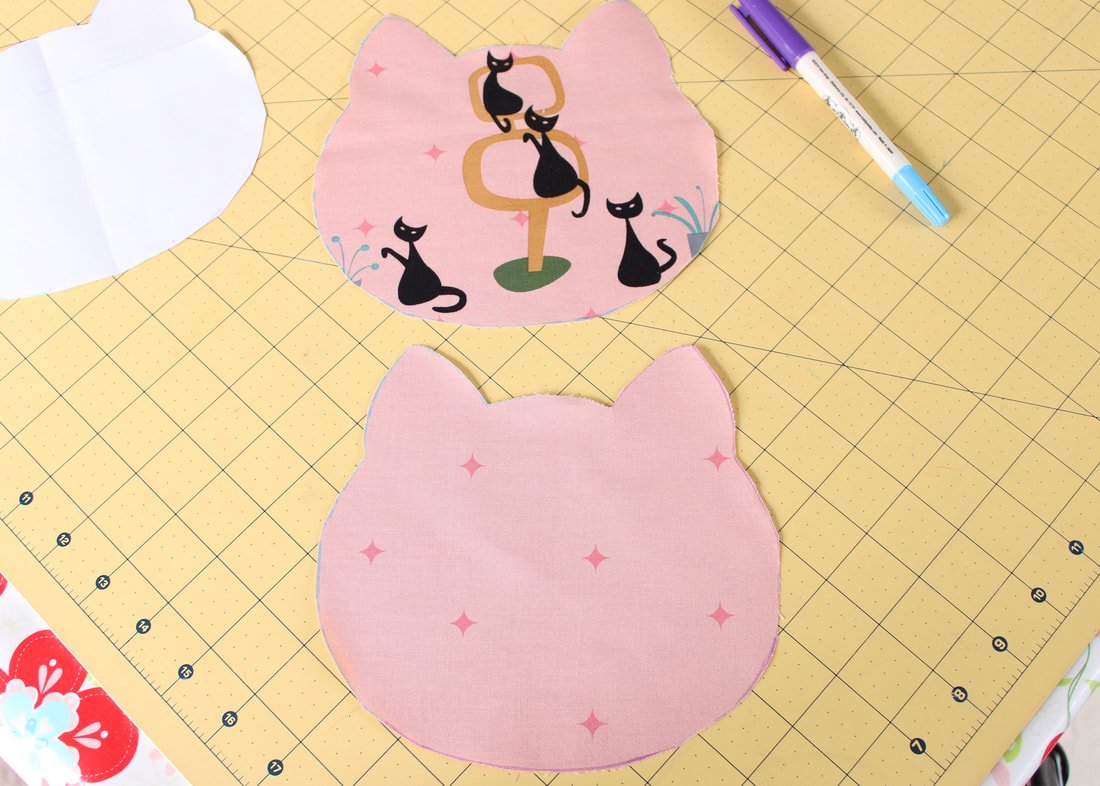
Print and cut out the PDF pattern with non-fabric scissors.
Place the pattern onto the fabric and trace it with an air-soluble pen or other marking tool. Transfer the markings onto your fabric. Trace and cut 2 pieces of fabric.
Cut out a piece of batting. (I prefer to cut it larger than the fabric because it will shift during sewing).

Pin Layers Together
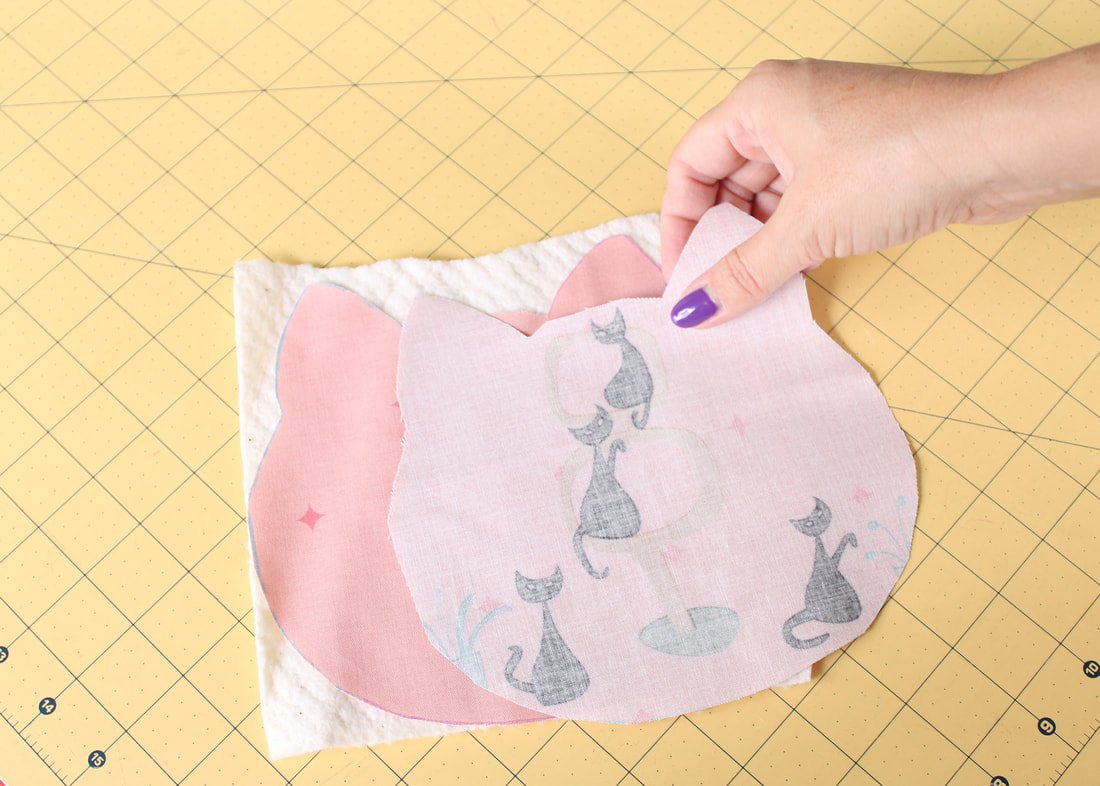
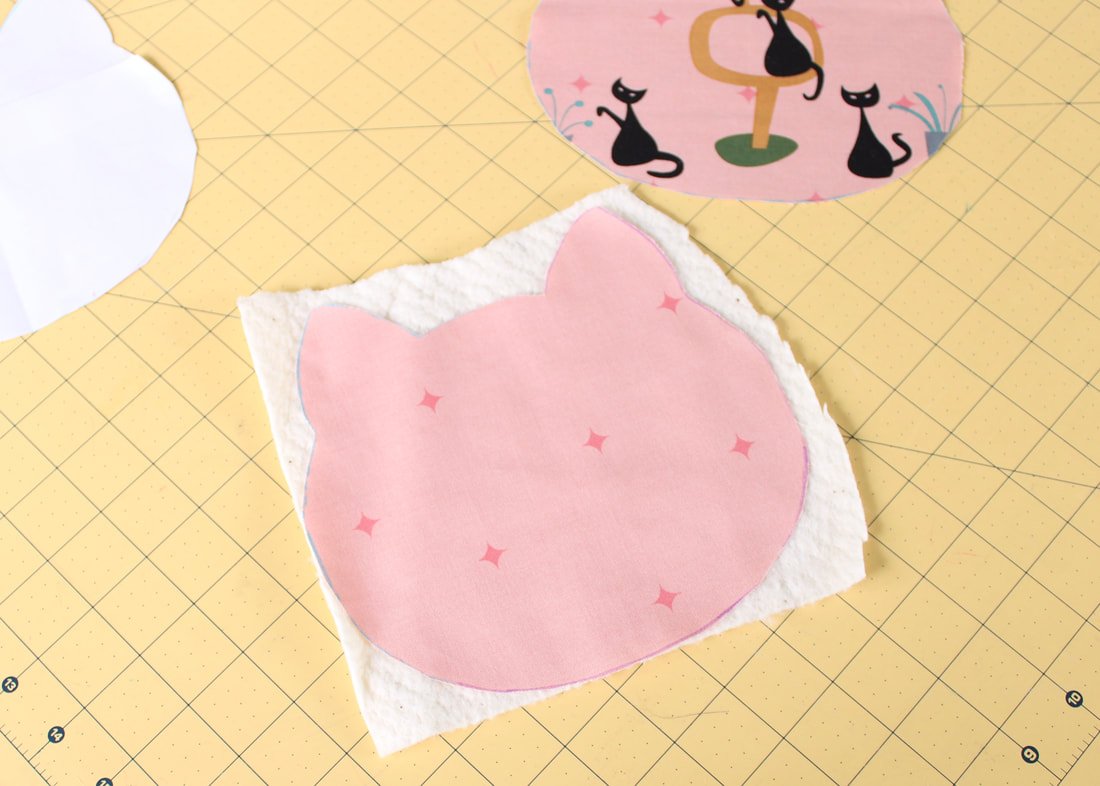
Place the batting onto the table. Then, place the wrong side of the fabric onto the batting. Take the second fabric and place it right side facing down. You'll have a fabric sandwich now. The 2 pieces of cotton will be facing right sides together. Pin or clip the 3 layers together.
Batting, fabric, fabric.
A note on batting: if you use Insul-bright or fleece, do not put your mug rug in the microwave. Fleece is polyester and will melt. Insul-bright has metal and will spark. If you plan on putting your coaster in the microwave, use cotton quilting batting or Wrap n Zap only.
Sew it Together
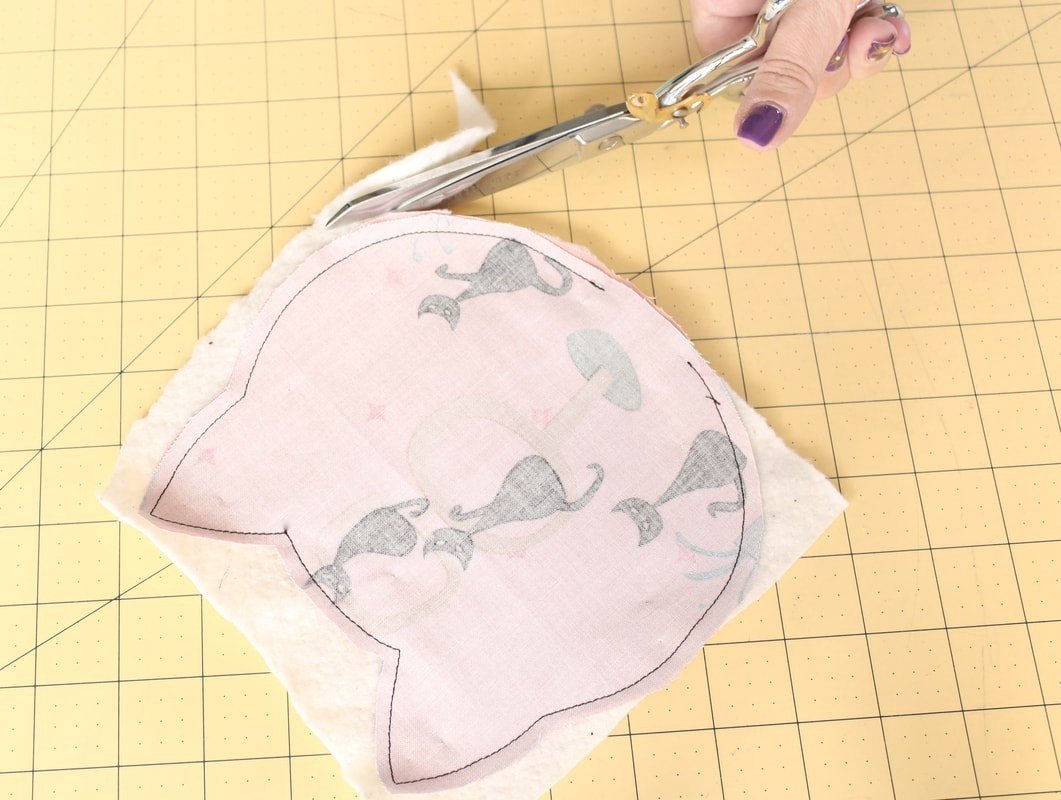
You'll sew the mug rug using a 1/4" seam allowance. Start sewing at one of the marked spots on the bottom, don't forget to backstitch. Sew all the way around. Go slow around the cat ears, it can get tight. Backstitch when you get to the other marking. You should have a small opening for turning out.
Clip your threads.

Sew from one bottom end, backstitch, then sew around to the other side, backstitch. Leave a gap open for turning.
Clip Curves and Turn Out
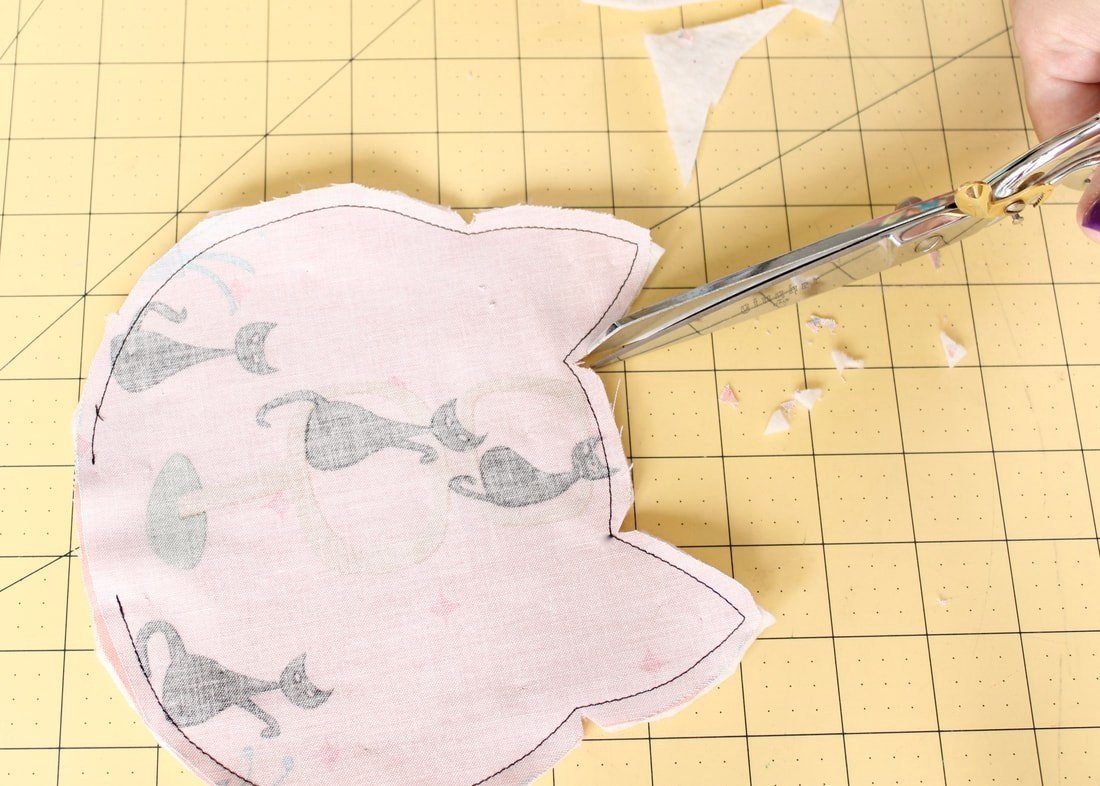
Trim away the excess batting.
Clip the curves and trim the corners. Clip the sides and top of the cat head. Cut tiny triangles into the inner curved areas near the ears. This makes them turn out nicely without any bunching.
Grab a chopstick or blunt pencil to poke out corners and seams. Press nice and flat.
Tip: Use the chopstick in one hand to push the seam out, while using the iron in the other hand to press. This is the same pressing method I use to make my wide Rockabilly headbands.
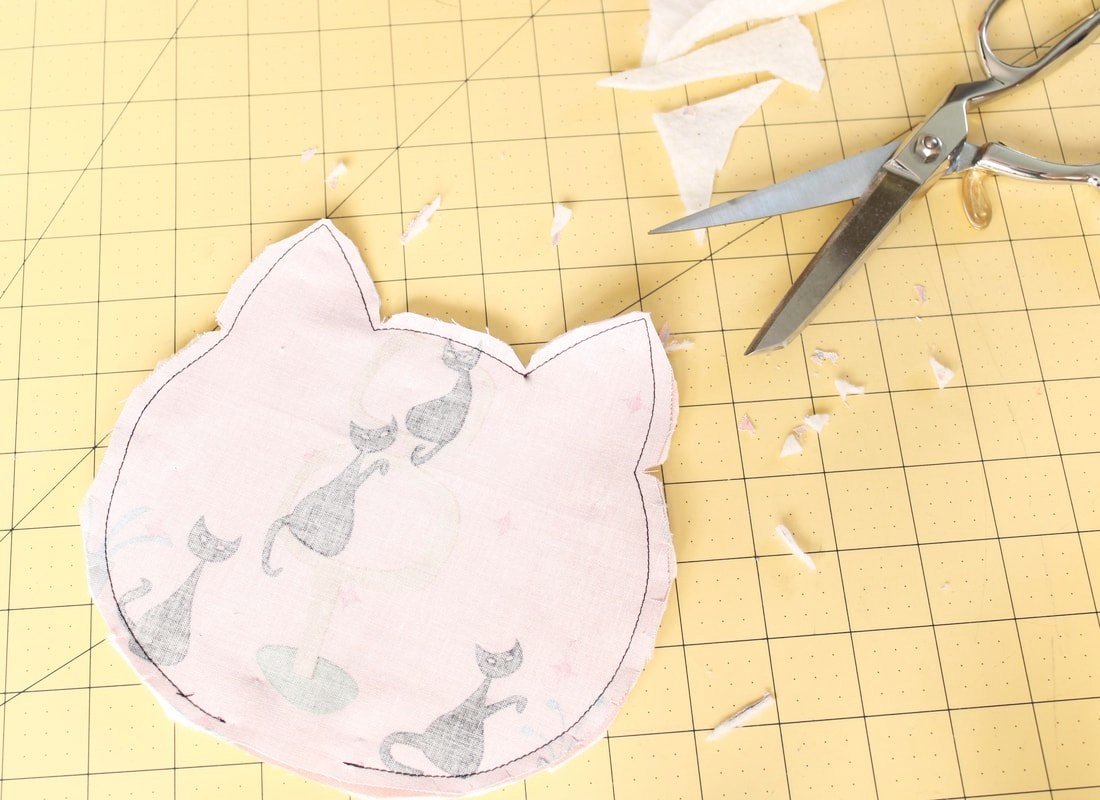

Use a chopstick to push out corners.

Topstitch around entire mug rug to close the opening.
Finishing Up
Give the whole mat a good press. Top stitch the opening closed, be sure to backstitch at the beginning and end. Or, you can top stitch around the whole coaster. Stitch using 1/8"- 1/4" from the edge.
You're all done! Now go brew a cup of something warm and tasty, and sip in style. Make one for each holiday or day of the week.
Extra Tips:
Make a few different sets of these to give as gifts. Wrap them with themed ribbon or twine. Add a fun, informative tag to let the recipient know what they are. Using themed fabric can make it extra personal. If your sister-in-law is a nurse, use medical fabric. If someone is a book lover, use their favorite movie or some comic book fabric.
Add some rick rack to the front or seam for added color.
Piece together and quilt to use up tiny fabric scraps.
Add piping to the outside. Go slow around the cat ears because it can get really tight on the inside corners.
Use 2 different fabrics to make it reversible.
A word of caution, these mats are made for beverages that are usually dark in color and can stain. I wouldn't recommend using white or really light-colored fabrics. Fabrics that are dark or heavily patterned work the best. Think of fabrics that will hide stains easily.
Wash your cat coasters with cool water, gentle cycle, tumble dry low, or air dry. Give them a good press if needed. I keep one near the coffee pot as a spoon rest, too.

Cheers to cat mug rugs.
Enjoy the pattern! And, enjoy sipping a cup of something delicious while you use this cute cat mug rug on your desk or table.
As always, thanks for stopping by, and happy sewing!
Annette

DIY Easy Sewing Machine Cover
Sew a cover for your sewing machine. Free pattern that’s easy and customizable. Sewing machine tutorial pattern on how to sew a cover.
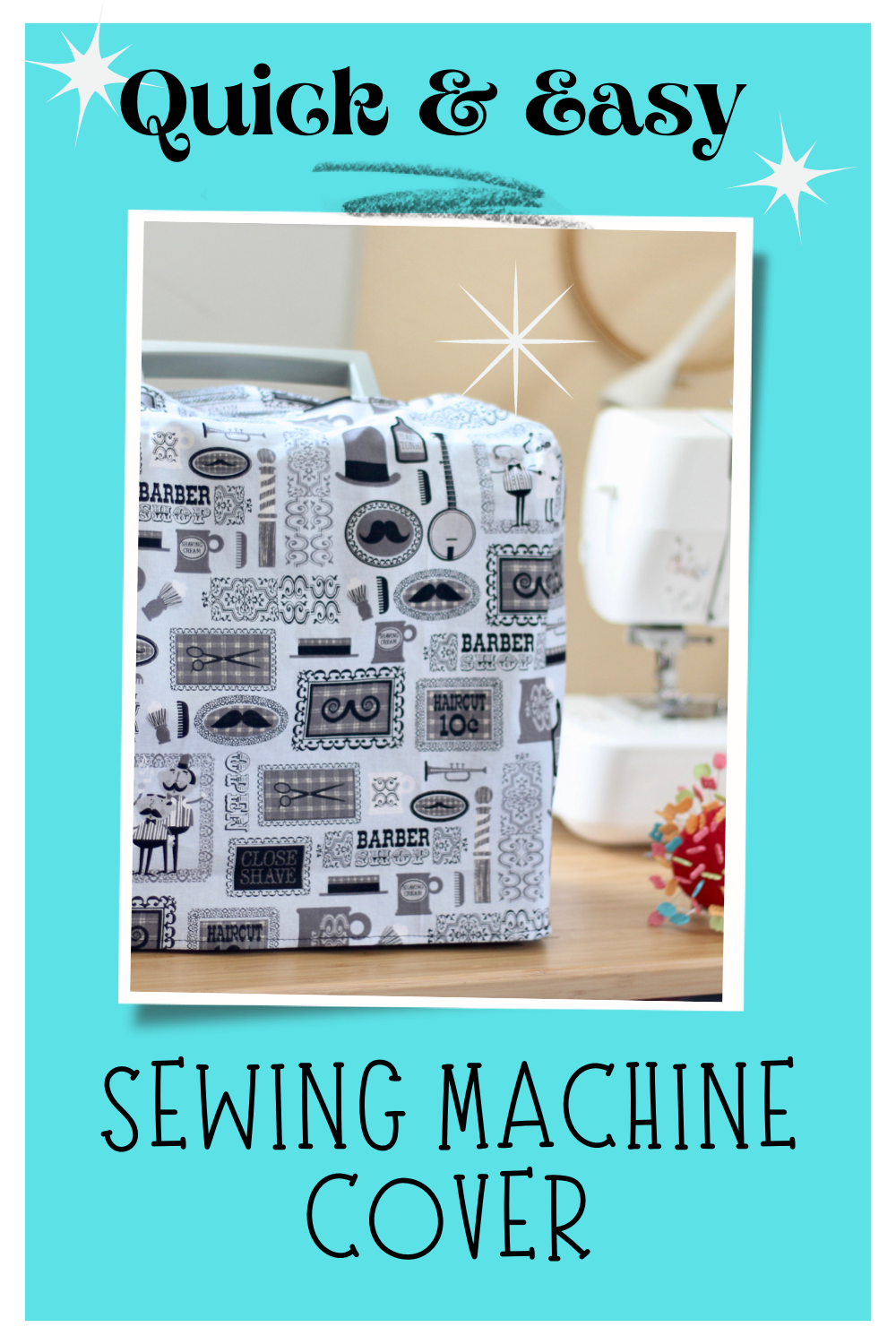
Is your sewing machine looking a tad boring? If it's a newer sewing machine, the answer is probably yes. The newer ones lack style and color. If it's a vintage machine, the answer is probably no. It's already gorgeous and full of vintage flair! Either way, let's add some new life to your machine with a dust cover. This is easy to sew, and you can make one for all of your machines.
We’re sewists, of course, we have more than one machine.
Back in the early pandemic days, mask-making was a big thing in this house and my husband bought himself a Singer machine. I'm a Brother fan through and through but, he liked the Singer's grey color. Of course, it's been sitting for over a year, untouched, and needs a little makeover. It's going to get a new fabric cover!
Psst... tickets for Craftcation are on sale!
Grab yours here and come craft with the best of them. What is it, you ask?? It’s a 5-day crafting vacation meant for creative people.
Read all about my first trip here. It was life-changing!!
I’ll be teaching 2 classes this year, so plan a trip to Ventura and craft your life away.
*(I earn a small commission if you buy through my affiliate link, at no extra cost to you.)*
* Before we get started, a lot of sewists have shown confusion about this cover:
You will cut 1 front, 1 back, and 2 side panels. The front and back will be sewn along the top. The 2 sides are inserted like a gusset.
Okay, let’s get sewing!

Let's make an easy sewing machine cover. You'll learn how to get the measurements and sew one up in an hour. Covers add fun to your sewing space and they keep your machine protected as well. Dust be gone! Speaking of dust begone, we just changed our AC filters. YIKES! They were long overdue. This is a friendly reminder to change your filters if you have an AC. ;) Go now, I'll wait.
Supply List
1/2 yard of fabric. Cotton, vinyl, canvas, denim, use whatever you want here.
Matching thread
Sewing notions: scissors, a marking tool, pins, etc.
Ruler
Serger for raw edges, or use a zigzag stitch if your machine has it
Sewing machine
A little patience when it comes time to insert the side panels ;)
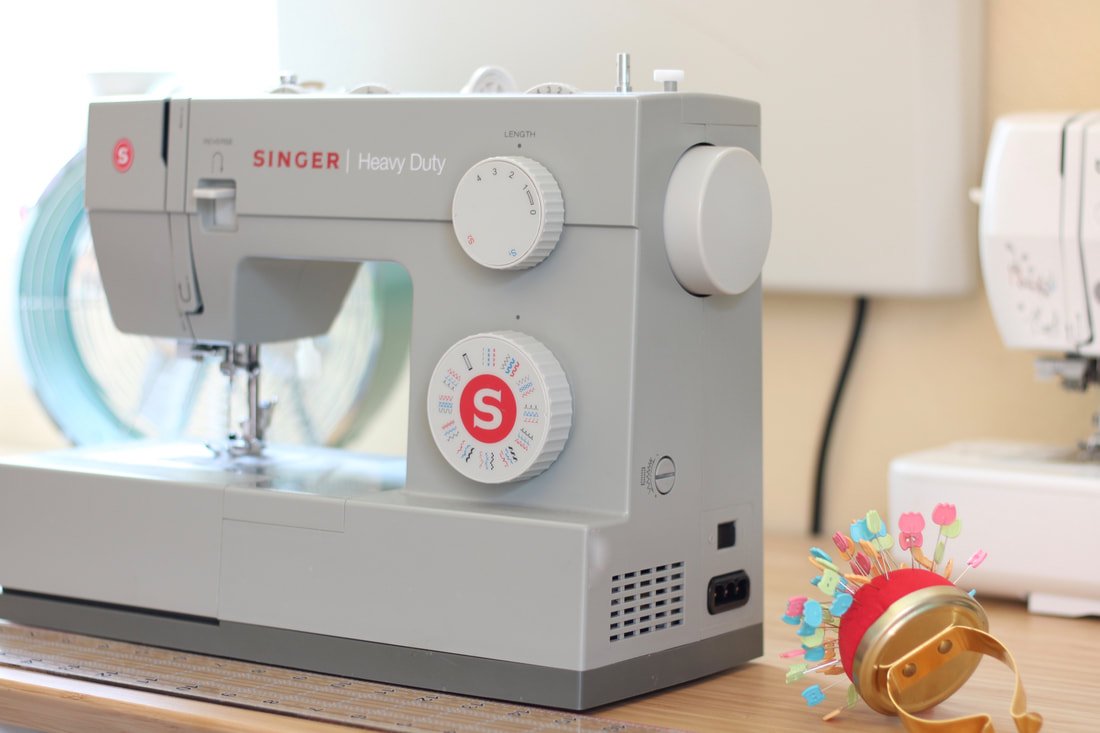
Grab some paper, a pen, and a ruler. You can use a tape measure but, the hard ruler makes it a little easier to get an exact measurement.
Measure all the sides of your machine.
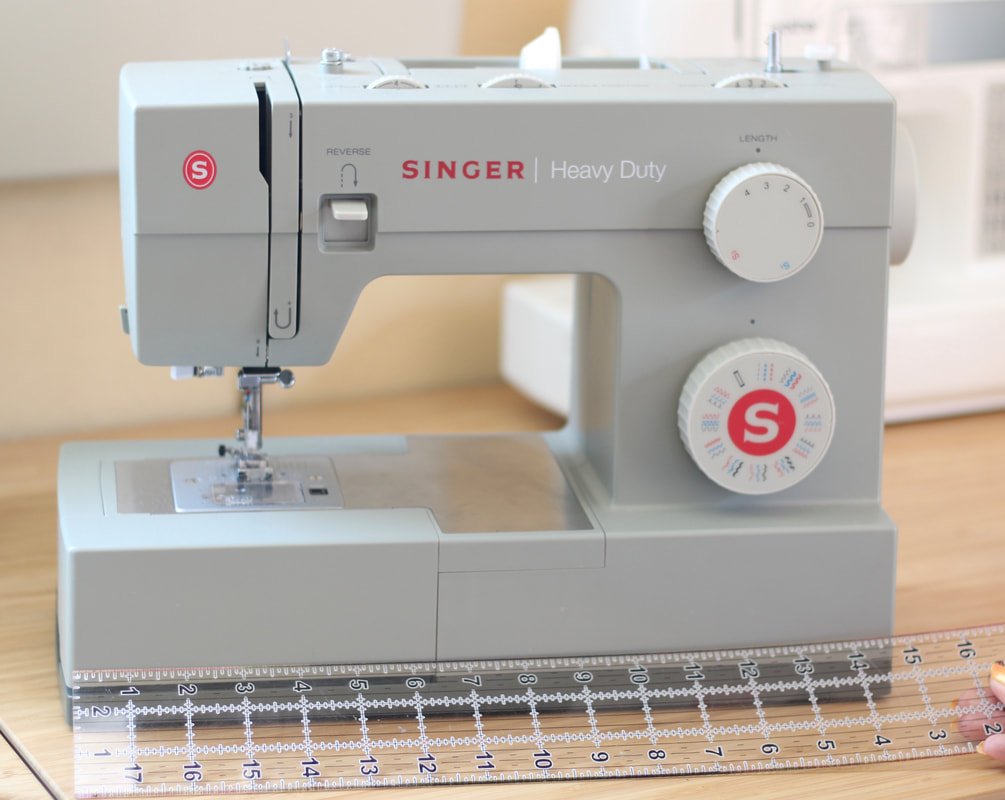
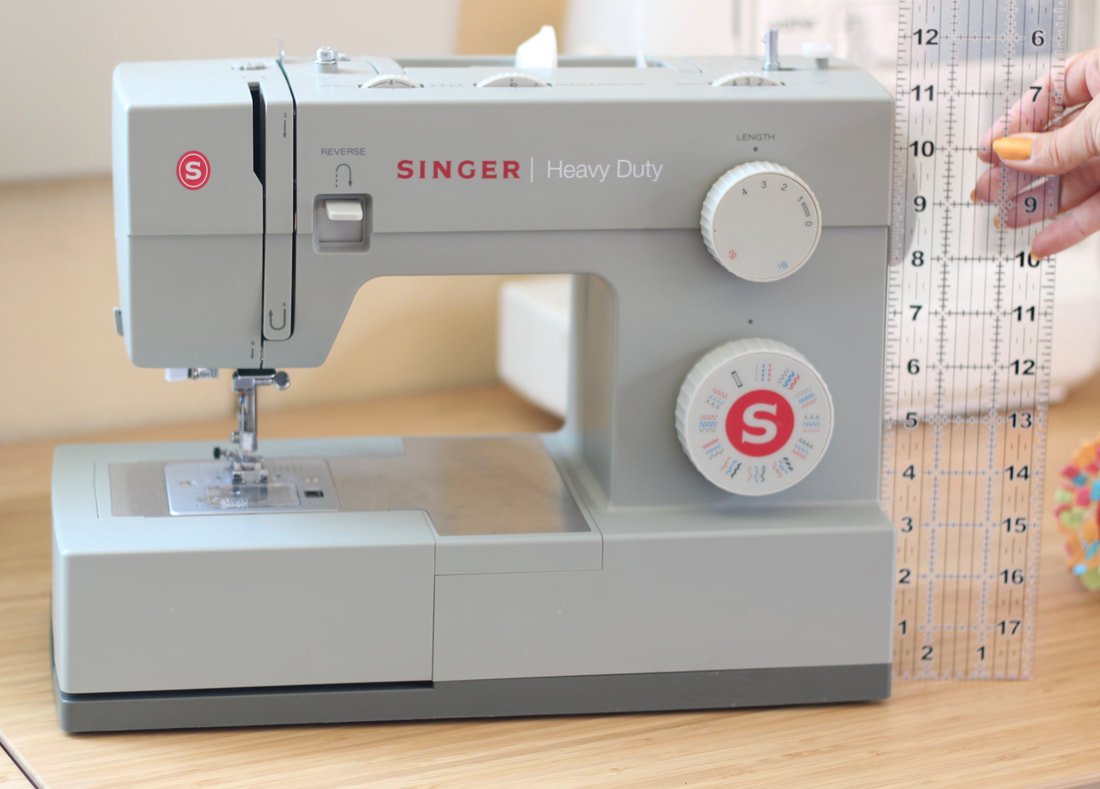
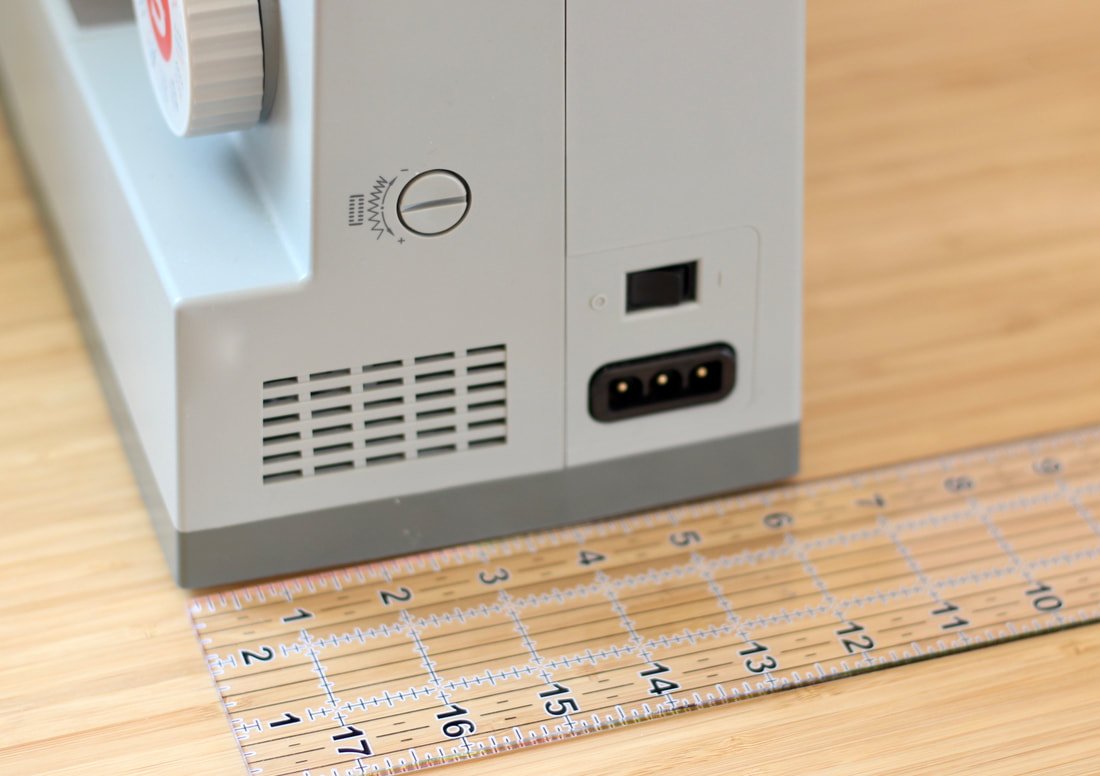
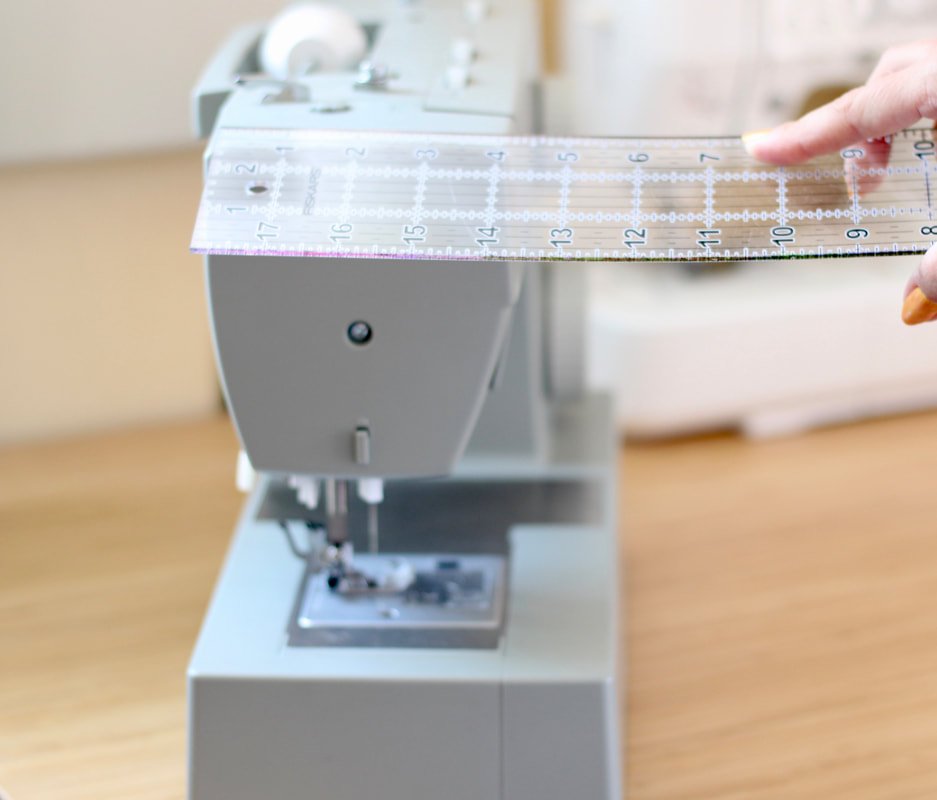
Time for Math, (insert tears here).
Now it's time for some math. I don't do math so, hopefully, I explain this correctly.
You'll be using a 1/2" seam allowance. So, you'll add 1" to each measurement number. (Each seam takes half of that inch.)
My machine is 12" tall by 15" wide. So, I'll add 1" to both of the measurements.
12 + 1 = 13. 15 + 1 = 16. So, my final rectangle will be 13x16. But, we're not done yet.
Next, you'll add 1" extra to your height for the front and back piece. This will allow the front and back to "roll over" the top.
The new measurement will be 14x16. These will for the front and back pieces. Cut 2.
* If your machine is extra deep, you may need to add more than 1" extra to the top height.
The sides will need 1" added to your measurements.
My side measurements are 6.5" by 4". Add 1" to each and they'll be 7.5" by 5". *If your top is narrower than your bottom, use your ruler to connect the top and bottom lines to form a trapezoid (a pyramid with the top cut off). Cut 2 mirrored. There might be a left and right side due to the angles. ;)
I hope I explained this correctly. Math is not my strong suit, so send me a message or leave a comment if you need help. I'll try my best to help, but no promises. ;) LOL Others might offer help in the comment section too.
Bonus tip
Cut out your 4 fabric pieces. You should have 2 sides and 2 front/back pieces.
This is where you can have fun and make it your own. Cut out four different colored fabrics or use different fabrics for the sides. You could piece together different fabrics to make a quilted look, or add some embroidery to the front. The possibilities are endless.
OPTIONAL:
If you do add embroidery or make a quilted one, you might want to line yours.
In this case, sew 2 covers the same size, pin right sides together, and sew along the bottom edge, leaving a 3" gap for turning out. Top stitch the bottom to close the gap and you'll have the embroidery stitches/quilting seams enclosed.
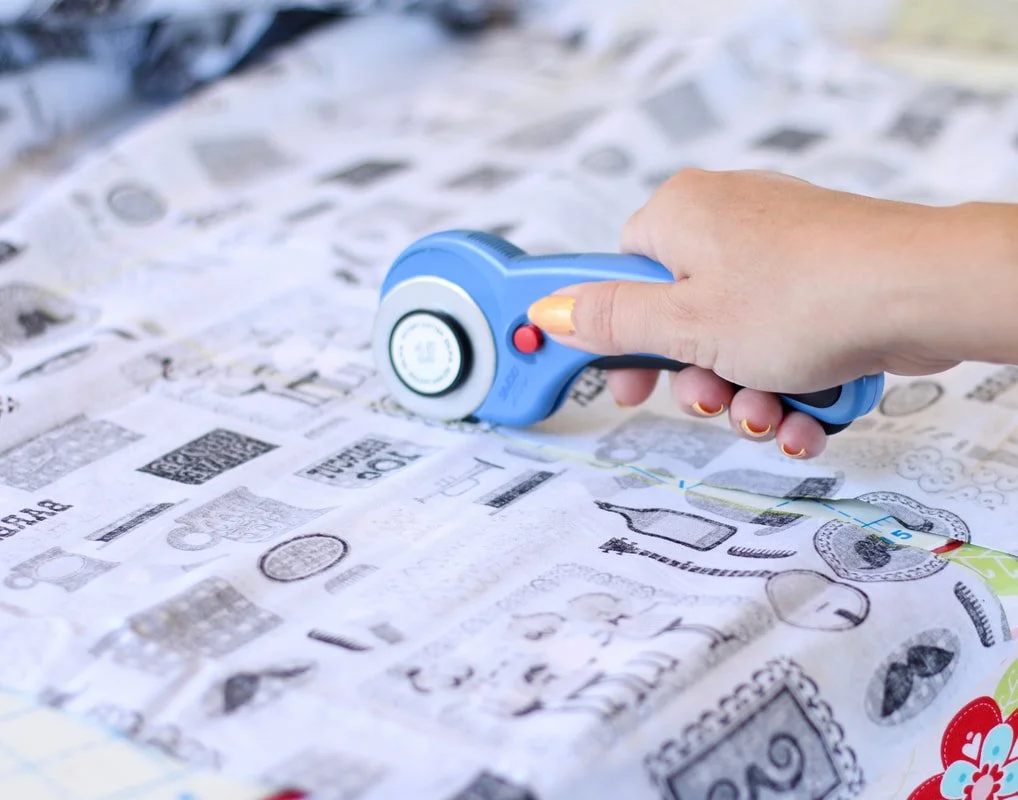
Using the rotary cutter and mat for the rectangles.
Sewing Time
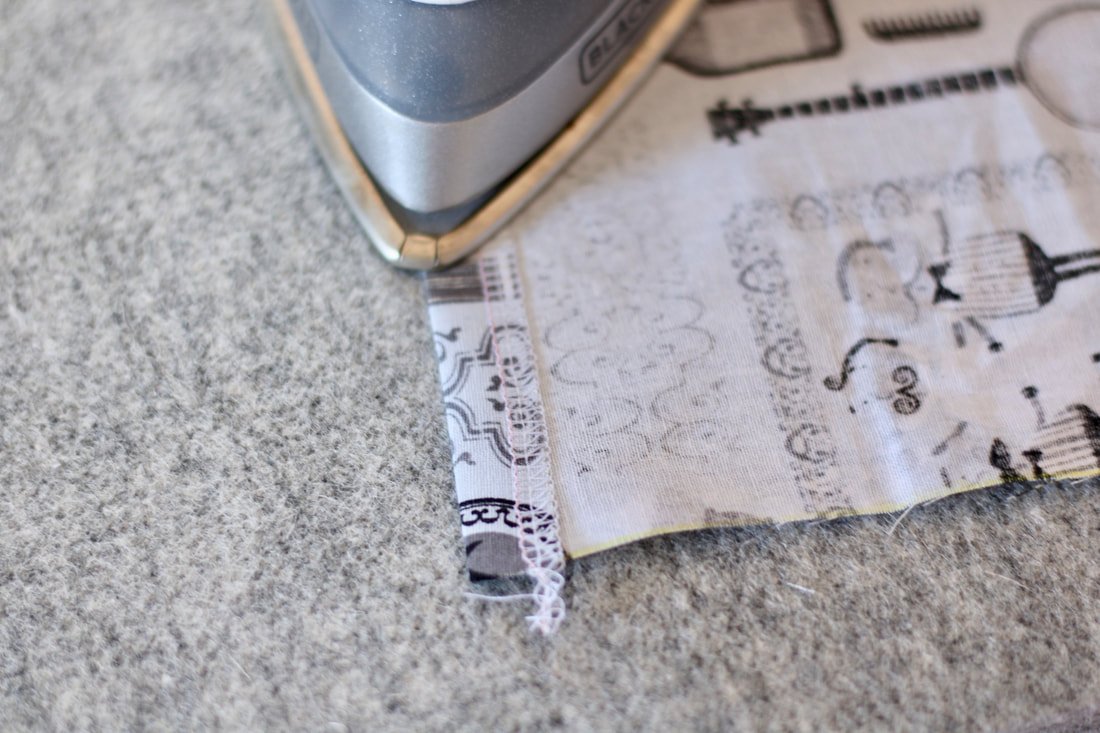
Start by serging or zigzagging along the top edge of the front and back pieces only.
Fold the serged edge down 1/2", then press. Topstitch 1/4" away from the edge. You're going to create a slit opening for your handle. *You can skip this part if you want. But, it's nice to have access to the handle when taking the machine to the repair shop or moving it to another spot in your sewing space.
Place both pieces RST (right sides together) and pin 2-3" from the sides, leaving the middle unpinned. You may need to adjust this measurement according to your machine. Sew from the side edge to the pins, only. Don't forget to backstitch.
The middle will be left open for the handle to pop out of.
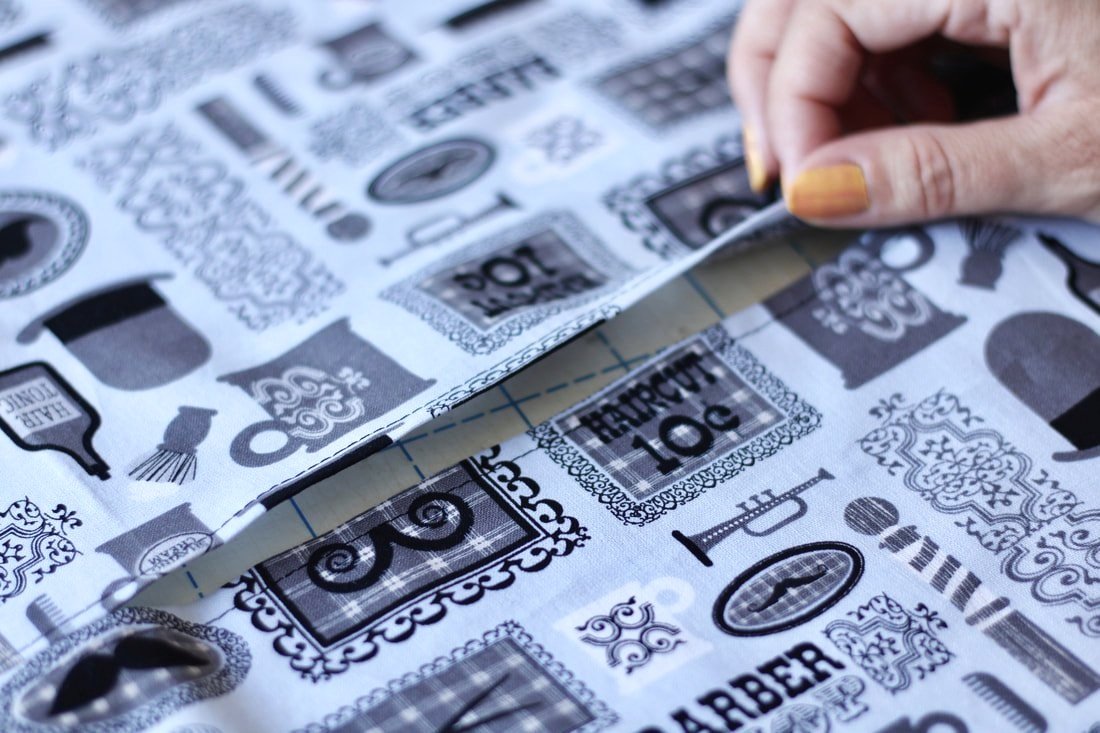
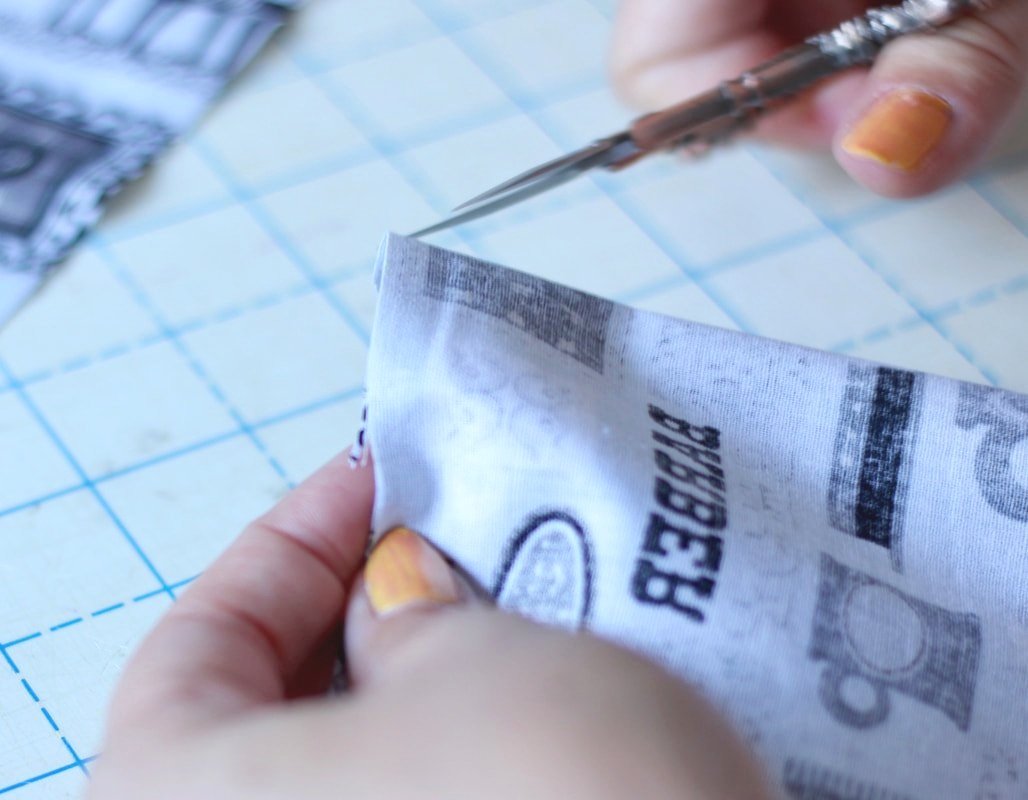
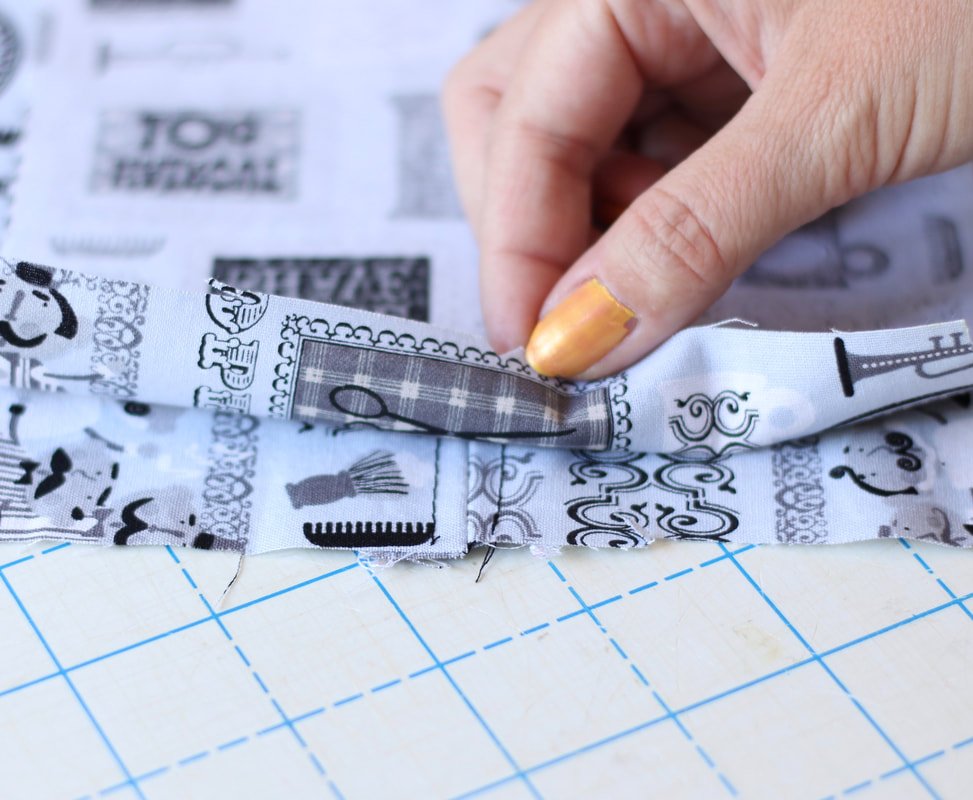
Take a side piece, and fold it in half to find the center top. Make a little snip or mark with a pen. Do the same to the other side piece.
Next, pin the side piece to one front/back Right sides together, by starting at the top. Put a few pins at the top, then go down to the bottom and start pinning upwards from there. This ensures your hem matches up. Next, you'll want to ease the curve of your corners. This may get wonky but, pin as well as you can. It doesn't need to be perfect.
Sew, using a 1/2" seam allowance.
It may be helpful to sew from one end upwards as far as you can go. Then, sew from the other end up and around the curve. Puckers might happen, but this way felt easier to me.
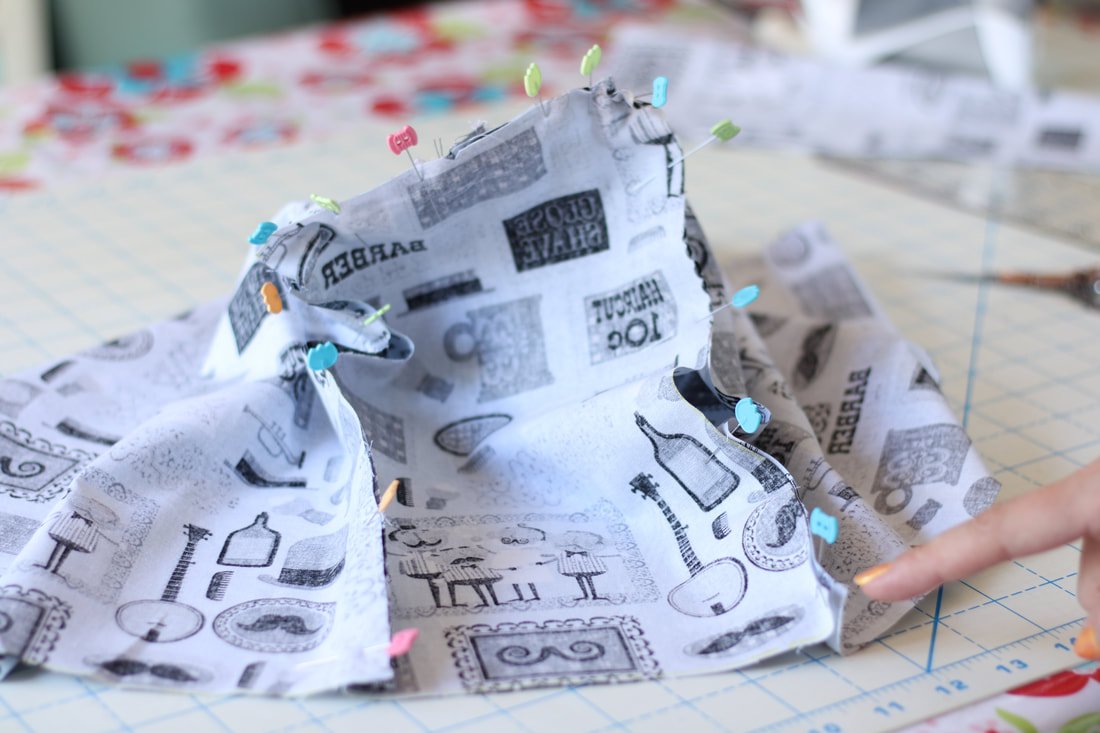
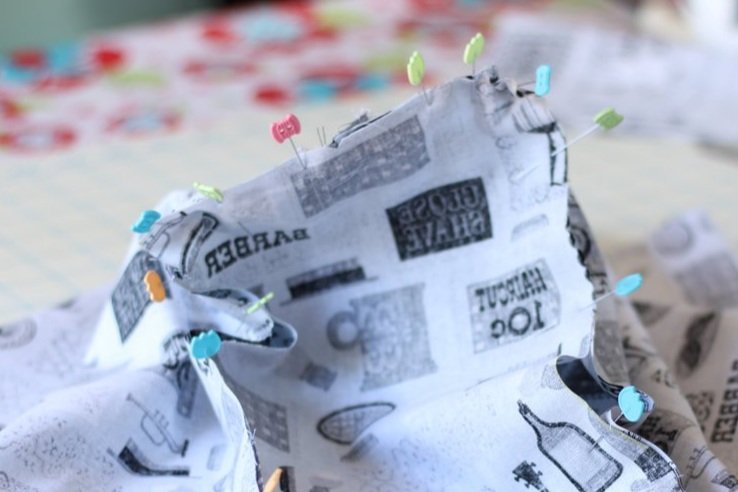
After one side is sewn, try it on the machine. Check the fit. Is it too long? Will the other side fit properly? Does it hang like a baggy bag? If there are any issues, fix them now.
If it's too big, make the seam allowance larger. (Use 3/4"-1")
If it's too small, unpick it and make the seam allowance smaller. (Use 1/4" instead)
If it's too long, trim away the excess or make a deeper hem. (Make a 1" hem)
Luckily the sewing Gods were on my side and I was fortunate for mine to fit perfectly. Yay, math was on my side, for once.

If it fits perfectly, move on to pin and sew the other side piece. Go about it the same way you did with the last side piece. After it's sewn, give the seams a good press. Slip it over your machine and admire it for a few seconds.
You're almost done. The hem is all that's left to do.
Serge or zigzag around the bottom edge. Fold up 1/2" and press. Topstitch and you're done.
If the bottom is too short because math is hard, just add a strip of ribbon or pom pom trim. It'll look like you did it on purpose. ;)

Easiest hem ever, serged edge and folded over once.

My husbands sewing machine will be dust free now.

Hole for the carrying handle.
Ta-da! Now go give your sewing machine some flair and keep it dust-free.
If you make one for your machine, tag me on Instagram @sewingtothemoon. I'd love to see what you create. Now, I am off to sew a new cover for my serger.
Happy sewing,
Annette

Butterick B6453: The Easiest Dress to Sew
Butterick B6453 dress sewing pattern. Beginner-friendly vintage style dress. Sew an easy dress with lots of vintage style.

If you need a break from difficult sewing projects, I encourage you to grab the Butterick 6453 dress pattern. It was easy and fun to sew! The only timely adjustment I needed to make was an FBA. After that was sorted out, it was all downhill.
This dress is fluffy and full, no need for a crinoline underneath. The princess seams are flattering. The straps are perfectly positioned. And, the back zip is a cinch. What are you waiting for? Grab the pattern and let's get started!

Supply List
A whole lotta fabric, this dress is a fabric hog. 4-5 yards is needed
Interfacing
Matching or contrasting thread
Sewing machine and notions
Serger, pinking shears, or a zigzag machine to finish the raw edges
16" or longer zipper
Seam ripper because... sewing
Rings and sliders for adjustable straps
Sewing Notes
This dress is super easy and only has 10 pattern pieces! This was wonderful news because I made the Hooded Princess Coat before this dress and that was a beast. Read the post if you've always wanted to make your own raincoat. Gertie did a wonderful job with the pattern.
I chose double-faced linen. It was a little heavy for this exact dress but, I love it nonetheless. It'll be warm enough to wear in the fall paired with tights and a sweater. I suggest using regular linen, cotton, gingham, etc. Check the pattern envelope for fabric options.
Shorten or lengthen to fit your torso. I shortened the bodice pieces by 1.5" because I have a short torso. I could have gone a little shorter.
Size down 1-2 sizes at least. I sized down but, in the end, the dress was still too big. Four inches on each side, too big! I have to take in everything. Ugh. Honestly, I threw on a little belt and it was fine to wear. But, I plan on taking in the side seams, princess seams, waist, etc. Cue the tears.
Widen the straps if you wear larger bras. Us gals with bigger cup sizes know the wide bra strap game all too well. I made my dress straps 1" wide and they cover my bra straps perfectly.

Trace and cut out all your pattern pieces. Make sure to transfer the markings and notches. I didn't trace the pocket or skirt pieces onto new paper. Sometimes I get lazy and use the actual pattern tissue. Please don't tell the sewing Gods on me.

Staystitch your neckline, don't skip this step.
Sew the darts.
Then, sew the princess seams to the front bodice piece. I find it easiest to clip the front piece a little to help with the curve if needed. Also, it's easier to sew with the flat piece on the bottom. Go slow and adjust as needed; you'll have a pucker-free seam in the first go.

After the princess seams are sewn, match the side seams with the back pieces. Sew from the waist up.
Here's a Tip:
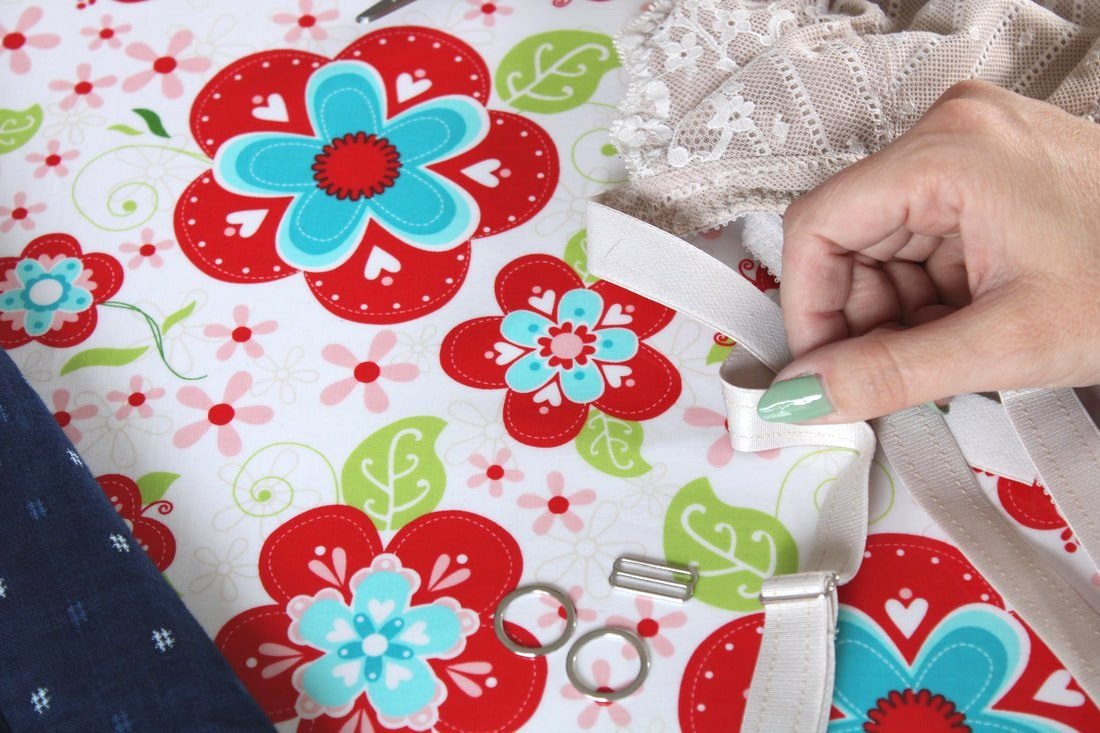
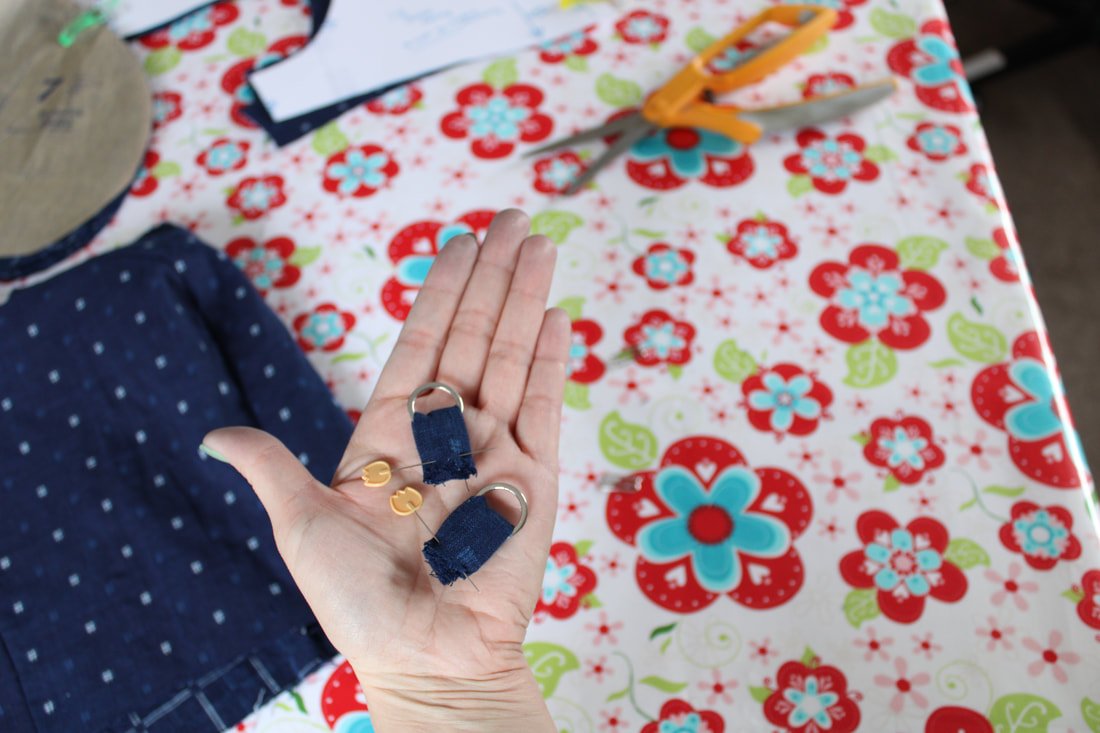
If you have an old bra lying around that no longer fits, cut it up. Use the metal hardware for your dress straps. I save all my metal hardware from old bras.
Notice my blue fingers? I've washed this linen three times and it still makes my skin blue. Ack!
Pin your straps into place and try the bodice on before stitching the straps on. I waited until the dress was fully sewn before I did this. The linen weighs a ton and I knew the skirt would pull it down. Yay, gravity! My fabric was too thick to make adjustable straps so I ended up sewing the strap ends onto the bodice. But, I love adjustable straps, even though the dress will only get worn by me. :)
Here's a bra hack post if you're interested in DIYing your bra.
Gather and sew the skirt's front and back pieces together. I didn't take any photos of this because it's pretty easy.

Zippity doo-dah! This pattern calls for a lapped zipper. I'm still on the fence about whether I like doing lapped zippers or not.
Press the right side under 1/2" and press the left (lapped) side 5/8" under.
Pin the right side and sew down from the top, using a zipper foot. Go slow to avoid any mother puckers. ;)

Pin the left side starting at the waistband. You want that area to match up. Then, pin upwards and downwards making sure the raw edge will be hidden after it’s sewn. Go slowly starting from the top and sew down. Swivel and sew a few stitches across to seal the end of the zipper.

Ta-da! Your zipper is complete. A white one was used because that's all I had on hand. I was doing a "no buy" sewing challenge. I normally would have used a navy blue one but, the white still matches. Sorta. Ha!
I eventually lost the challenge after a fabric cutting mistake though. Insert eye roll.

Butterick 6453
All that's left to do is sew the hem. Choose an easy hem, turn up the raw edge 2", and then turn it up again.
So, that's it. This is the easiest dress pattern I've ever come across. Are you going to make one? Do you know of an even easier vintage-style dress pattern? Heck, my caftan was more involved than this was. I assumed a caftan would be easy. Nay-nay!
Thanks for hanging out today. If you are looking for a few other pattern reviews, click here for the Ginger Jeans review. Or, here for a Cheongsam sew-a-long.
Happy sewing!
Annette