Pattern Reviews, Sewing Hacks, Tips & Free Patterns
Sewing Blog Besties

Easy Vintage Hair Scarf Sewing Pattern
Sew a quick and easy 1950s rockabilly hair scarf. Vintage style pinup scarf to elevate your style. Beginner-friendly sewing pattern to wear at your next car show.

Do you love the vintage pinup look but don't know where to start? Grab some pedal pushers, a black fitted top, and this sewing pattern! You're about to get your vintage style on.
This pattern is the straw that broke the camel's back- in a good way.
I have quite a few patterns I want to share, but I lack the technical know-how to get them to you. This is the pattern that made me search the interwebs, far and wide on how to create a PDF. And, here it is! Finally, a downloadable pattern that was made just for you!
This wide hair scarf is made for good hair days, bad hair days, and for curly-haired gals, too! I see you (I am a curly girl). Toss your hair up in a messy bun, and you'll be cute as a button when you wear this retro-inspired hair-scarf. This isn't a lifesaver, but it's definitely a hair saver. Ha!
If this thicker style headband isn't your cup of tea, I have a post on a narrower one, over here. It can be worn with your hair up or down. You can tie it around your neck, or wrist, or use it as a purse accent when tied in a bow. The size is completely customizable too, lengthen or shorten it to your desired size
Okay, let’s get started on the Wide Hair Scarf Pattern.
*UPDATE: I have given 1500+ free patterns, and to help pay for my website, I’ve added the pattern to my Etsy shop. It’s the same cost as a coffee. If you still want to sew it and can’t afford a coffee, send me an email. ;) I’m not heartless.
What You'll Need:
1/2 yard of cotton fabric
Sewing machine
Matching or contrasting thread
Chopstick or other turning tool
A smile, because you're making something cute :)
Let's get sewing!
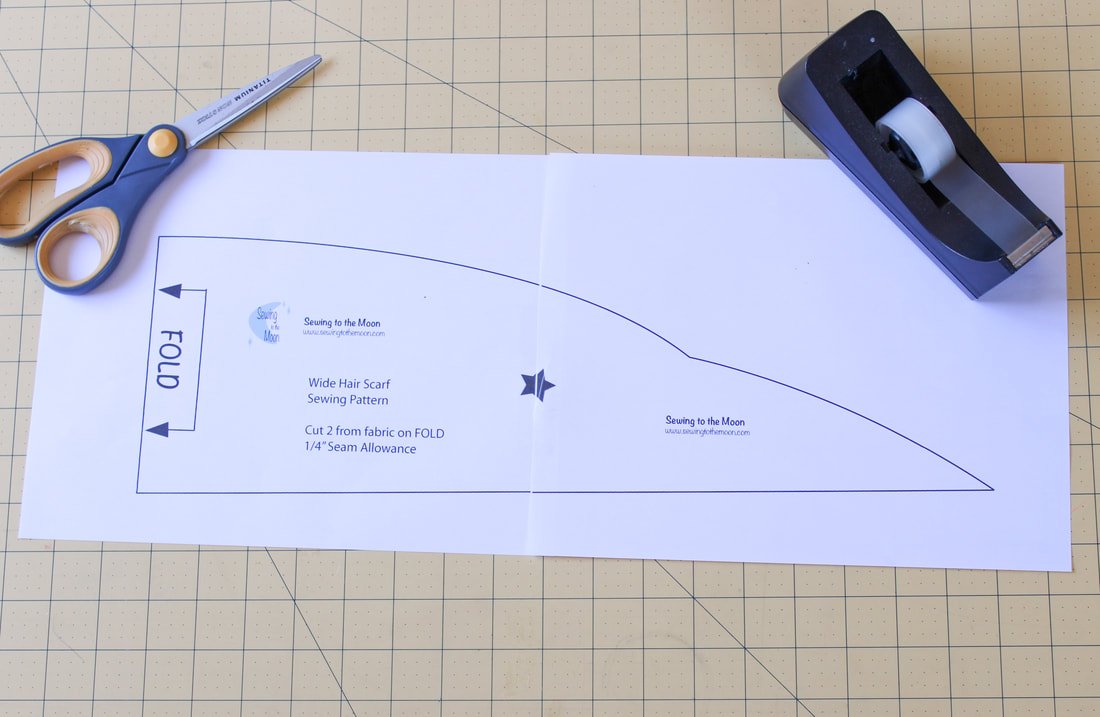
Download the PDF pattern, print it out (*do not scale or resize), and tape it together.
This will now be your pattern piece. Make sure to match up the star points.
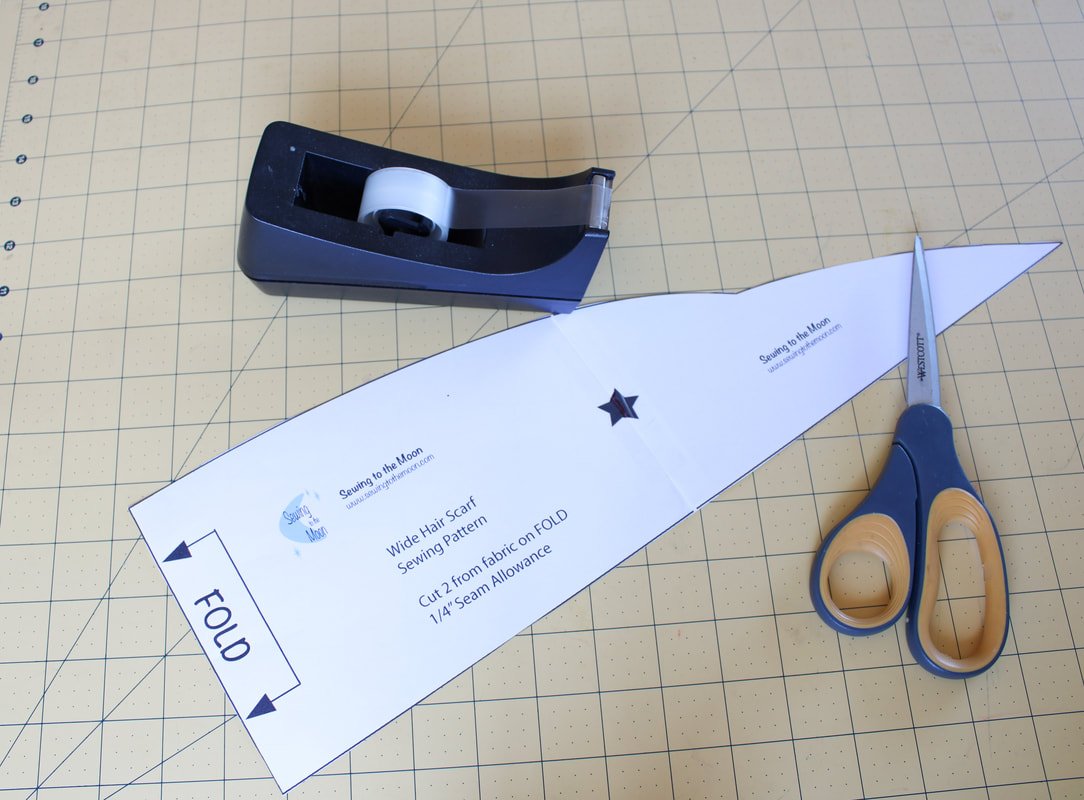
Cut out the pattern along the lines and set it aside. It will resemble a plague mask. Haha ;)
*The pattern will print out on 2 horizontal pages. They are made to overlap a bit to create the pattern. Match the star and you'll be good to go. No scaling or anything is necessary. If you'd like to trim off a thin sliver of paper to match the star up perfectly, you can. That's what I did.
Like I said above, I’m brand new to PDF pattern making.
PDF Stuff
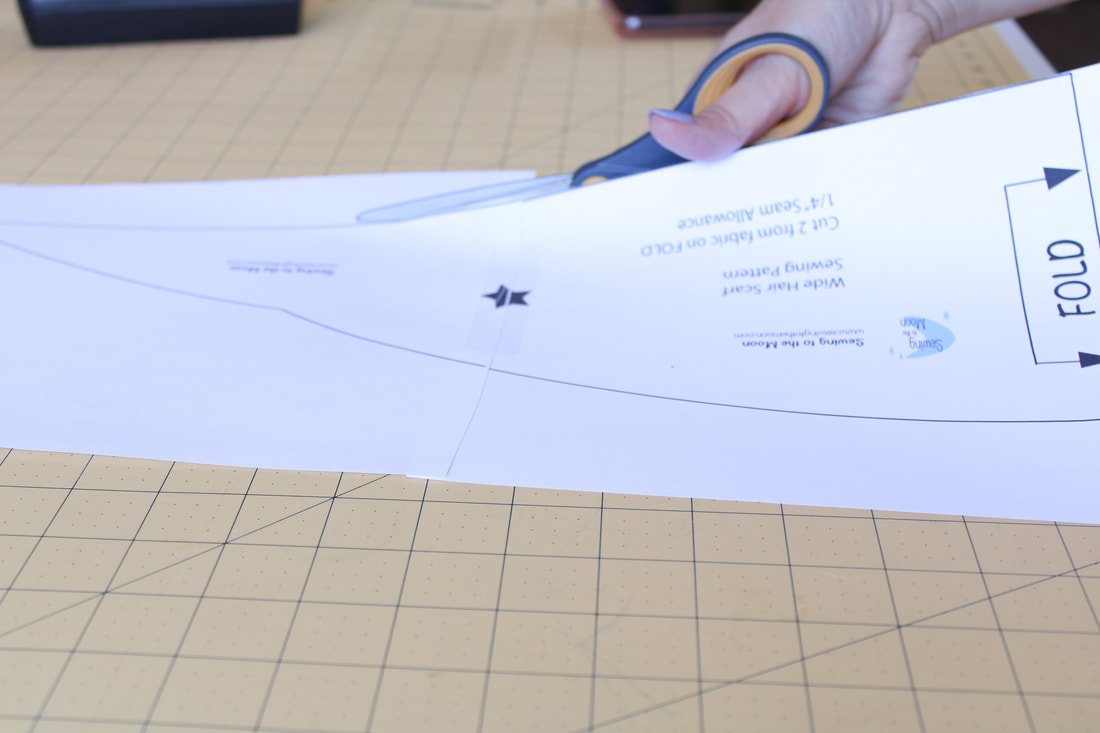
You might have to trim a thin slice of paper for the star to fit perfectly.
Cut along the line.
Once it’s cut, it’ll resemble a plague mask.

Fabric Stuff
Next, wash, dry, and iron your fabric if you haven't already. This is totally optional.
What fabric(s) did you choose? Did you go with a solid color or a fun novelty print?
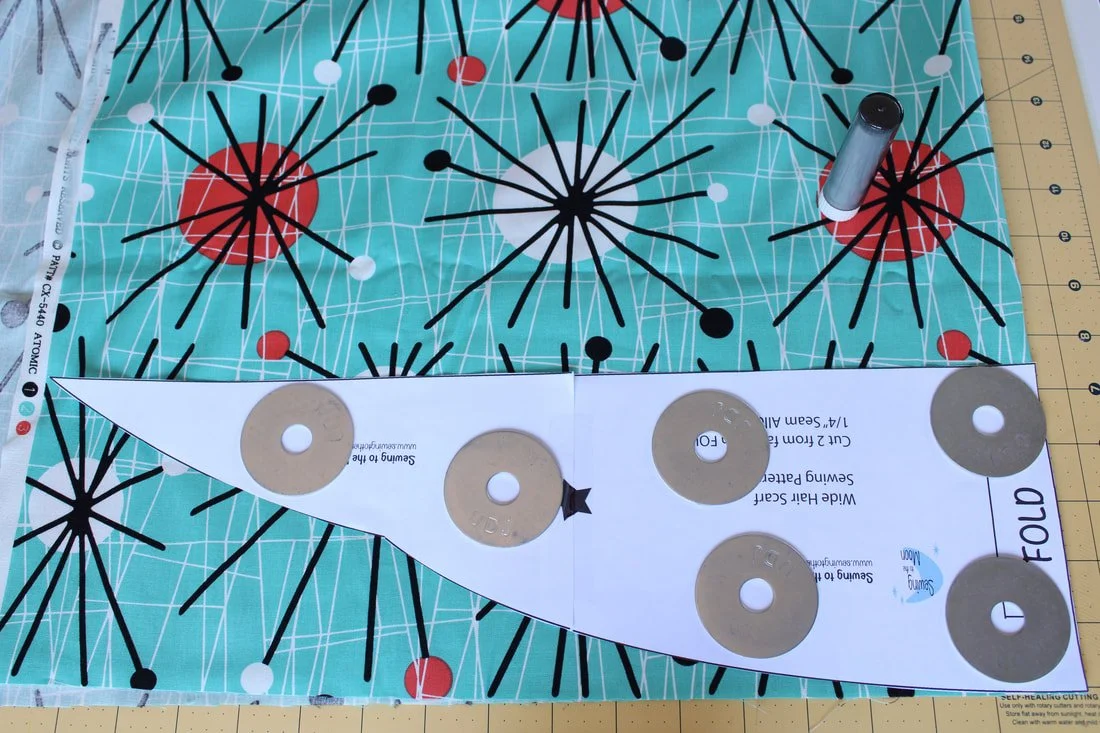
Use pattern weights to hold the pattern down. Trace around, then cut it out.
Grab your scarf pattern piece and lay it on top of your folded fabric. Line up the folded edge of the fabric with the pattern side that says FOLD. You can do this with RST or WST; it won't make a difference for this pattern.
Use pattern weights to hold the piece down while you trace out the shape. Use an air-soluble pen or a chalk pen to trace. Cut along the lines.
Repeat the steps for the other side. You are tracing an outer and inner piece of fabric for your hair scarf. Cut.
You should now have 2 pieces of fabric cut out.
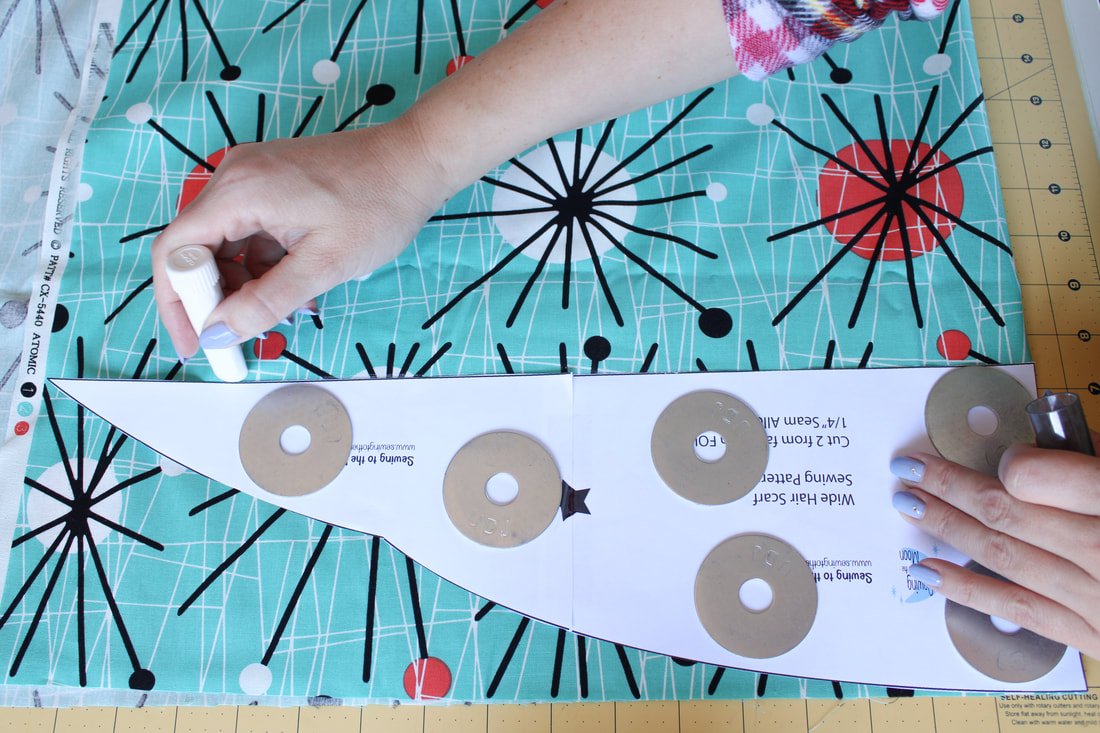
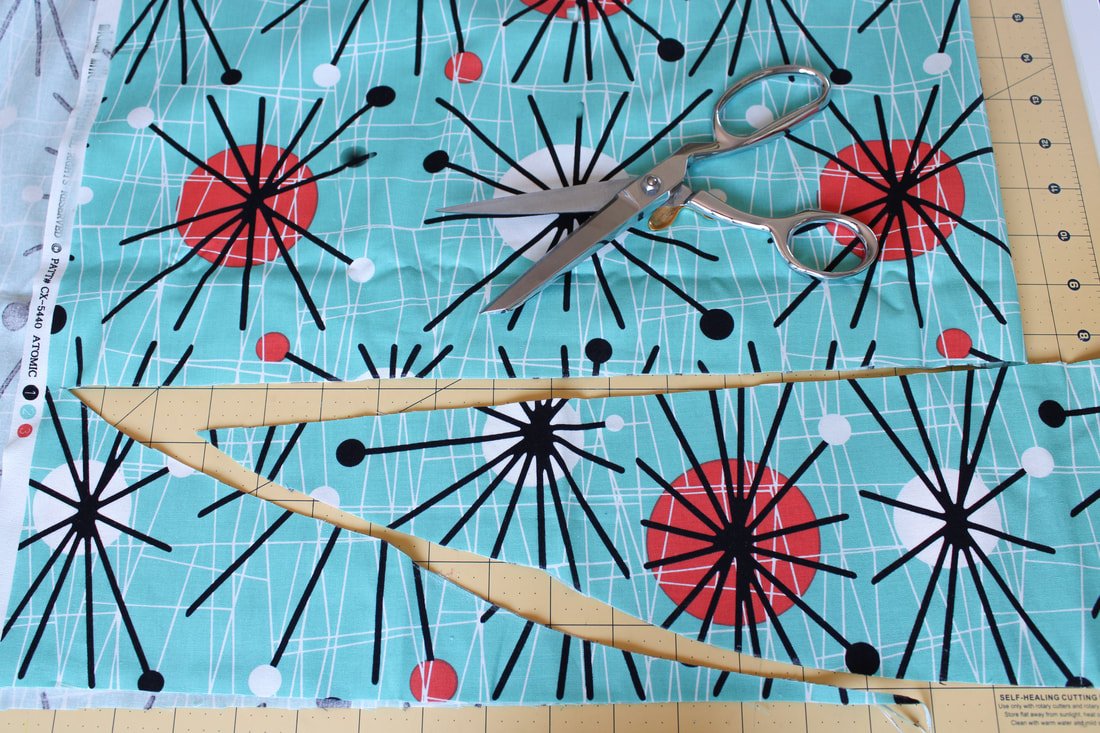
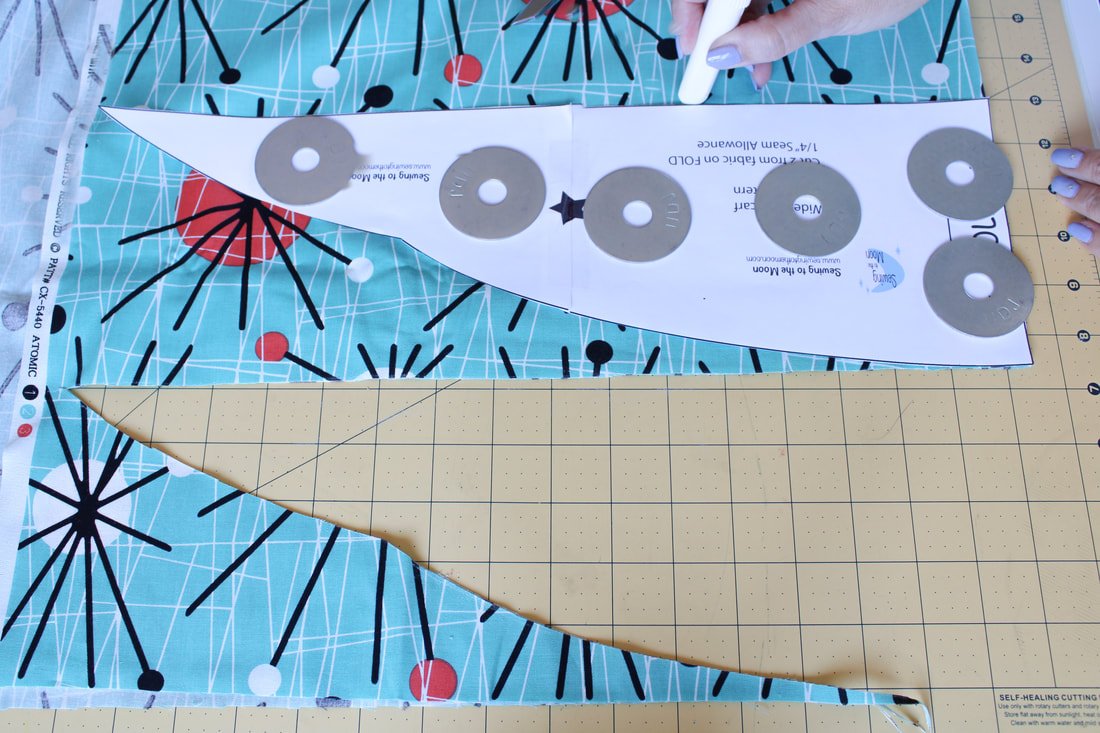

Weird plague mask fabric pieces.
Now take the pieces and place them right sides together. Use pins or clips to hold them together.
Mark a 3" gap where the pattern piece indicates. This area will not be sewn so, you can turn the scarf out afterward.
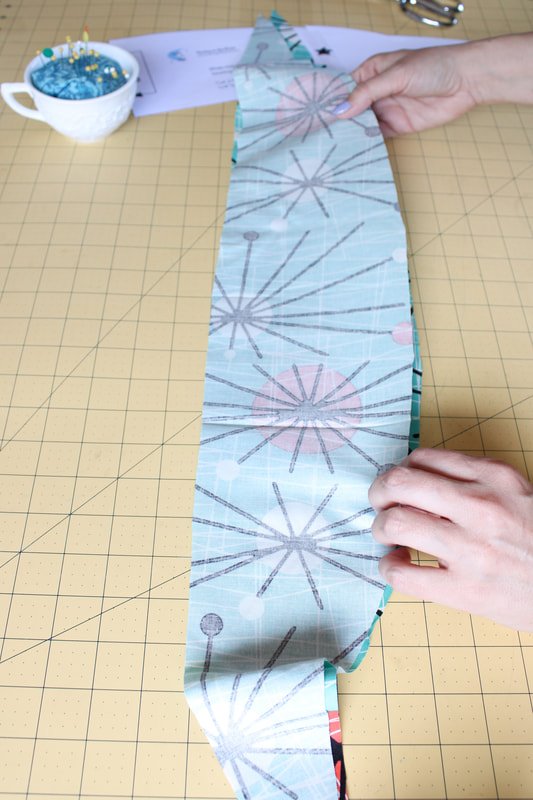
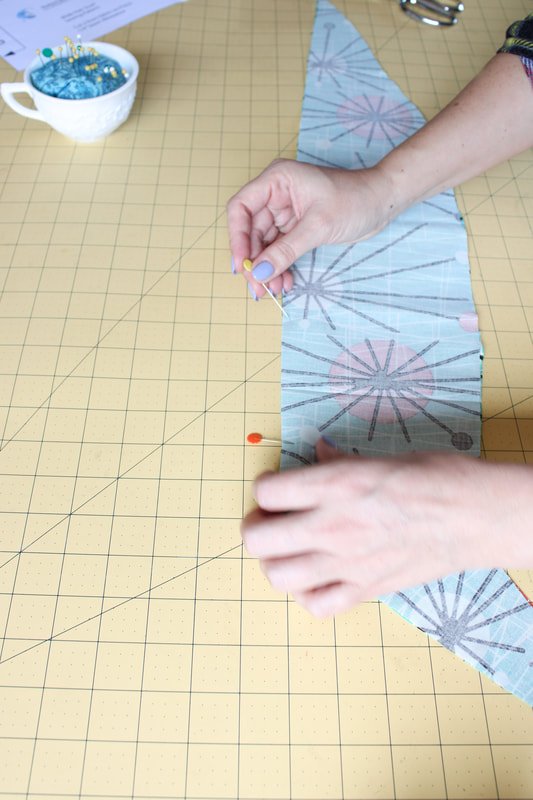
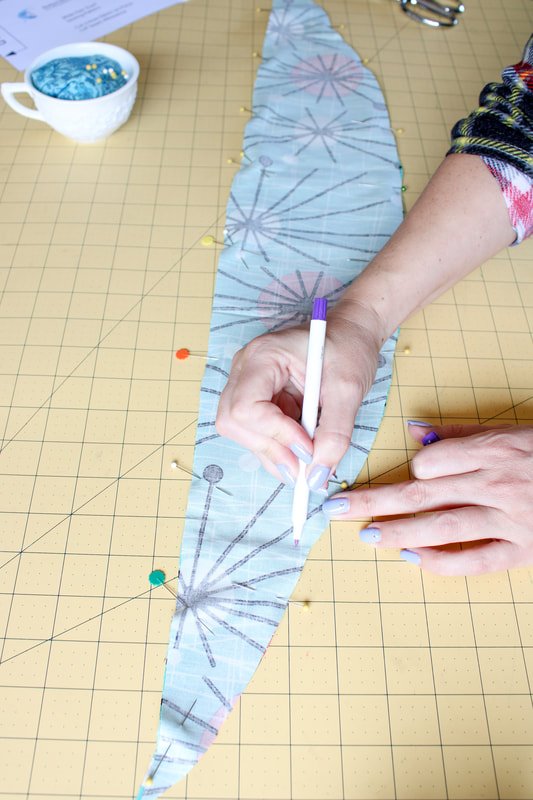
I took an air soluble pen to mark the pivot point on the scarf. This isn't necessary, but it helped. The pivot point is where the scarf gets narrower.
Time to sew! Use a 2.5 or 3mm stitch length.
Seam allowance is 1/4"
Go slow, this gets tricky at the pointy ends
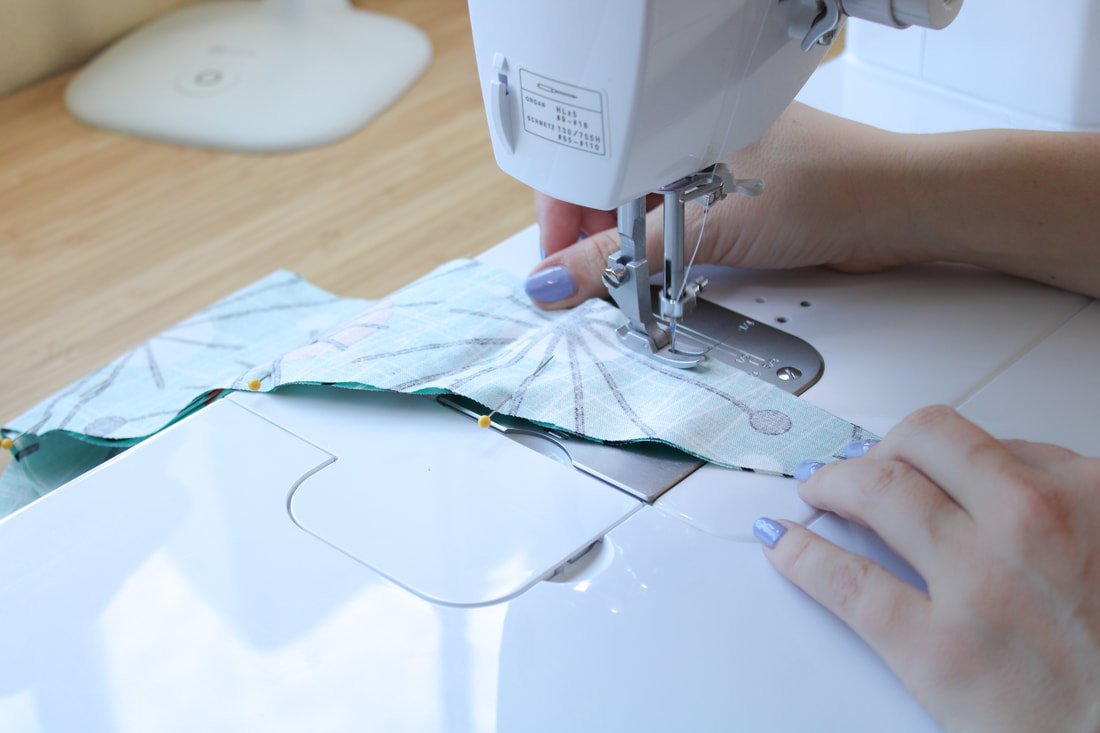
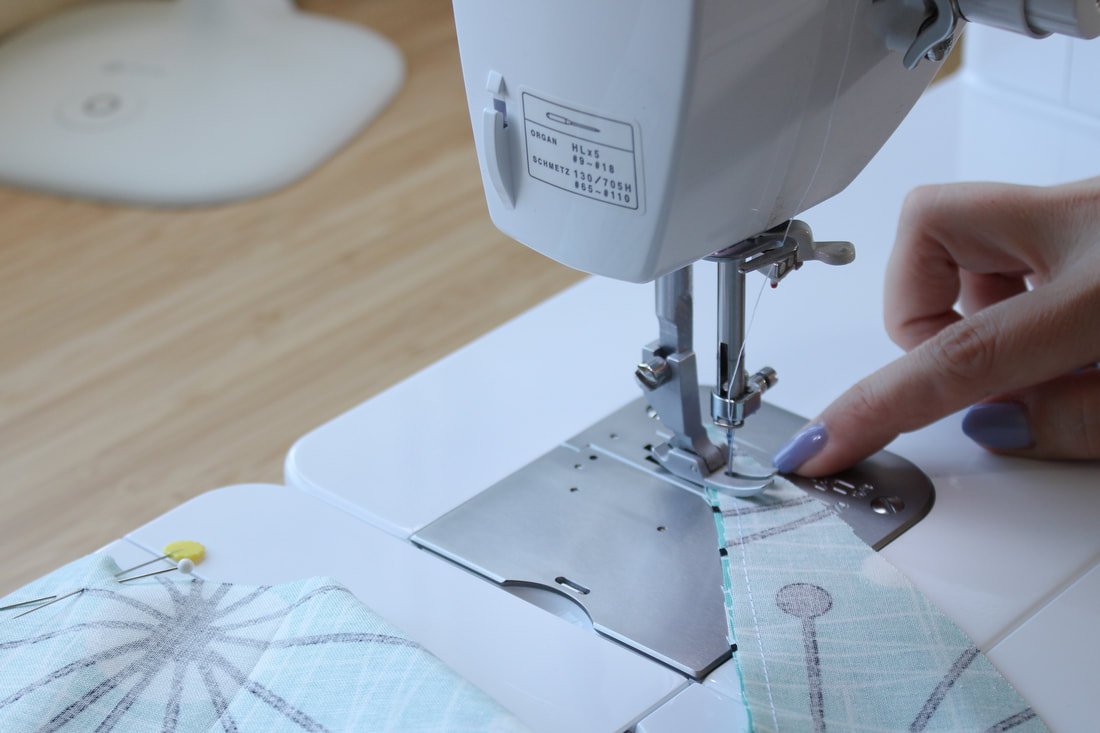
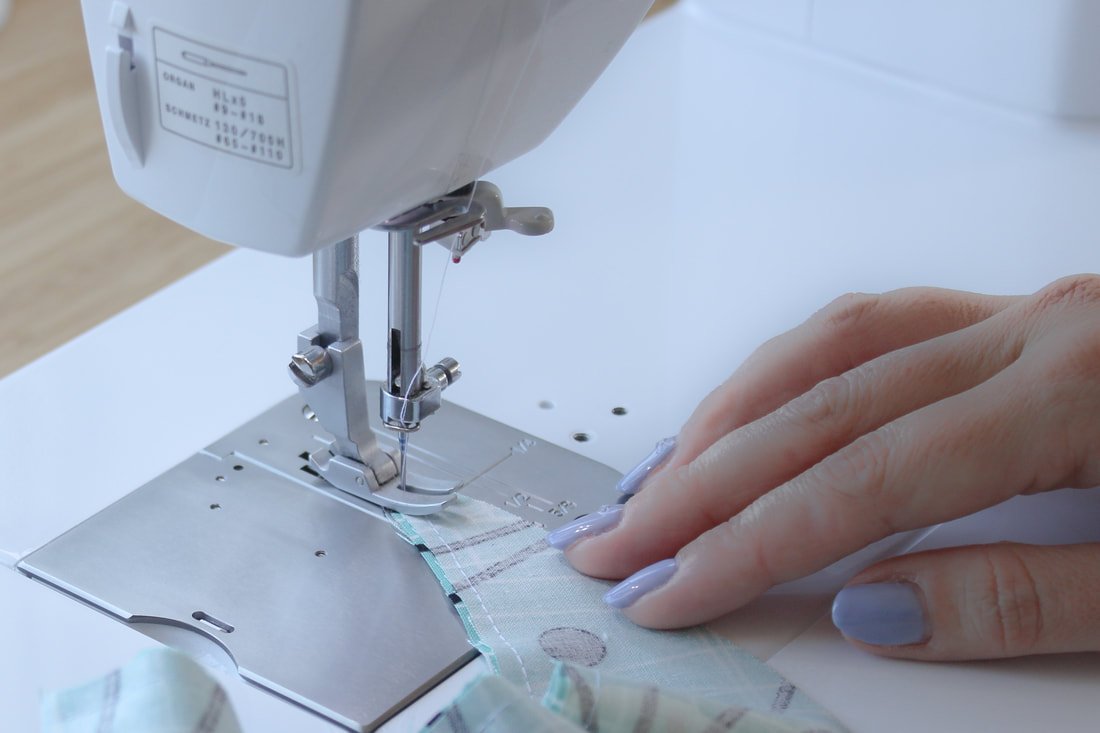
When you get to the pointy corners, leave the needle down, lift the pressure foot, and turn your fabric. If it's not quite at 1/4" mark, go back and hand crank a stitch or two. Continue sewing all the way around until you come to the 3-inch gap. Backstitch.
Clip your corners, carefully!

Time to turn the scarf out. Grab a chopstick or any other turning tool.
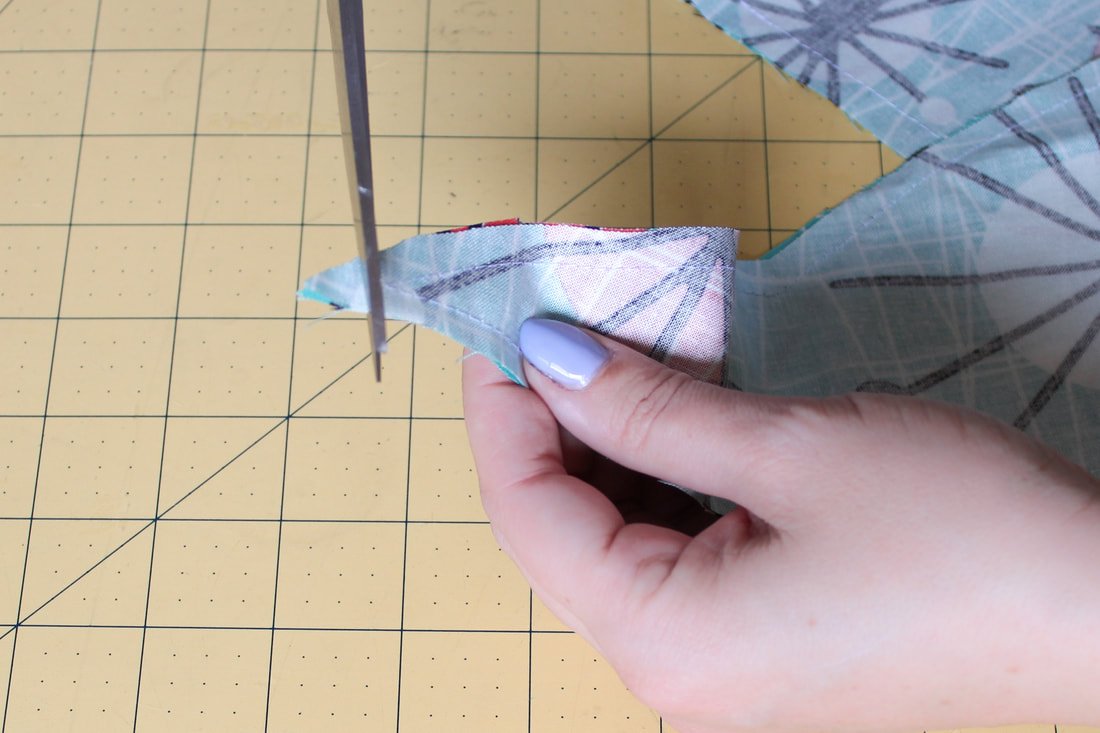
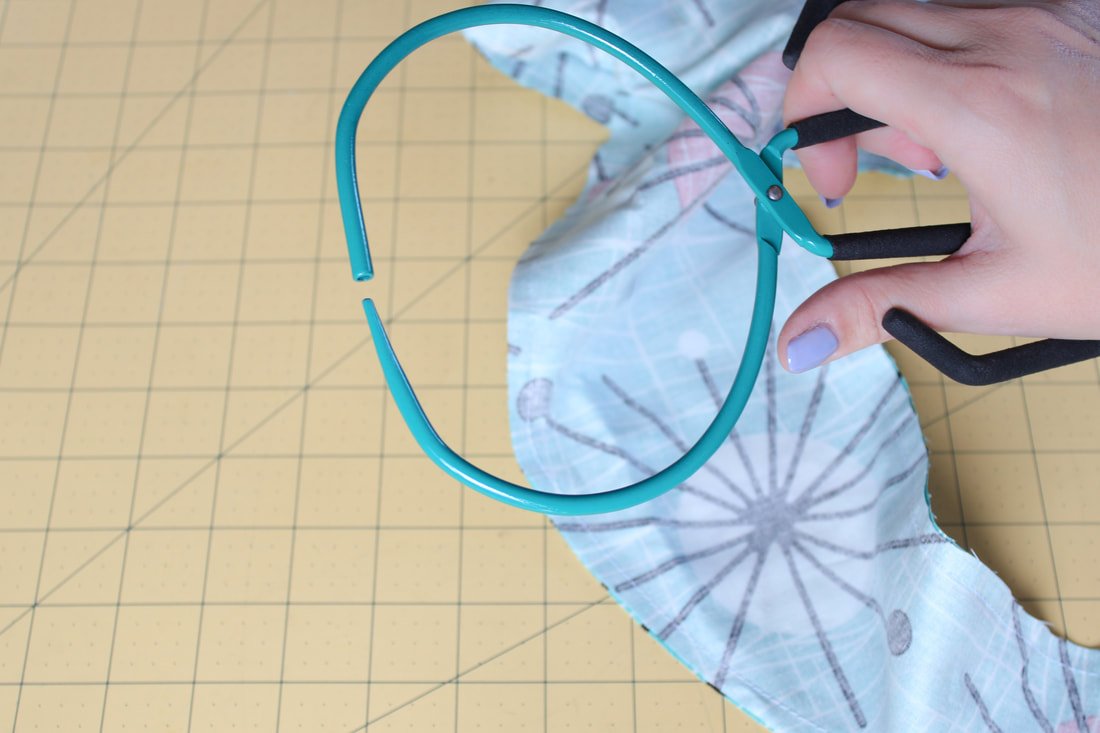
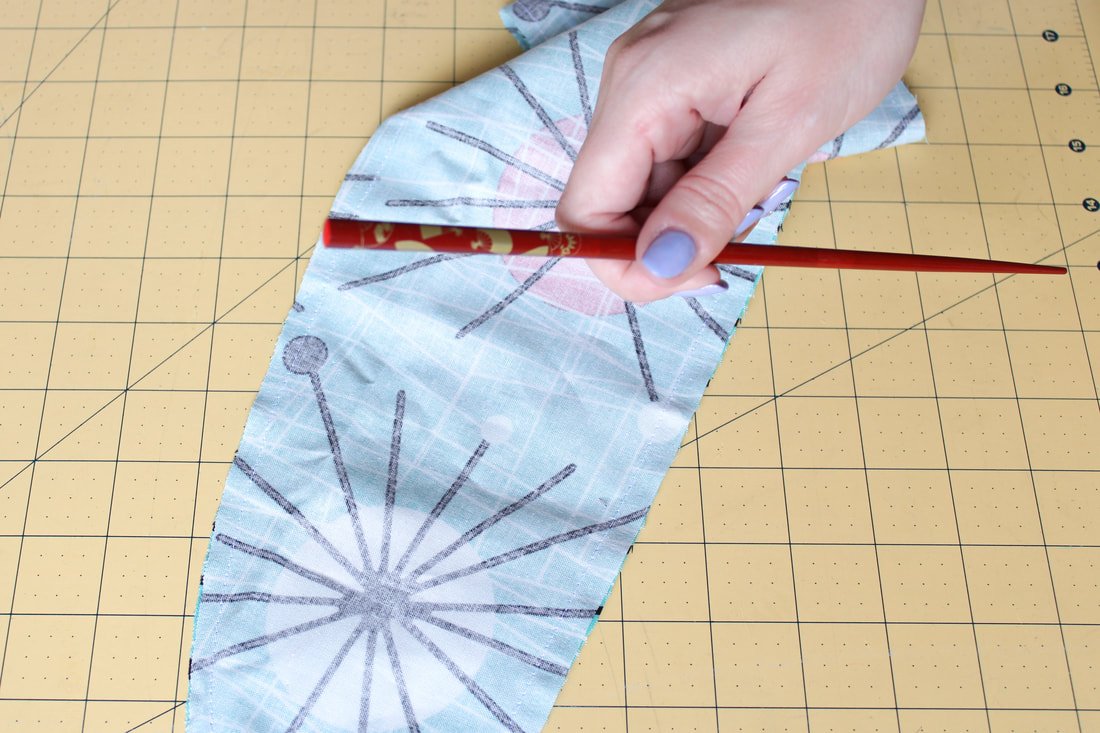
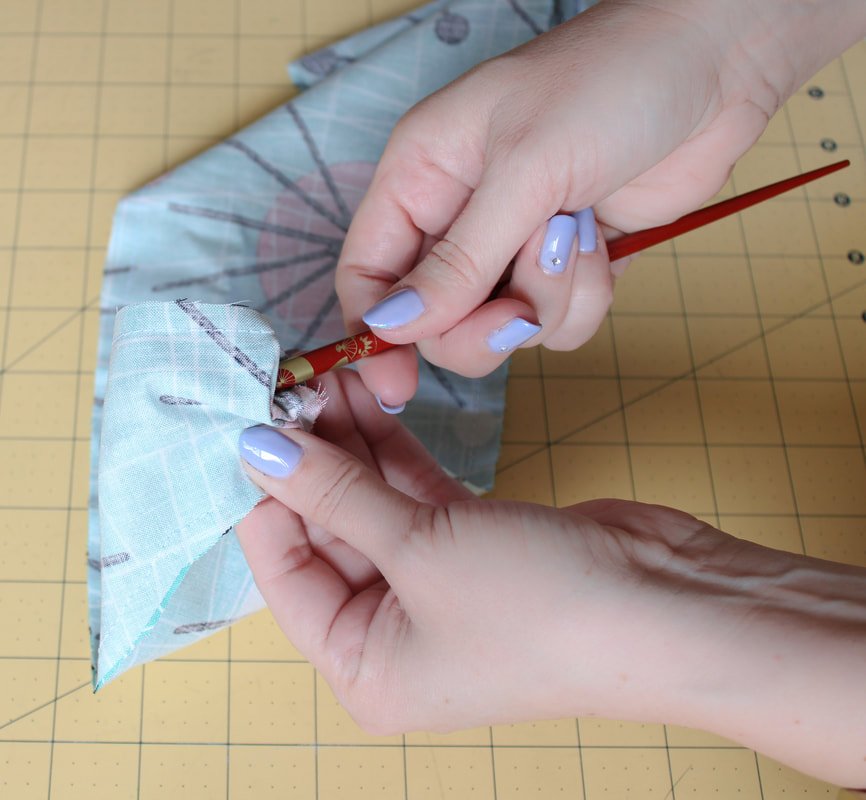
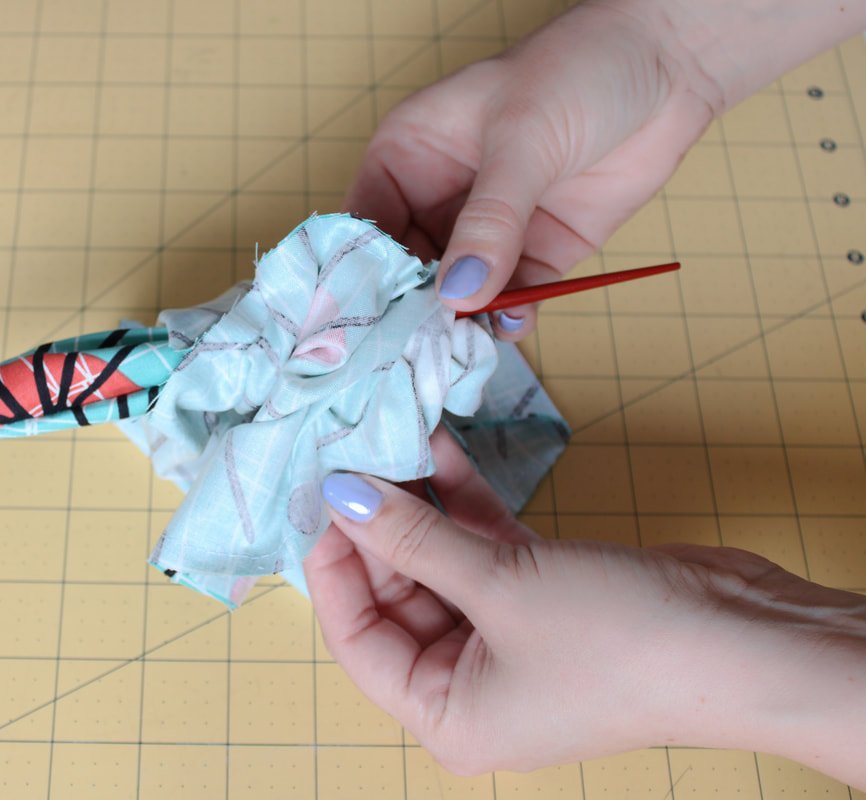
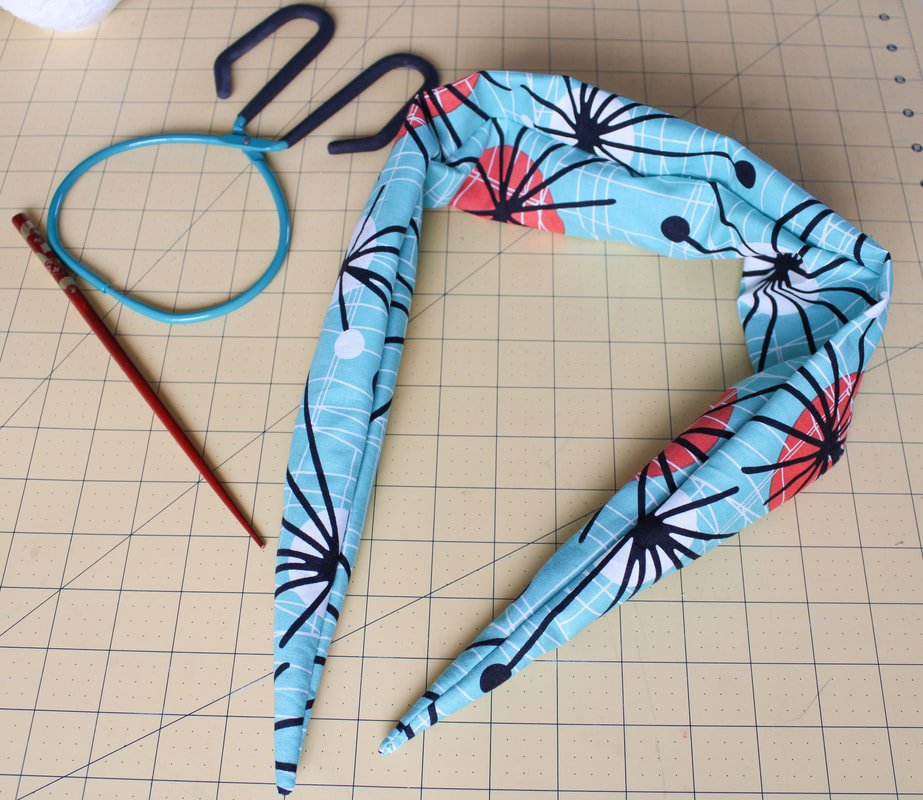
If you're using a chopstick or pencil, poke the blunt end into the pointed fabric corner. Slowly pull the fabric down around the chopstick until you can easily push it through to the gap opening. Repeat for the other side.
It should look like the last photo above, once it's turned out! Huzzah! The rest is downhill from here.
Iron time!
Roll the seam out. Using your fingernail helps this process. You can also take the chopstick and slide it under the seams while pushing the seam out and open as well. It'll take some finagling, but it's well worth it in the end. This is the hardest part of making this 1950s vintage-style hair scarf.
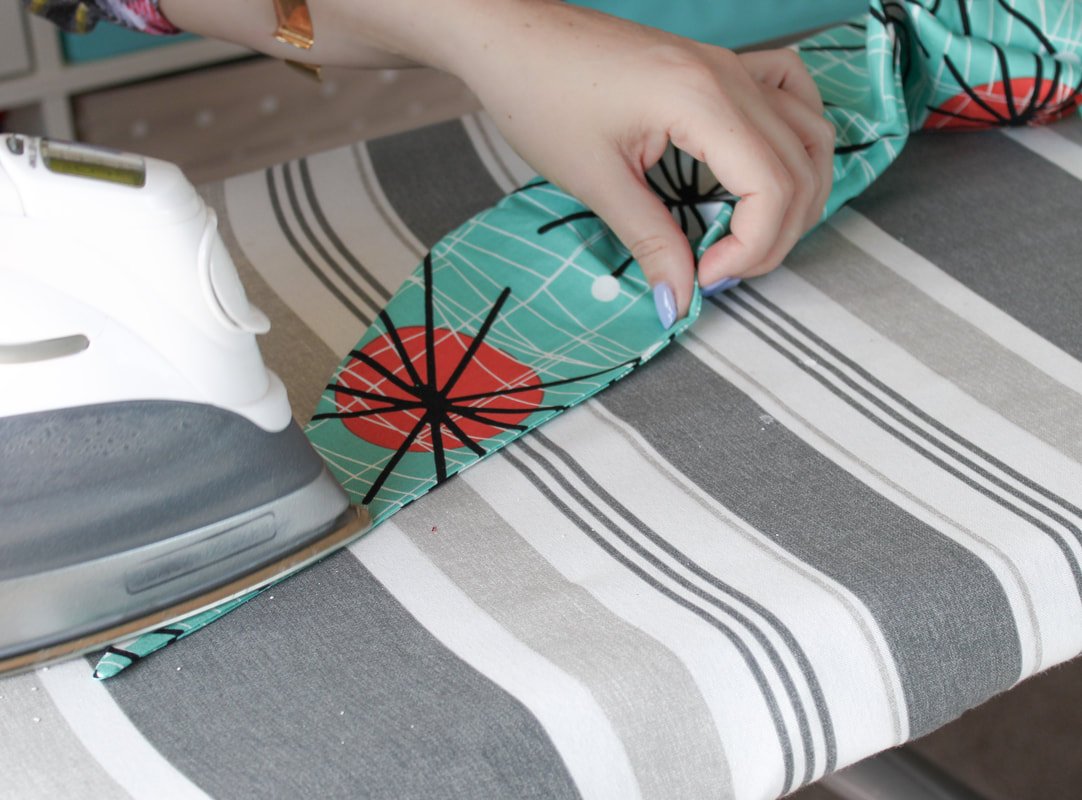
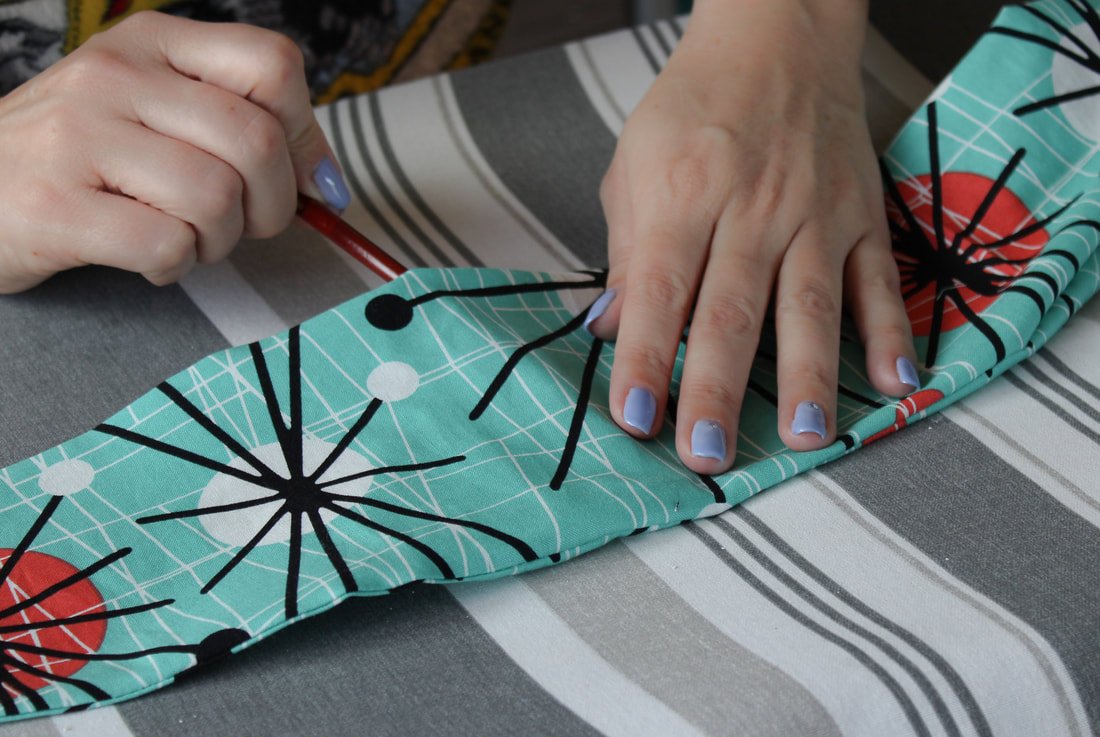
Back to the sewing machine to topstitch the gap closed.
Topstitch 1/8" from the edge, backstitching at the beginning and end. If you'd like to topstitch around the whole hairscarf, you can.
Clip any loose threads.
Press the scarf again. And, you're done!

Topstitch the opening closed.

Clip those little threads.

Ta-da! It’s finished and ready to be worn.
To wear the scarf:
Place the wide part at the back of your head just covering your hairline. The curved side will frame your face.
Pull the pointy ends upwards, covering the tops of your ears, and tie in a knot on top of your head.
This is perfect for messy hair days and curly-haired girls too.
To create a cute car show look, pin large curls on top of your head, tie this scarf up, and wear it with a pretty dress.
If you're going for a 40s style, you can pair the scarf with wide-legged trousers and a boxy button-up top. This hair scarf is for anyone looking for a quick and easy retro hairstyle!
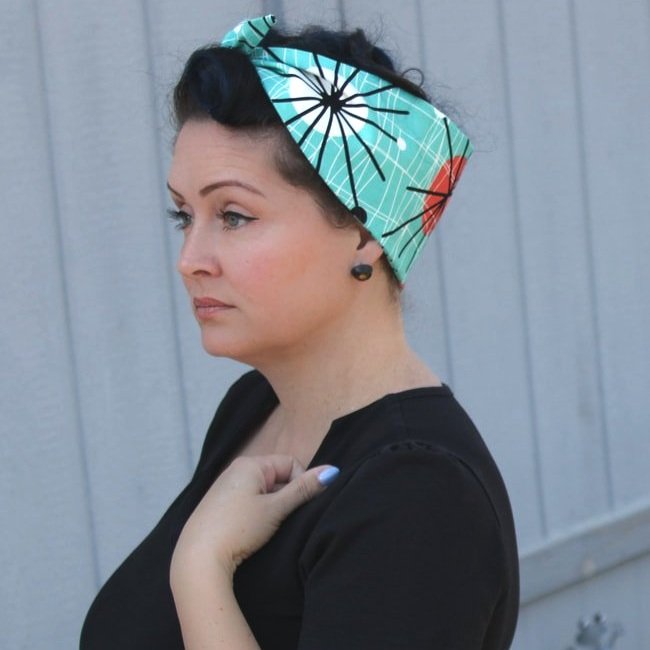
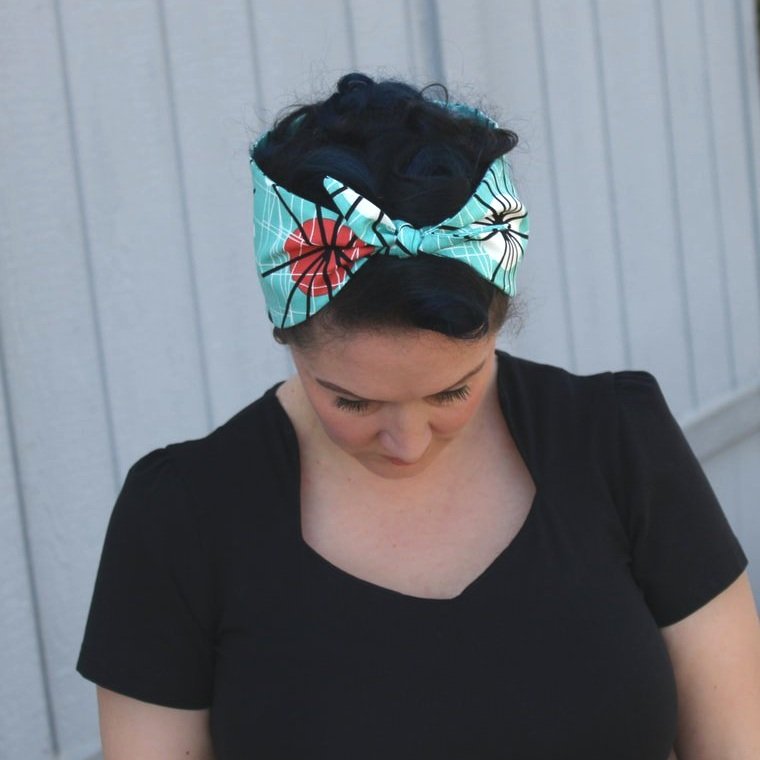
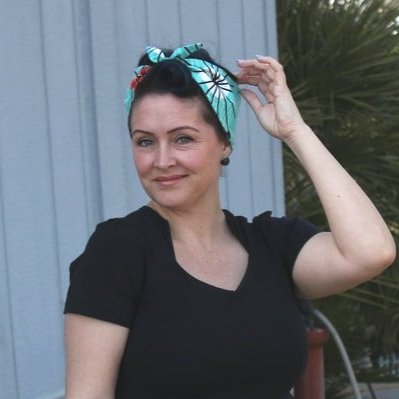
So, what do you think of the pattern? It was easy, right? Do you plan on making as many as you can for the summer? I wear my hair up most summer days and this thicker style is what I've been yearning for! Easy & cute hair... yes, please!!!
If you make one or ten, please tag me on Instagram. I want to see them aallll! Use the hashtag #sewingtothemoonScarf
Let me know in the comments below if you've made this or plan to. I seriously can't tell you how overly excited this whole process made me. :D
Thanks for all the love and support on social media and on here! Sewing people are the best people.
Happy sewing,
Annette


Sewing the Ginger Jeans
Sew your own high waisted pair of jeans. The Ginger jeans sewing pattern by Closet Core is great. It’s beginner-friendly as well.

Ginger Jeans! I made a pair and love them. These were fun to sew and I learned a few things along the way.
Living in comfy clothes seems to be the new norm. Cozy pants especially. Fleece-lined leggings, flowy lounge pants, soft cotton harem pants, and PJ's of course. Gimme all the couch surfing pants.
Jeans don't really fit into the cozy pants category but, I'm going to talk about them anyway. Jeans are something I rarely reach for when I get dressed in the morning (afternoon?). If I do wear jeans, I reach for my Calvin Klein high-waisted skinny jeans. They fit my body like a leather glove. So, when my friend told me about the January Jeans sew-along, I jumped on board!

The Jeans Fitting Journey
This post is a little different than my usual pattern posts. Hundreds, if not more, Ginger Jeans tutorials already exist. So, I wanted to do something different. I'm taking you through my jeans-fitting journey. Beware though, it's gonna get ugly before it gets pretty.
The January Jeans sew along was hosted by some lovely ladies in the UK, on Instagram. They set up a Slack app group for all of us to post and share photos to. We had live Zoom calls every Monday and then we were put into smaller Zoom groups. It was a whole jeans journey. We helped each other with fit issues and got feedback on our own jeans.
If you've ever wanted to dabble in jeans sewing, you really need to get the fit correct. Here we go!
Materials Needed
First, you need a pattern. I chose Closet Core's Ginger Jeans pattern in View B. It's a skinny leg, high waist pattern. My favorite style of jeans. But, you might want a low rise, wide-leg style. Scour the interwebs for a pattern that fits your specific taste.
2-3 yards of Denim (check what % of stretch you'll need too)
Cotton fabric for pocket linings
Interfacing
A jeans zipper (*it needs to be a metal jeans zipper so the pull will lay flat against the pants/ your body)
Denim thread, regular thread, topstitch thread (optional)
Jeans needles
Fabric for a muslin (preferably denim)
Jeans button
Rivets (optional)
Awl and hammer for inserting buttons and rivets
Rulers, a chalk marker, scissors or rotary cutter, etc.
Sewing machine
Patience and time
Serger for finished seams (optional)

Make a Muslin
Jeans sewing is an easy process. I've made a few pairs of “jeans” from Gertie's book, Gertie Sews Vintage Casual. However, this was my first time making a zipper fly and I was a little bit intimidated. Sewing your muslin fabric is a great way to practice a new skill or technique. It wasn't hard at all!
I really do recommend sewing a muslin first. It's a trial run. You can rip out seams, cut fabric to make space for your hips and legs, and practice topstitching. Use it as your "scratch piece of paper." Through my first muslin (that I made with 0% stretch fabric), I found that the so-called high waist wasn't high enough for me. My first adjustment would be to add length to the rise.
The first muslin fit, almost. I cut out a straight size 12. I like to cut one size that is the closest to my measurements and go from there.
The jeans were snug around my bum and tummy area. An easy adjustment would be to grade up to a size 14 or 16 in the waist area. However, I knew I was going to add height to the tummy area.
Here’s what I did:
Added 1.5" to the length of the rise, to create an authentic high-waist pair of jeans.
Full tummy adjustment. This adds room for those of us with mom bellies or bloaty bellies -that's a very technical term. ;)
Took out length in the legs but, not more than an inch. I'm short but, I have long legs. Thanks to weird genetics!
Low bum adjustment. Although, I didn't end up needing this in the end.
Second Muslin
Yes, if your first muslin was a total bust, do a second one. You could easily unpick seams and go from there. However, I was changing the pattern, so I needed a second muslin. The second would be a wearable muslin pair of jeans. I grabbed some clearance denim, made my adjustments to the pattern paper, cut the new fabric, then sewed the second pair with the adjustments.
And WOW! What a difference from the first muslin. I loved the waist height. I loved what the full tummy adjustment did for me. I did not love the low bum adjustment because it added excess fabric in my rear and in the back of my thighs. You can see all the bulk in the photos below. This pair was cut in a size 12 just like my first muslin. You can see how my pattern adjustments really changed the fit.
Leg Twist Hack
I had a serious leg twist issue with one leg. I followed the cutting directions to a T, too. I cut on the single layer and alternated each leg just like the pattern recommended. Ugh!
I unpicked the inseam and side seams and sewed them back up. No more annoying twisty leg. So, if you do have this issue, I recommend unpicking the seams. Sew the inseam by starting at the cuff of one leg and go up. Backstitch at the crotch seam. Then, sew the other leg by starting at the cuff and sew up to the crotch. This may or may not be the correct way but, it fixed my issue.
Photos below are of my wearable muslin pair of Ginger Jeans. I've worn these around a few times and they fit well enough. The denim only has 1% stretch while the pattern calls for a 2%. They are a little stiffer than I'd like but, no seams have popped open when I bend over. Yet! LOL
I actually like the fit of these better than my final pair. Shhh, don’t tell anyone.
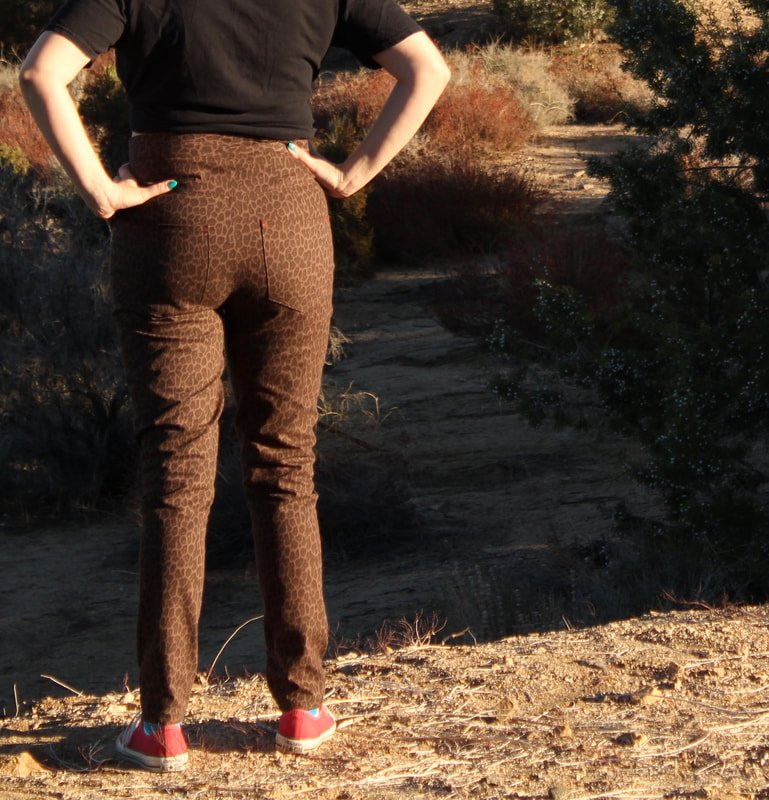
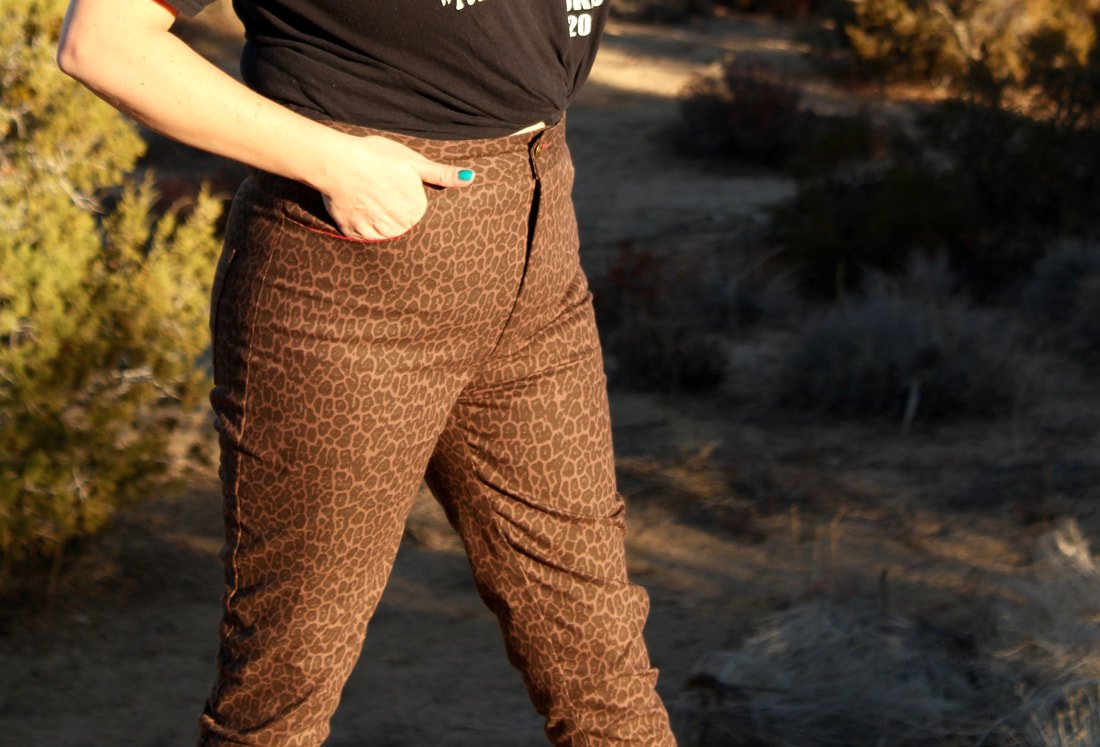
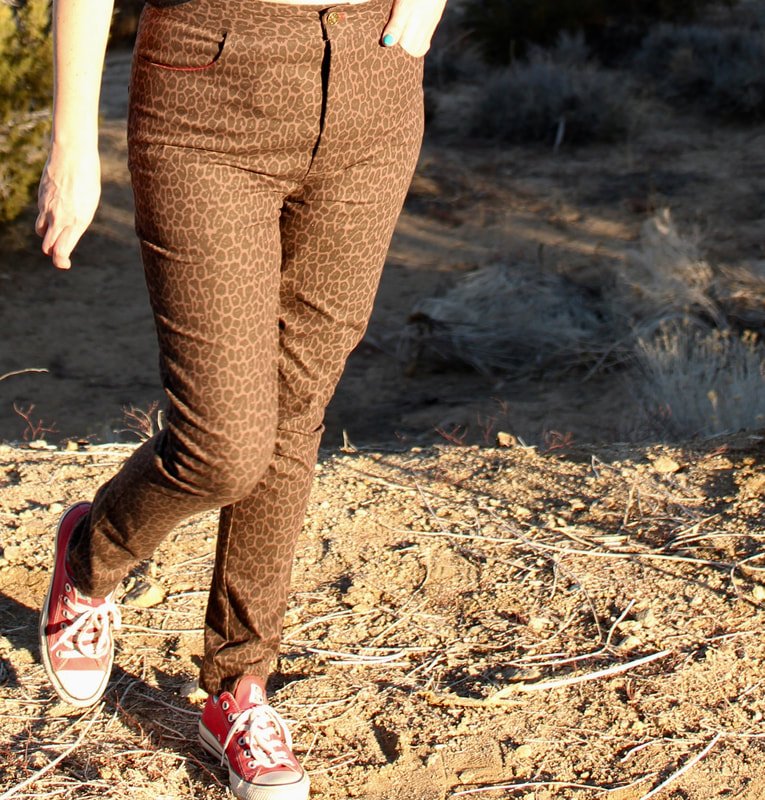
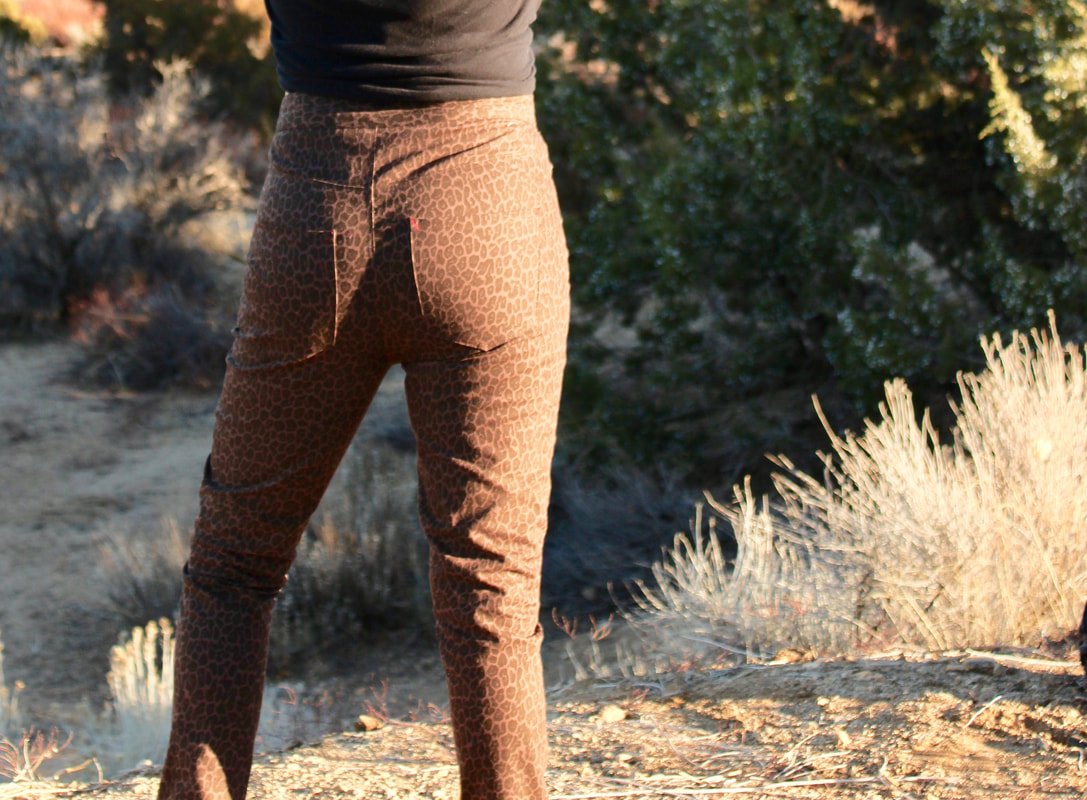
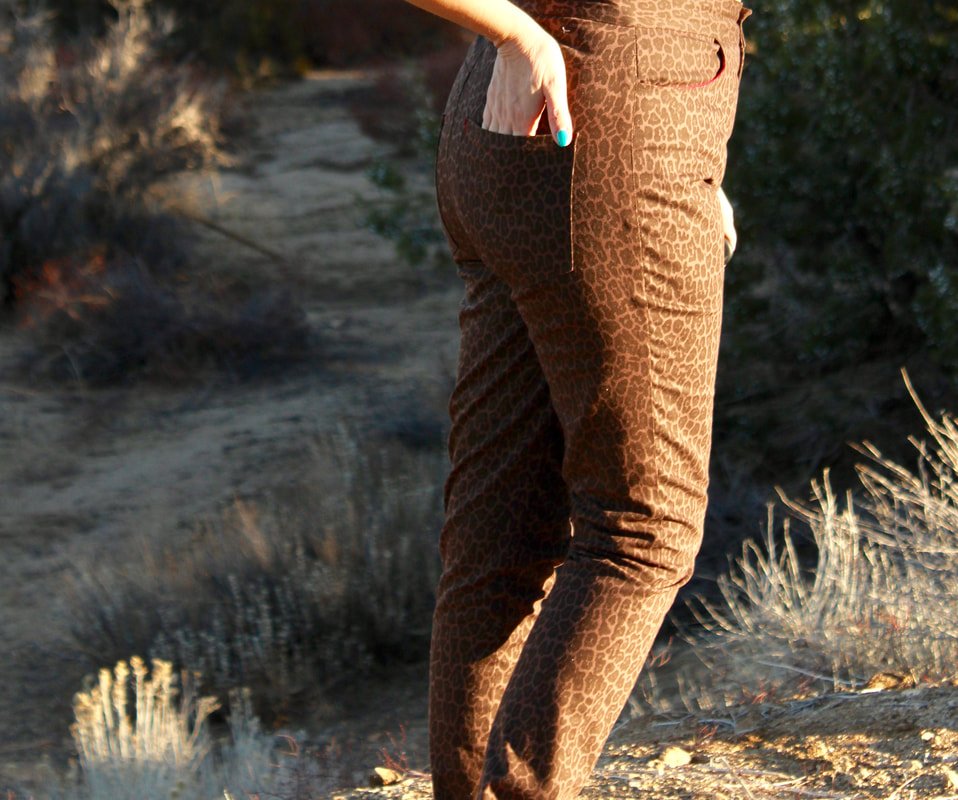
One back pocket is lower than the other but it didn't bother me enough to re-do it. Shhh, it'll be our little secret. ;-)
There is extra fabric and bagginess on the back thighs because of the low bum adjustment. It wasn't needed. I guess I have a high bum. Who knew? Hahaha!! And again, it didn't bother me enough to rip open the seams and fix it. This pair was supposed to fall into the "good enough" category. And they do just that.
Red cotton fabric was used for the pockets, you can see it peaking out a bit. I also did red bar tacks in place of rivets.
Whew, I hope you're still with me. Now, it's time for the final pair!
Final Pair of Ginger Jeans
I chose dark grey denim for my final pair of Ginger jeans. I love a red accent too so, I used red topstitching in place of rivets and made red pockets again.
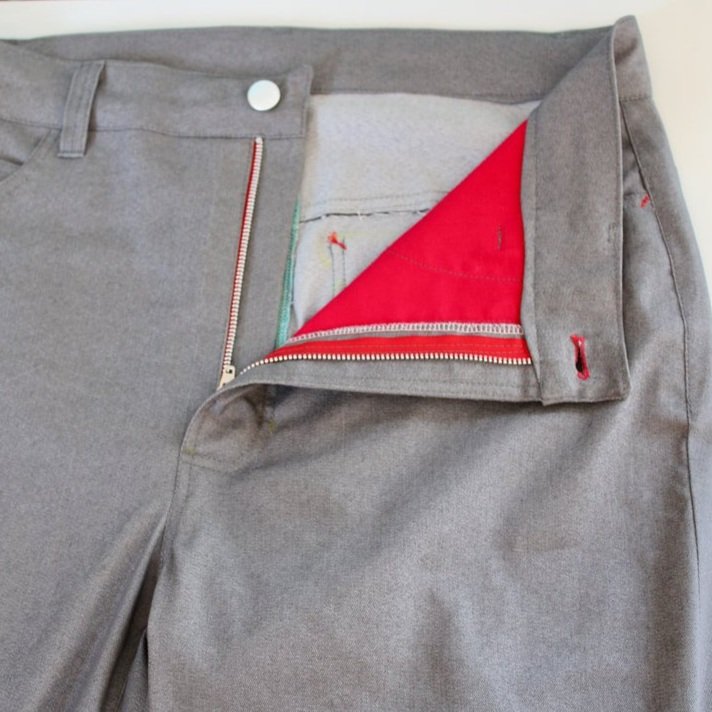
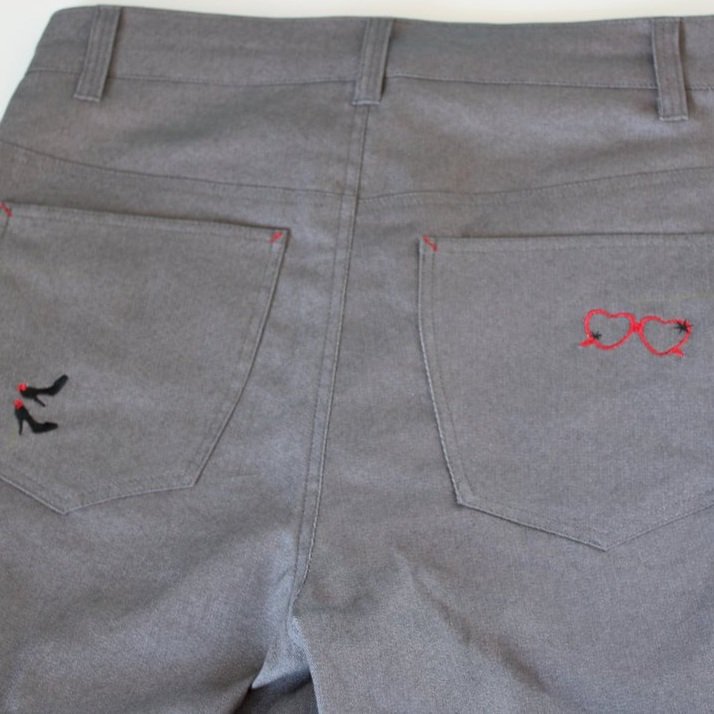
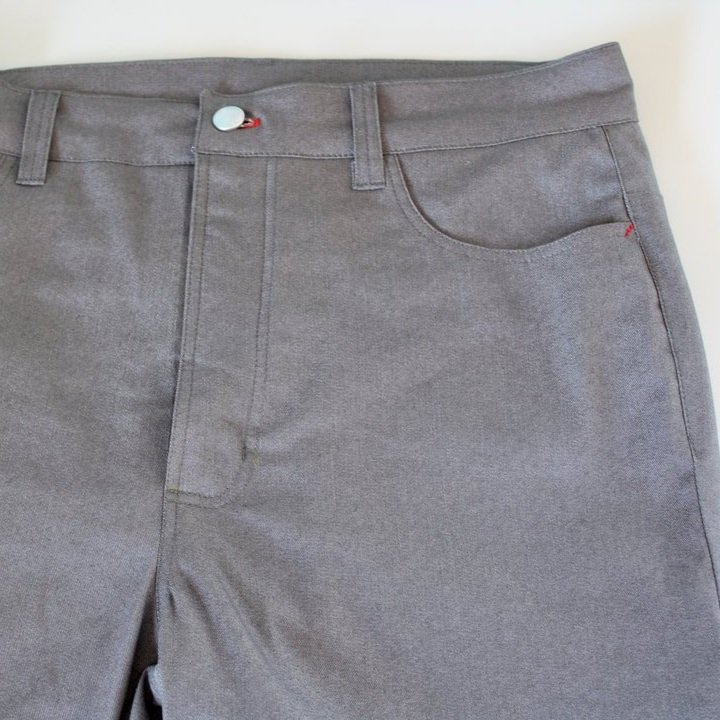
For the final pair, I did the adjustments that seemed to work best for my body.
Full tummy adjustment
Added 1.5" to the rise to create an authentic high waist
Shortened my leg length by 1 inch
Placed the pockets higher to accommodate the rise adjustment
I love the fit so much! My bottom half isn't very curvy due to my apple-shaped figure. Therefore, these jeans fit so much better than any RTW pair I've ever owned. They fit my legs and waist perfectly. I'm truly happy with the fit.


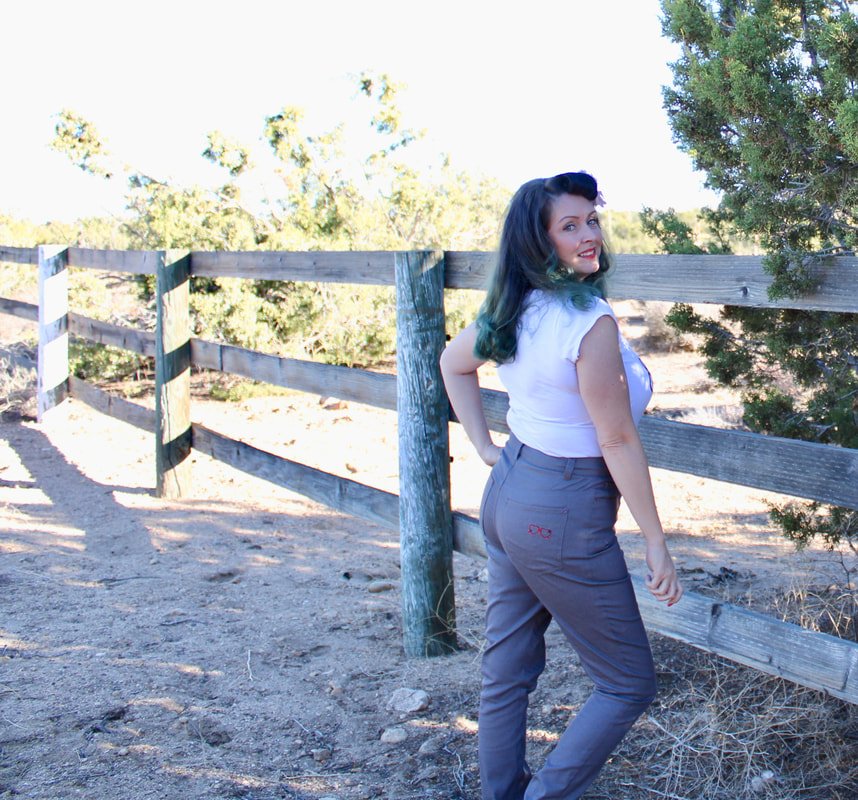

I’m pretty excited about my new jeans!!

Pastel Denim
This pastel peachy denim will make a perfect pair of Spring jeans. I might even roll the hem up and wear them with flats. A flowy white top and large straw hat too, yes, please!
I love the 3D stitching on this denim. It's not something I've ever seen. I'm not sure if I'll do a white or pastel yellow contrasting thead.
Now that you followed me through my fitting fun, are you going to make your own jeans? I really do encourage you to make a pair. I've made pants before but they didn't have all the stitching detail. These taught me more about fitting your own body and how perfecting the fit really does make all the difference.
If you're still on the fence about jeans making, maybe these trousers are more your speed. They're wide-legged and flattering on everyone.
Or, would you rather stick to an easier project? Sew up a little something here, here, or here.
Either way, go sew something! You deserve it! :D
Happy jean sewing,
Annette

Egg Gathering Apron
Collect your chicken eggs with a cute apron. The pockets keep the eggs safe and snug inside. Free sewing pattern for backyard farmers.

Got eggs? If you have a hobby farm or small homestead, you probably have hens. And, if you have hens, you have eggs. So. Many. Eggs.
Well, you need something to gather all those eggs with. A bucket works, a basket is cute, and in a pinch, you can use your hands and coat pockets. We've all been there. ;)
But, wouldn't it be fun and albeit easier to use an egg apron? Yes! You can live out your farm life dreams with a sweet egg-gathering apron.
So, it's decided. You're going to make an apron for collecting those little breakfast nuggets. Besides, buckets are only made for livestock grain and treats anyway.

Supplies
Swoon Patterns Egg Gathering Apron pattern. This is free on their website. Grab it here.
Sewing machine, thread, and notions
1/2 yard medium weight fabric
1 1/4 yards contrasting fabric (I didn't use a contrasting fabric)
1 1/4 yards lightweight fusible interfacing
Chalk pen or erasable pen
Ruler
Clips and pins.
I chose to use the Swoon Patterns egg gathering apron. This was the coolest egg-collecting pattern I found while scouring the internet. I collect about a dozen eggs every morning and wanted an apron to hold eggs and keep them safe. It also needed to be comfortable for me to wear.
Many patterns had pockets that were sewn in a way that didn't seem secure. If you were to bend over (to pet the cat or clean out the coop) the eggs would fall out. Swoon Patterns created an egg apron that is pure genius! It involves a little extra sewing but, is well worth it in the end.
I promise!
Let's Make an Apron
Grab the FREE pattern, print it out, and tape it all together. Decide on the size(s) you're going to make. Simply fold over the pattern for the different adult sizes. You don't have to trace off a new pattern, and it'll work perfectly. For this tutorial, I made the child size.
Let’s Get Sewing
First, apply your interfacing to the pieces following the pattern instructions. I used canvas as interlining because I was short on interfacing. I skipped using it on the main pieces. Secret lazy sewist tip. You're welcome.
After the pieces are cut and interfaced. You're going to make the pocket portions. Sew the long pocket panel RST (right sides together) along the long edge to form a tube. Turn out and press. Repeat with the other pocket panel.

Sewing the apron
My littlest sewing buddy making her own egg gathering apron.

Mark the fold lines.
Next, grab your chalk or erasable pen, and ruler. Mark the heck out of the pocket tubes. Per the instructions, use your ruler to measure the distance from the edges and between the pockets. It helped to make the vertical lines a few inches long. You'll then take these tubes to the iron and press them.
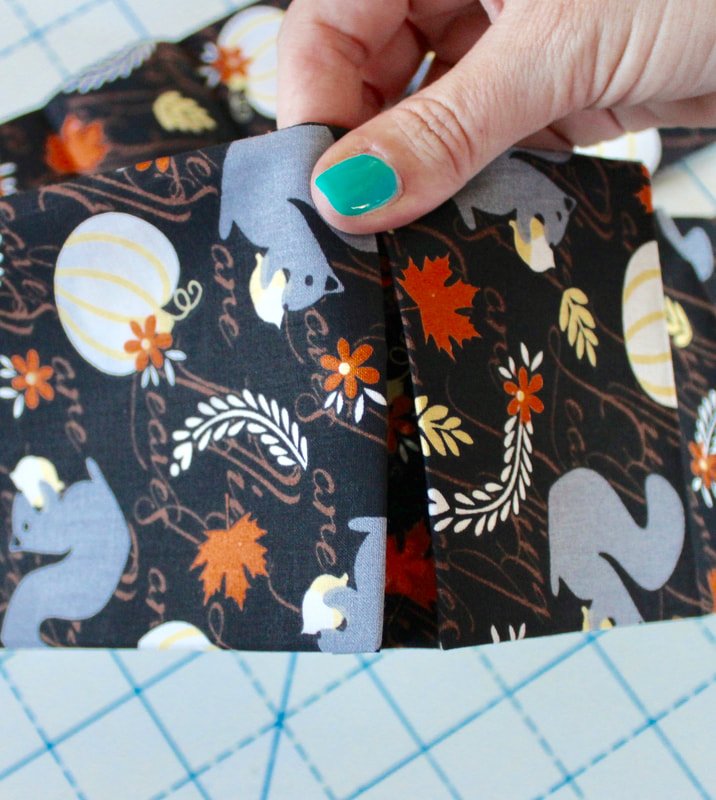
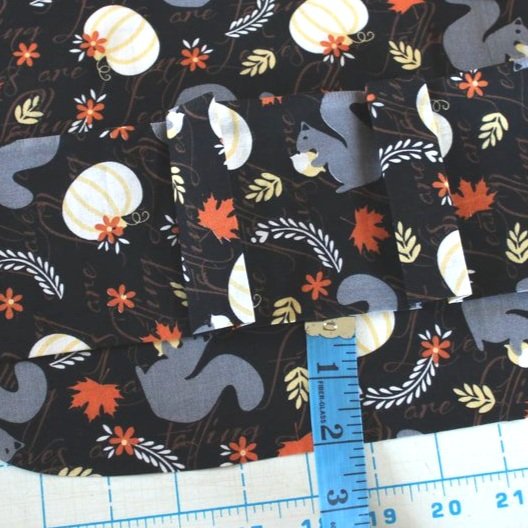
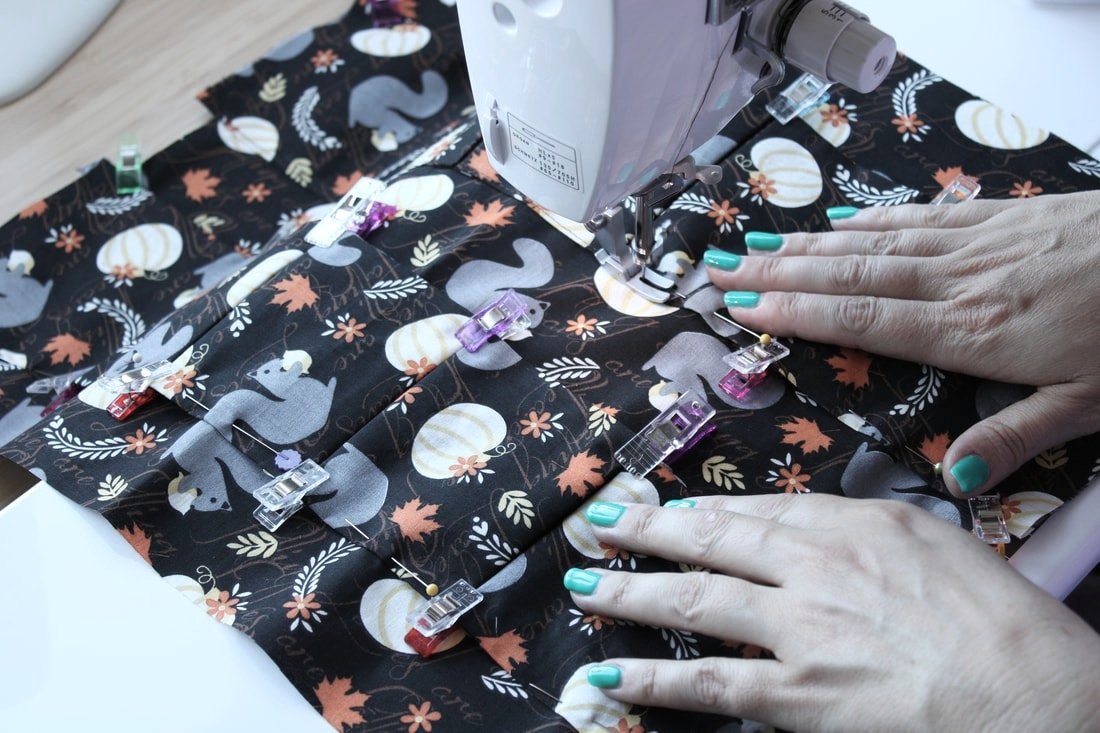
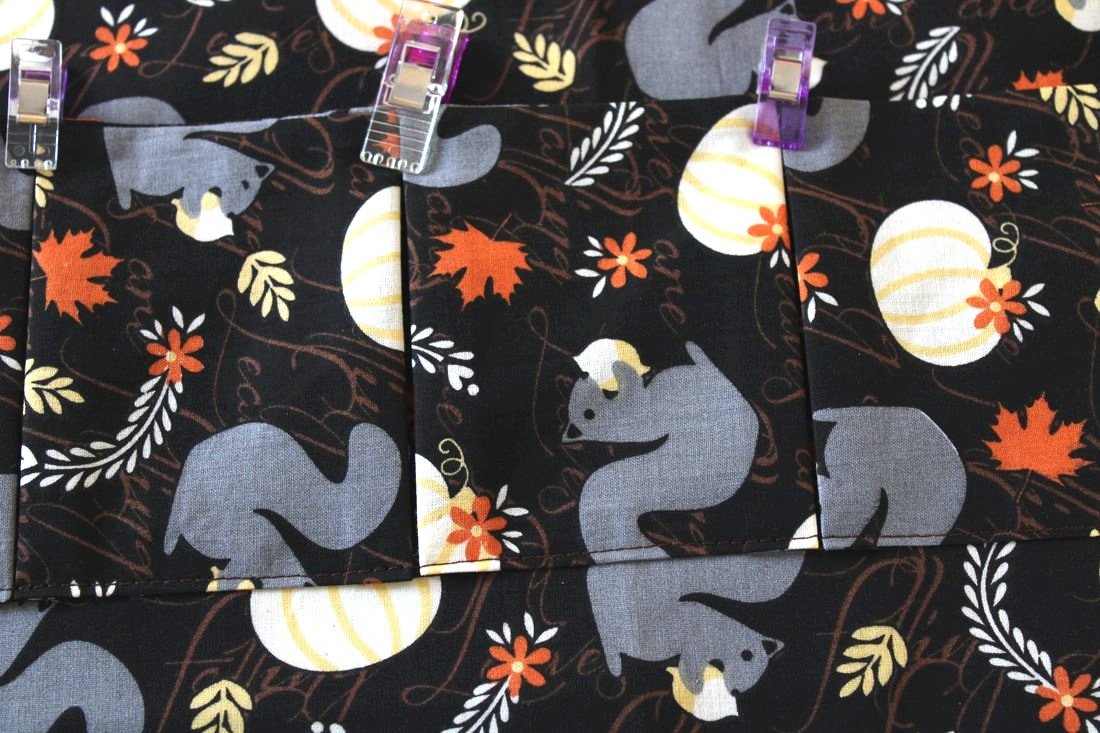
Once the pockets are pressed, grab clips and pins to pin and clip the panel in place. I used pins to keep the pocket tubes attached to the apron. Clips kept the pocket folds together. I used a tape measure and the pattern to place the pocket panels in the exact places.
Topstitch the bottom edge of the pocket panel to the apron, removing pins as you go. I took this part very slowly. No pedal to the metal here.

Use pins to hold the bottom edges down. Clips keep the pockets folded together.
The Egg Shaped Pocket

Now it's time for the fun part. Grab the pocket stitching guide piece. Choose chalk or erasable pen to trace.
Line the top and bottom fold with the pattern piece. Trace the shape to create the egg pockets. You'll make 8 for the child size and 10 for an adult-sized apron. I found that clipping the piece helped to keep it in place while I traced.
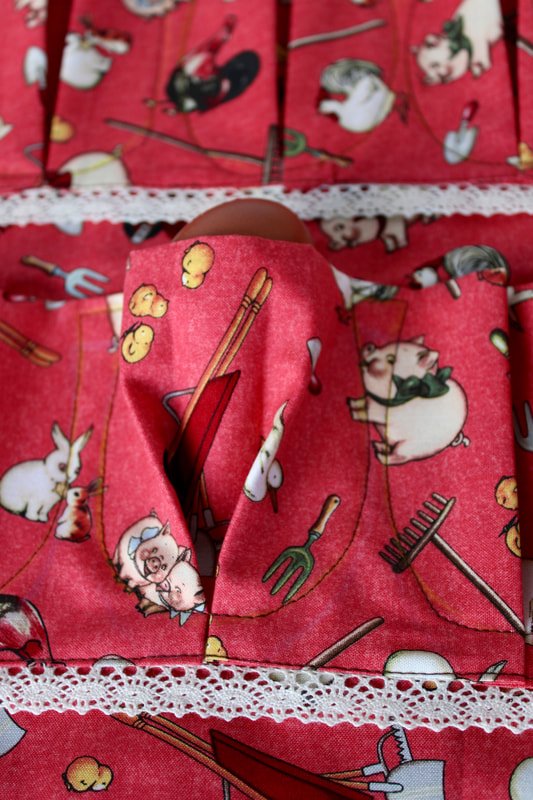
This part is where the Swoon Pattern really shines! The egg shape cradles the egg like a cup, inside the apron. Unless you're hanging upside down, they can't move around.

Continue tracing the pattern shape onto the apron for both pocket panels.
Starting on one side, sew around each egg shape pocket. Go slowly, this is a lot of circular sewing. I hand cranked the wheel a few times around the edges.
After the pockets are finished, it's time to sew the apron back and front pieces together, RST. Sew the sides and bottom only. Clip your curves. Trim seam allowances.
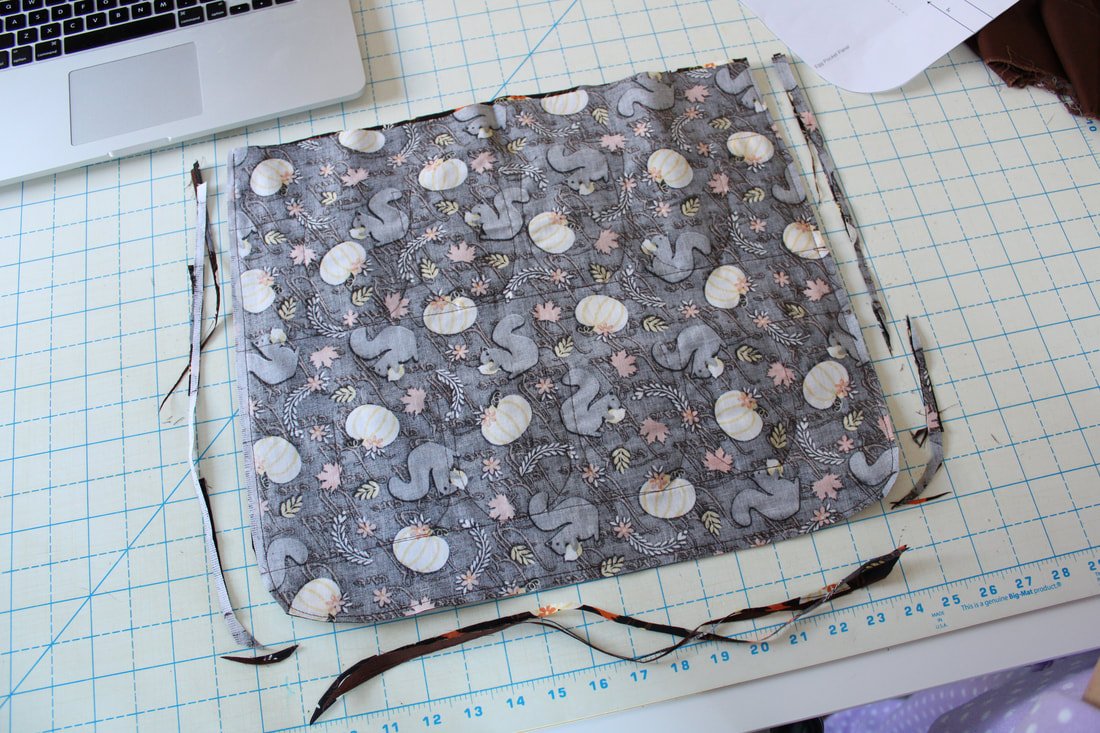
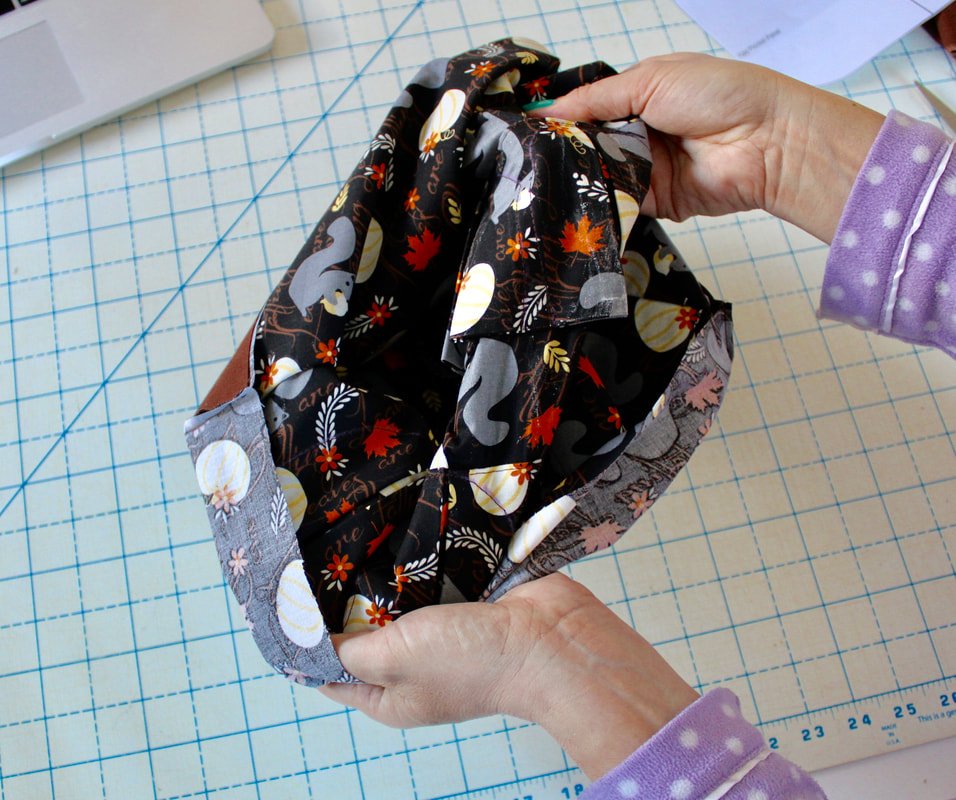
Yes, I made this apron while wearing jammies. Aren't they considered fashionable apparel these days? Haha
Turn the apron right sides out. Grab your chopstick or other turning tool to push out the corners
Waist Strap

Sew the waist tie like you would with any other piece of bias binding.
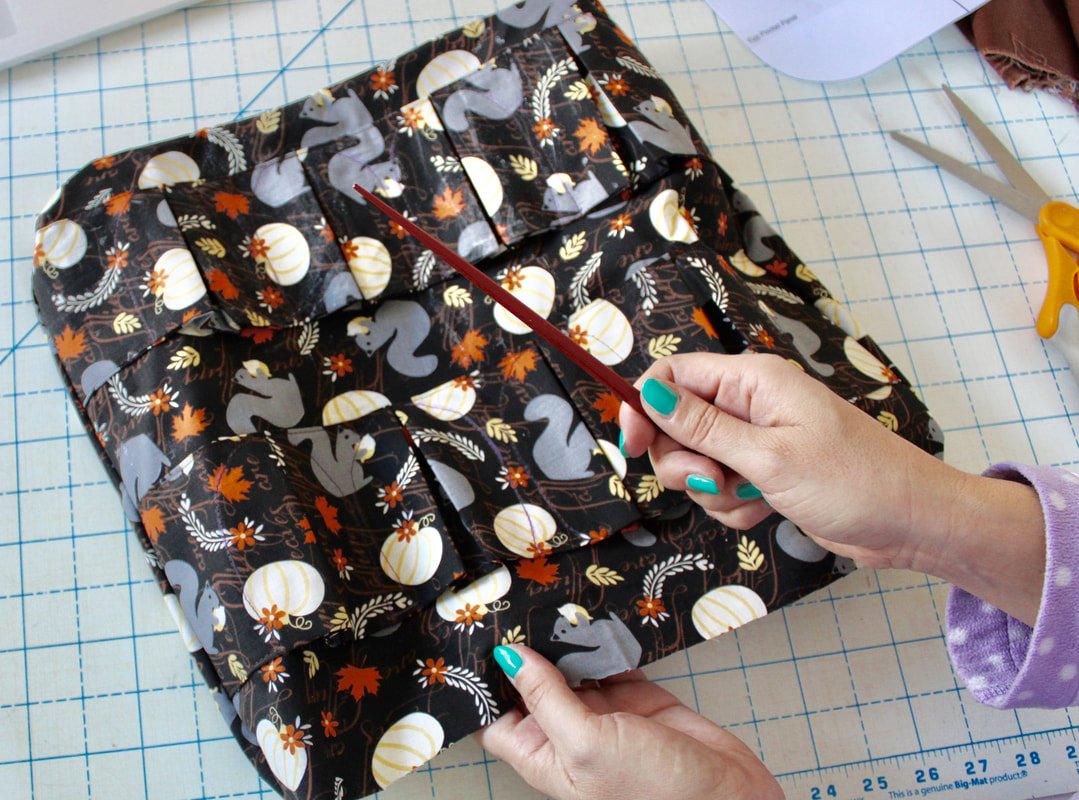
Make the waist strip following the instructions. Match the raw edge of one side to the top edge of the apron. Sew in the folded area where I'm pointing.
*You can see my chalk marks on the egg pockets still. They'll go away when I brush the fabric with my hand and spritz some water on the area

Fold the other side over. Use clips to hold in place.
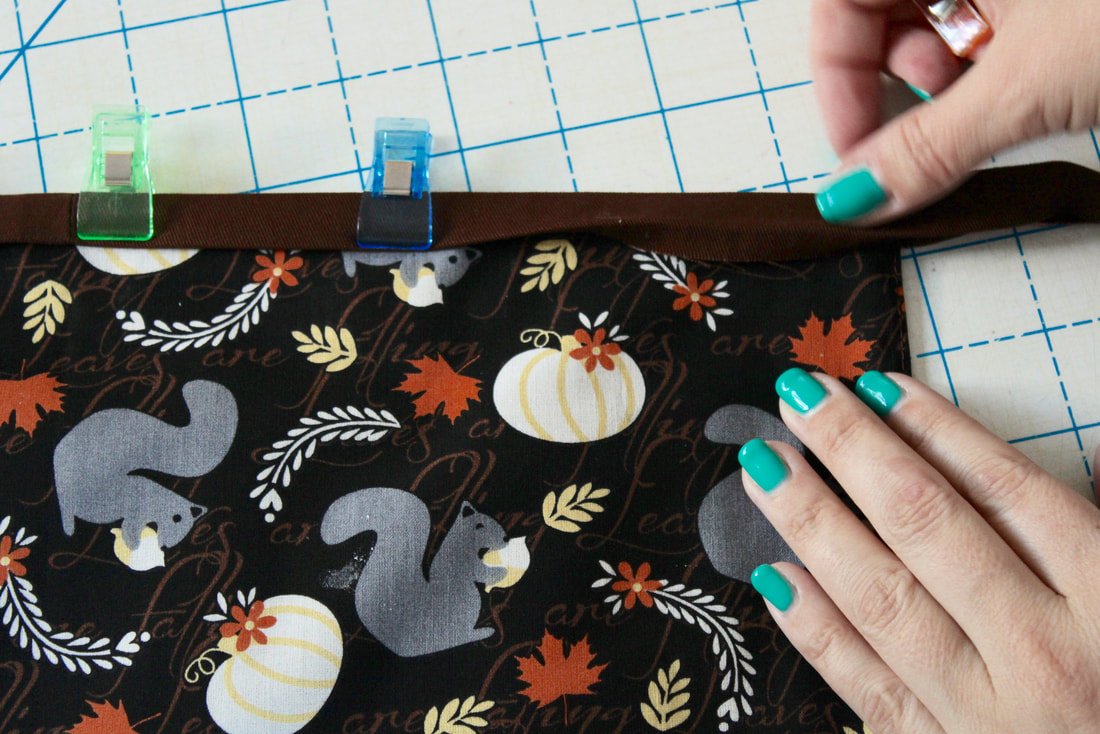
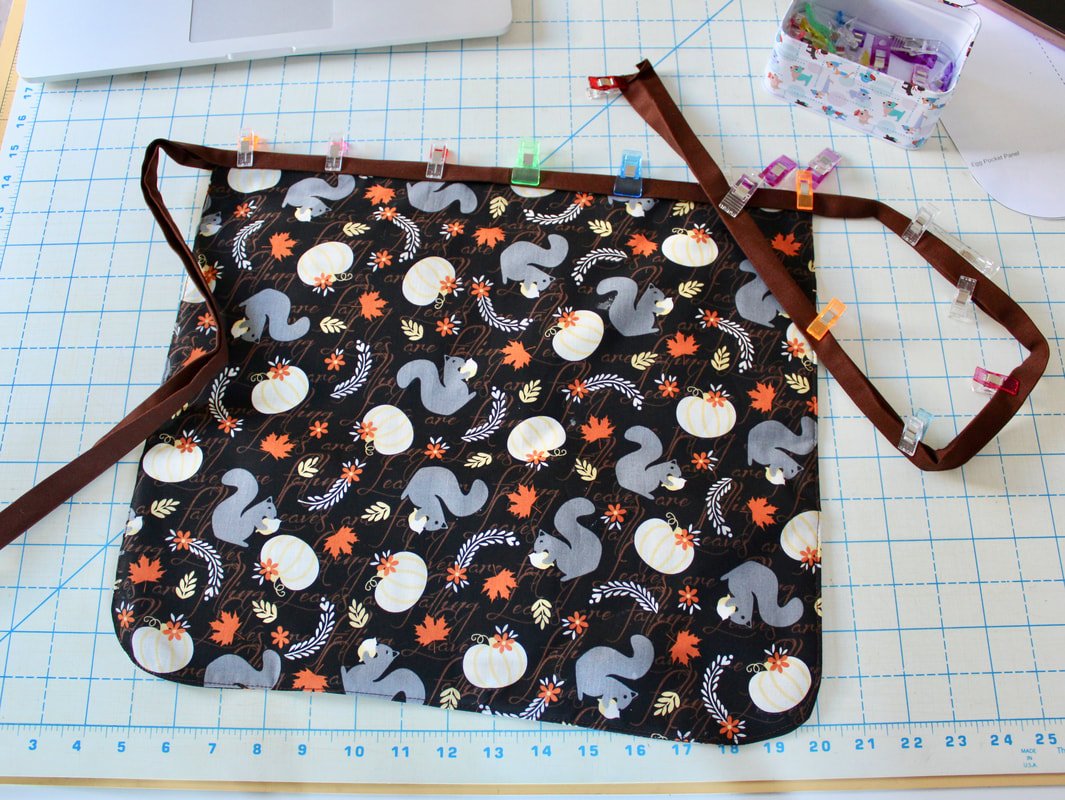
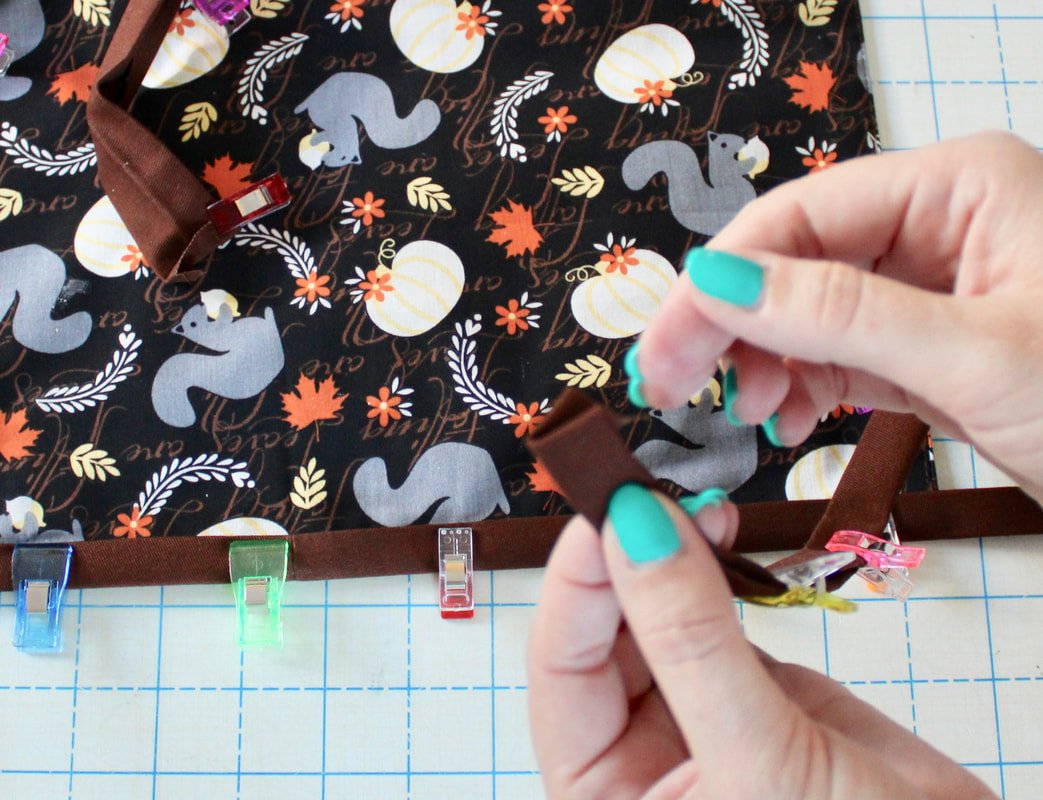
Your apron is finished! Hooray!!! Now, go gather some eggs and don't forget to take treats with you. The girls work hard for their eggs.

Notes on the Pattern
I didn't really change anything. This pattern was great. In the instructions, they tell you to baste the raw top pieces together. I skipped that because it seemed unnecessary. If a child or beginner is making this, then maybe that step shouldn't be skipped.
I prefer a narrower waist tie than what was called for. But, that's a personal preference.
After making the first apron, I was commissioned to make a few more as gifts. I sewed them the same as well. There wasn't anything I wish the pattern had or didn't have. It's a wonderful pattern and I'm thinking of making a few to add to my shop. I think every chicken mama and papa needs one of these aprons!
I took close-up photos with another one I made. The light-colored fabric makes it easier to see all the details.
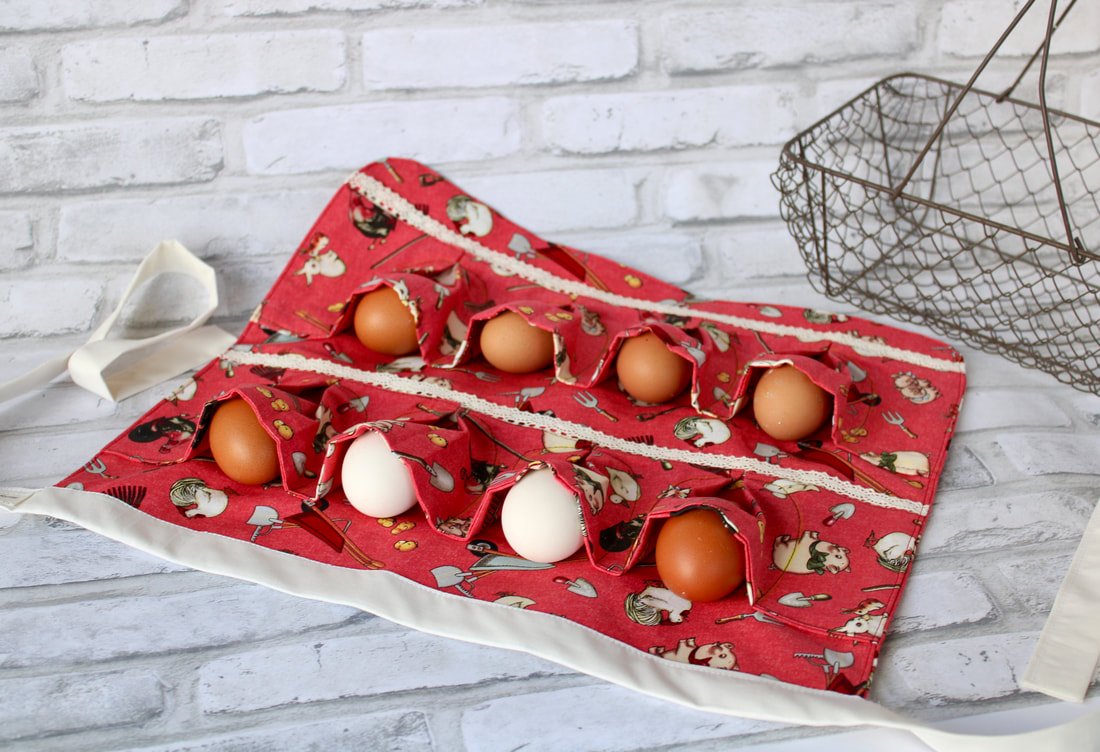
This apron is the best egg-collecting apron in my opinion. I can usually put 2 small eggs in each pocket. It keeps the eggs safely inside the pocket while I change bedding, change water buckets, and refill the feed buckets.

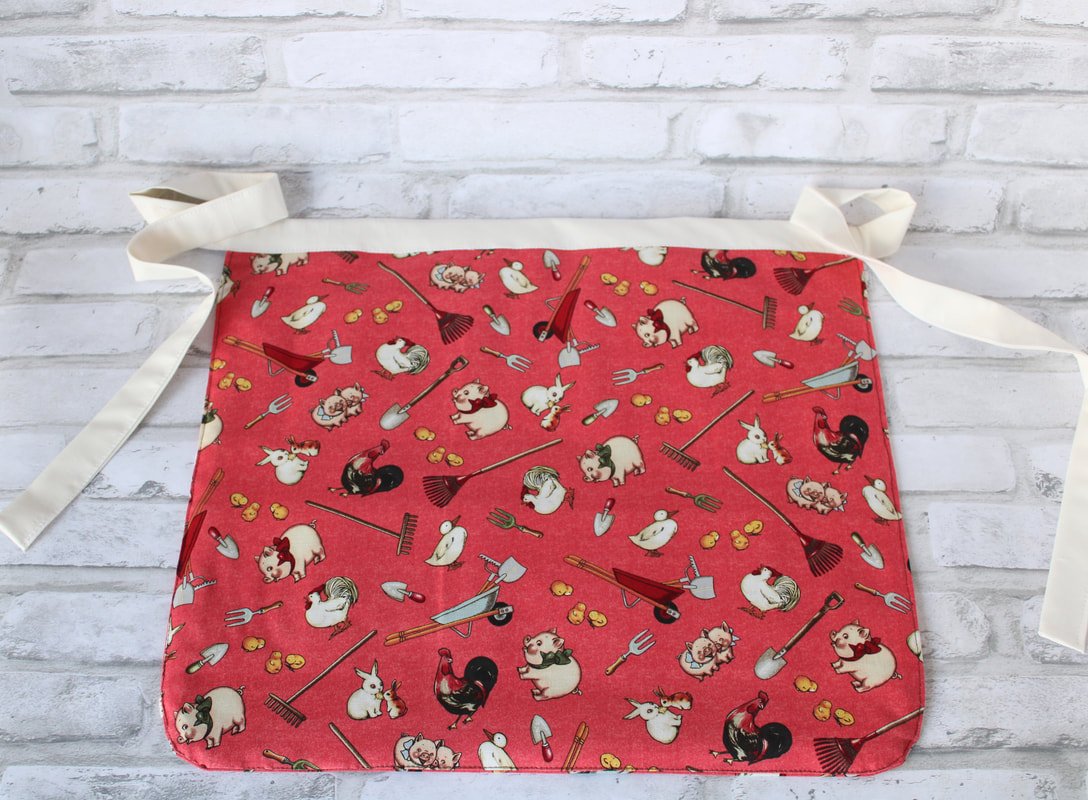
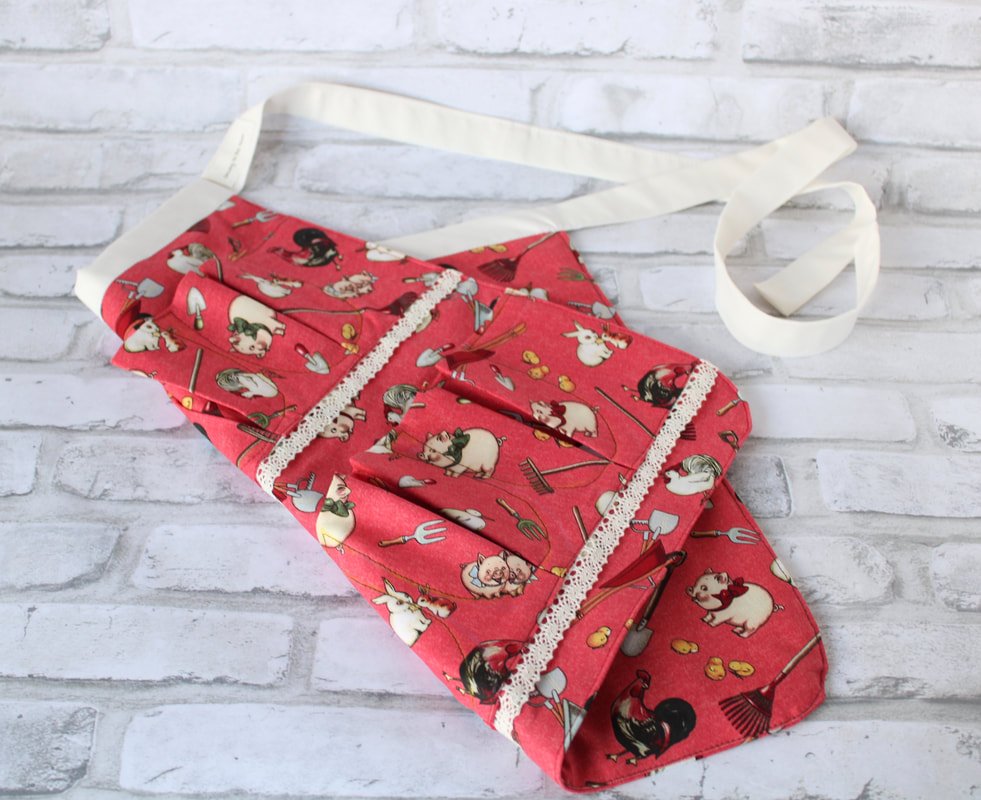
This is the child sized apron. It holds 8 eggs. I am in love with how this turned out. I love the lace detail, it’s so sweet.
Now that you've made an apron for the eggs, I am curious...
What do you make when you have oodles and oodles of eggs? We usually opt for a frittata or an angel food cake. Those seem to disappear pretty quickly in our house.
I hope you make one of these aprons. It's such a useful farmer’s tool. And a cute tool at that!
Happy gathering!
Annette
